It’s here, in hardcover and paperback.

Greetings, faithful readers. I am pleased to report that Crockett Johnson and Ruth Krauss: How an Unlikely Couple Found Love, Dodged the FBI, and Transformed Children’s Literature — a book that was twelve years in the making — now exists in both hardcover and paperback.  I received my author copies today, which means that it should be available for shipping from warehouses in the next few weeks (the official publication date is September 1st).

Crockett Johnson and Ruth Krauss: How an Unlikely Couple Found Love, Dodged the FBI, and Transformed Children's Literature (hardcover). Crockett Johnson and Ruth Krauss: How an Unlikely Couple Found Love, Dodged the FBI, and Transformed Children's Literature (paperback).
The author poses with the hardcover. The author poses with the softcover.

It’s already available on the Kindle, Nook and SONY Reader, but I find the ebook’s absence of book design a little disappointing.  So, I recommend purchasing the paperback. First, it’s cheaper.  Second, only the paperback has the full wraparound cover (designed by Chris Ware).  The Kindle version supplies only the front cover.1 On the hardcover, the artwork wraps around the spine and onto the back cover, but, since there is no dust jacket, the cover ends at the vertical edges of both back and front covers.  The paperback also has no dust jacket, but does have folded flaps that mimic a dust jacket  — they fold in along the vertical edges, tucking in between front cover and first page, and between last page and back cover.  Thus, the paperback allows you to view the full wrap-around cover.

Chris Ware's cover for Crockett Johnson and Ruth Krauss: How an Unlikely Couple Found Love, Dodged the FBI, and Transformed Children's Literature

The only other ways to see the full cover are on this blog or in the poster versions.  The generous Mr. Ware has designed a version of the cover — sans blurbs, UPC symbol, etc. — that is currently being made into posters.  I plan to sell them at book events. (I’m selling them rather than giving them away because I’ve underwritten the cost of this endeavor, and I’d like to make back my investment.)

Anyway.  My point is that the book is now officially real.  For me, a book is not a book until I hold it in my hands.  It doesn’t matter that I’ve signed the contract, delivered the manuscript, edited the manuscript (many times in this case), obtained rights to reprint the images (88 for this one), checked the page proofs, or seen the image for the jacket.  The book is only real for me at the moment I actually see a physical copy for the first time.  For this book, that moment was late this afternoon.

My biography of Crockett Johnson and Ruth Krauss is now real.


1.  I haven’t seen the Nook or SONY Reader versions. I assume they look much as the Kindle version does, but cannot verify that assumption.

Comments (11)

Crockett Johnson and Ruth Krauss: Chris Ware’s cover

Front cover by Chris Ware for: Crockett Johnson and Ruth Krauss: How an Unlikely Couple Found Love, Dodged the FBI, and Transformed Children's Literature (forthcoming from UP Mississippi, Sept. 2012)

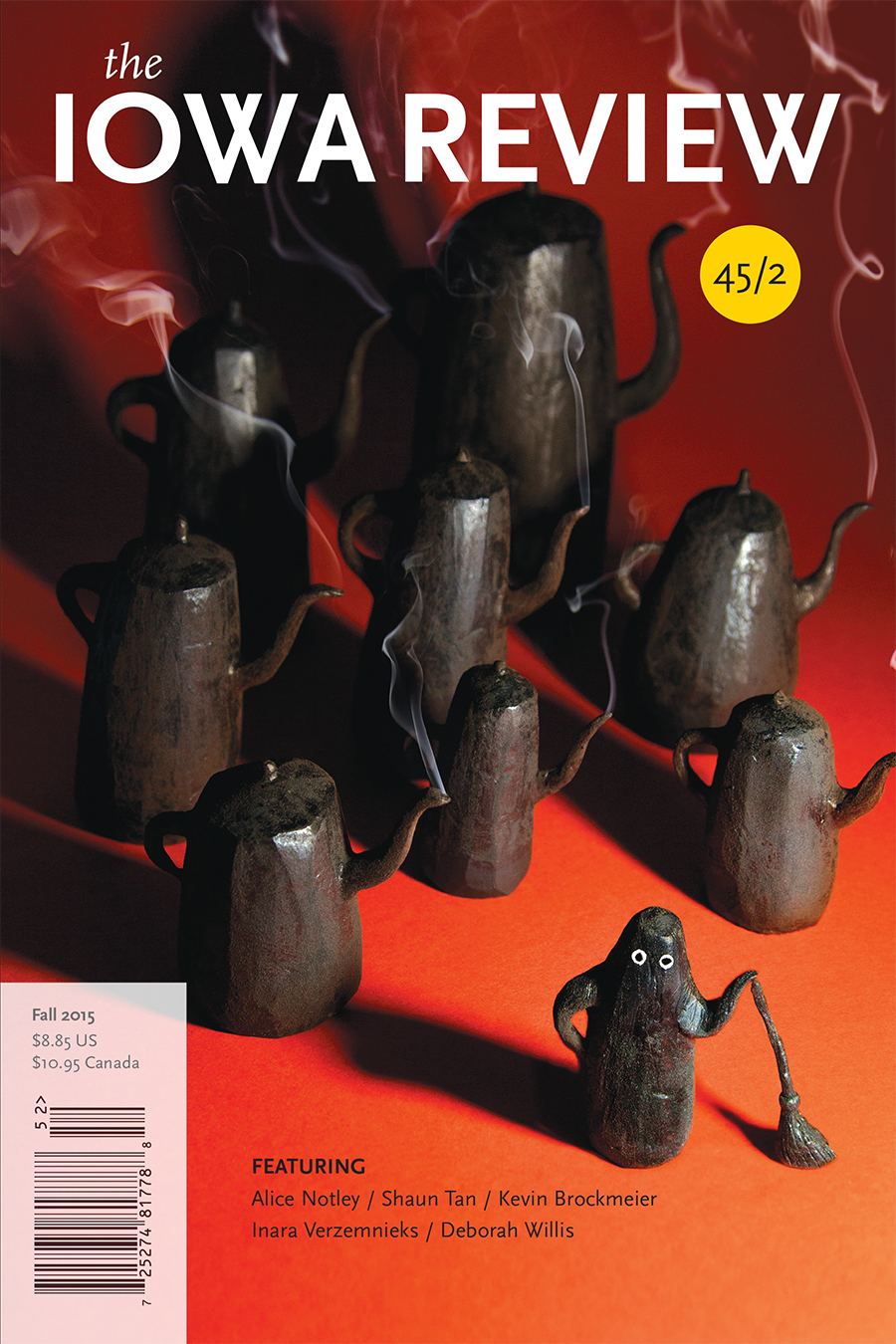
Graphic genius Chris Ware designed the cover for my Crockett Johnson and Ruth Krauss: How an Unlikely Couple Found Love, Dodged the FBI, and Transformed Children’s Literature (due this September from the University Press of Mississippi). The front cover is above.  The full, wrap-around cover is below.  Click on it for a larger image.  Trust me: you’ll really want to see all of the detail.  It’s beautiful.  It’s perfect.  I’ve never been happier about one of my book covers.  And for those keeping count, there are six previous books (two co-edited), all of which have striking covers.  The other designers were no slouches.

But Chris Ware is a genius. And no, I am not overusing that word.  But, yes, perhaps we should add a few more words to describe the cover itself. Clever. Detailed. Vivid. Art.

Full, wrap-around cover by Chris Ware for: Crockett Johnson and Ruth Krauss: How an Unlikely Couple Found Love, Dodged the FBI, and Transformed Children's Literature (forthcoming from UP Mississippi, Sept. 2012)

He’s done the cover in the style of Crockett Johnson.  In the case of the girl dancing above Krauss’s typewriter, it’s Mary Blair filtered through a Crockett Johnson aesthetic; for the boy sliding own her back, it’s Maurice Sendak filtered through Johnson. (The girl is from Krauss‘s I Can Fly, illustrated by Blair; the boy is from her A Hole is to Dig, illustrated by Sendak.)  Finally, Ware transforms all of these styles into something uniquely his own.

Fans of Johnson and Krauss: Are you getting all of the references here?  Would you like some help?  I could fully annotate this cover, but I wonder if that would detract from the pleasure of exploring it yourself.  The academic in me wants to proceed with the annotations, but the art lover wants to stay silent, so that your eyes can linger on Ware’s art, looking slowly, experiencing it on its own terms.  And… the art lover wins.  (No annotations.)  Enjoy!

And: Thank you, Chris Ware!

Comments (14)

The Most Wild Thing of All: Maurice Sendak, 1928-2012

Maurice Sendak, 2011

But the wild things cried, “Oh, please don’t go—

We’ll eat you up—we love you so!”

And Max said, “No!”

—Maurice Sendak, Where the Wild Things Are (1963)

In June 2001, I went to hear Maurice Sendak speak at Yale University. A couple of years earlier, I’d started working on a biography of Crockett Johnson, and I knew they were close. I had written him to see if he would be willing to chat, but, the previous April, he had declined via a letter from his assistant: “Mr. Sendak does not have any useful recollection relating to Ruth and Dave…. He hopes your research yields more valuable results and best wishes!” So, I thought: I need to try again. I’ll go, I’ll ask him during the Q+A period. When that time came, I was very nervous. He’d already turned me down once. What if he gets angry at me for pestering him? But… I plucked up my courage, and asked.

He looked me in the eyes, and after the briefest pause said Yes. I should talk to him after the Q+A. I did. He wrote his home number down in my notebook, and told me to call.  I did.

I remain astonished at his extraordinary generosity toward me, who (at that time) had published a handful of articles and no books… and yet was going to write a biography. Why even give someone like me the time of day?

This is why. Ruth Krauss and Crockett Johnson — along with their mutual editor, Harper & Brothers’ Ursula Nordstrom — were the most important people in shaping his early career. In the early 1950s, he began visiting their Rowayton Connecticut home on the weekends, while working on Krauss’s books. They were his “weekend parents” who helped shape him into the great artist he would become. He stayed with them many times during the ’50s, illustrating eight of Krauss’s books, starting with the groundbreaking A Hole Is to Dig (1952).

So, he was willing to help me. I phoned, we chatted, and then set up a time for a longer conversation later that evening.  At 9pm on June 22nd, I phoned him.  We talked for the next two hours.  The phone call began like this:

Philip Nel: Let’s hope the tape works.

Maurice Sendak: Oh, you’re taping it?

PN: Yes, if that’s alright with you.

MS: Yes, that’s fine.  You’re going to hear an odd sound now and then which is my putting a colored pencil into my sharpener ’cause I’m going to try and draw as we speak.

PN: OK.

MS: I have to finish a page a day, a layout a day, for the book I’m doing.

PN: What are you doing?

MS: Well, it’s a book based on an opera, an opera that I’m going to produce.  I have a little children’s theatre which I’m getting rid of, but this is our last thing to do.  It’s an opera that was performed in a concentration camp in Prague, there’s a very famous concentration camp called Theresienstadt.  It was actually Emperor Tieresias’ army encampment right outside the city.  During the war, it became a camp, and it was known as Hitler’s favorite camp.  There was a movie made to impress Red Cross and diplomats coming that all that they were hearing about dead Jews, dead gypsies, dead gays was all a lie.  And a film was made showing volleyball and chess and children, part of a children’s opera, some brief moments.  And the true fact is that there was an opera composed in the camp.  A young composer named Hans Krasa and his librettist wrote an opera for the children in the camp.  And the opera is called Brundibar, and it’s one of the only things we have of Mr. Krasa except for a trio and some songs because he was incinerated when he was about 35 along with the librettist and all the children who performed the opera.

PN: Wow.

MS: We now have the rights to the opera — took us a long time to get it — and Tony Kushner, the playwright

PN: Yeah, Angels in America.

MS: Yeah.  Is one of my very most wonderful friends.  I begged him to take the job of translation because the original English translation is horrible.  The Czech is beautiful, but it’s got to be sung in English, so we translated it, and we got people interested in doing it, staging it.  It has been done, but in schools, in community centers.  It’s never had a real production.  And so in order to raise the money for it, we agreed we would do a picture book.  So, Tony extrapolated from the libretto into a very gorgeous complex story — the first time he’s ever done anything like this.  He’s amazing.  He just adapted it, without any fuss or feathers.  Gorgeous, gorgeous funny language.  And I’m doing the picture book because we need the money for the stage production, and Hyperion will pay for a good part of the stage production and the trade is they get the picture book.  And I was very sick for a year and a quarter, and of course I’m terribly late.  So, I’m trying very hard to catch up.

PN: Wow.

MS: And, it’s beautiful, beautiful work — a perfect way for me to wind up, actually.  So that is it.

PN: Wow.  I’ll be fascinated to see that — the book — when it comes out.

MS: Yeah, the book is evolving because Tony keeps rewriting and I keep rethinking, and we swore we would not make it too dark.  It would be the sweet, little Czech peasant opera.

PN: Well, good luck.

MS: It’s hopeless already.  I have Hitler in it, I have Eva Braun in it, I mean I’m just uncontrollable.

PN: It would be difficult to avoid the darkness.

MS: Impossible.  But, really, seriously must to an extent in order to not obscure what these people really set out to do, which was to write a charming piece to amuse the children.  It’s just that history beclouds it so much.  It is difficult to do.  It is difficult.  But it’s also great fun.  I’m having a wonderful time.

PN: I’m fascinated.  I’ll be interested when it comes out to show it to my class.

He asked about my class.  I had just begun teaching Literature for Children at Kansas State University.  “I always wonder how you teach children’s literature,” he said.  I offered to send him a syllabus.

MS: To me, it’s really a great mystery.

PN: Well, I’m new to teaching it.  I’ve taught it only for a year.  So, I’m pretty close to that sense of mystery.

MS: Well, once the mystery settles deep on you, then you’ll know how complex this thing is.  It’s always been considered low man on the totem pole, one page in the New York Times, and it’s all treated like Peter-Pan-ville.

PN: Right.

MS: It’s very tiresome, and it used to irritate me profoundly when I was young and now I just can’t afford the energy that goes to being irritated.

After a little more conversation, he started to tell me about Ursula.  And Ruth.  And Dave. (David was Crockett Johnson’s real first name, and his friends called him “Dave.”)  Maurice was very open, direct, and shared an enormous amount of deeply personal memories with me — tears in his eyes, as he described his visit to Ruth just before she died. I felt like his therapist, mostly listening, asking the occasional question. By the end of the conversation, I felt as if during the course of those two hours we had become old friends. He invited me to visit him in Ridgefield. I accepted.

(I never did manage to get out there, which is something I now very much regret, of course.)

Maurice Sendak became the biography’s third central character.  Dave and Ruth are the two co-stars, but Maurice gets third billing — or would, if the book were a film.  Beyond the decade of the 1950s, when he was collaborating with Ruth and staying with them some weekends, he visited in 1963 when he got stuck working on Where the Wild Things Are.  What should he call the three wordless two-page spreads in which Max and the wild things cavort in the forest?  Dave suggested “rumpus.”  So, just before the wordless pages start, Sendak has Max say, “Let the wild rumpus start!”  Dave and Ruth were so important to Where the Wild Things Are that Sendak has said, “I feel as though Max was born in Rowayton, and that he was the love child of me, Ruth, and Dave.”

Maurice and I collaborated on getting Crockett Johnson’s Magic Beach published in 2005, with an afterword by me and a foreword by him. We kept in touch. Generally, I’d write him a letter, and then a few days later, he’d phone me back. It was always astonishing to pick up the phone and hear Maurice’s voice on the other end. Or to find his voice on your answering machine. I don’t think I ever quite got over the fact that Holy cow, I’m talking with Maurice Sendak.  That, truly, was “the most wild thing of all!”

In the summer of 2008, I sent both him and Nina Stagakis (who knew Johnson and Krauss very well) an early draft of the manuscript up until the mid-1950s. How was I doing? Anything I might improve? Anything missing? As he recuperated from triple bypass surgery, he read what had become a double biography of both Johnson and Krauss.  On September 10th 2008, he left a message on my office phone.  He said he liked it, it was good work, but he had a few questions. Call him back. I did. He was hesitant to criticize, but I wanted to know. So, he offered his critique: “For me, it was me and Ruth.  And, for you, it was you and Dave.”  Ah, I said, so I need to have more Ruth in there.  He said, well, it’s your manuscript and you can do what you like.  I said, no, I want there to be a balance between the two.  He said, it’s “like a missing color from a palette.”

So, after our phone call, I started going back through the manuscript, and creating a map for each chapter that included a one-line summary of each paragraph which I then labeled either “CJ,” “RK” or “CJ-RK.”  I made the same map for all subsequent chapters, too.  This allowed me to see where the book was unbalanced, and to create a balance, trimming “CJ” sections, expanding “RK” sections.

Maurice was a little out of sorts that September night. In addition to being in recovery, he was also in mourning — his partner of 50 years, Dr. Eugene Glynn, had died the year before. And, at the start of our conversation, he alluded to an article about him in that day’s New York Times, which he described as “a very odd interview that’s very frank.” So, he said, “I’m telling you because I may sound odd.” Wondering what he was talking about, I looked it up (on-line) as we spoke. That’s the article where he at last talks openly about his sexuality. The interviewer asks whether there were anything he had never been asked, and Maurice answers, “Well, that I’m gay.” So, I think he may have feeling a little more vulnerable than usual that evening. (I expect that, if I had just told the New York Times a secret I’d been keeping for 80 years, I’d feel vulnerable, too.)

That was the last time we spoke.

He continued to be supportive of the biography, granting permission to use artwork, and sending me a scan of a photo of him in his 20s — I wanted an image of how he looked at the time he met Ruth and Dave. I believe my biography of Johnson and Krauss will mark the photo’s first publication, though I’m not sure.  But this was all done through his assistant, Jennifer.

My sense of his final years was that he was devoting the life he had left to his work and to mentoring other artists. So, though he no longer returned my occasional letters by phoning me, I figured: well, if I were in my 80s, I would also claim as much of my time for myself as I could! And: He’s been so very generous to me. I can’t complain. I could worry about him, though. I did worry about him.  Whenever he talked to the press, he sounded sad. And he’d sounded sad to me, when last we spoke.

I did write him, and thank him for all he’d done. I was planning to write him again, in a few months’ time, sending him a signed copy of the bio. and another thank-you. (Sigh….) Well, at least he got to see page proofs. The publisher sent him those a few months back.

When I heard the news this morning, “No!” was my first reaction. Yes, I knew he was 83, and he’s never been in the best of health. (He was sickly as a child, and had his first heart attack just before he turned 39.) Still, I assumed he’d always be there. I assumed I’d get the chance to write to him again.

But it was time for him to board Max’s boat and sail away.

Farewell, Maurice.  And thank you.

More on Maurice Sendak (last updated 14 July 2012, 10:15 pm Central Time):

More on Sendak from Nine Kinds of Pie (this blog):

Comments (22)

Crockett Johnson’s FBI File. Part 1.

On April 21, 1950, the FBI’s New York Division reported that Crockett Johnson was one of “400 concealed Communists.”  In June, the New Haven office began compiling a file on him.  These are the first 15 pages.  (Clicking on each page will yield a larger image.)

Crockett Johnson's FBI file, page 1

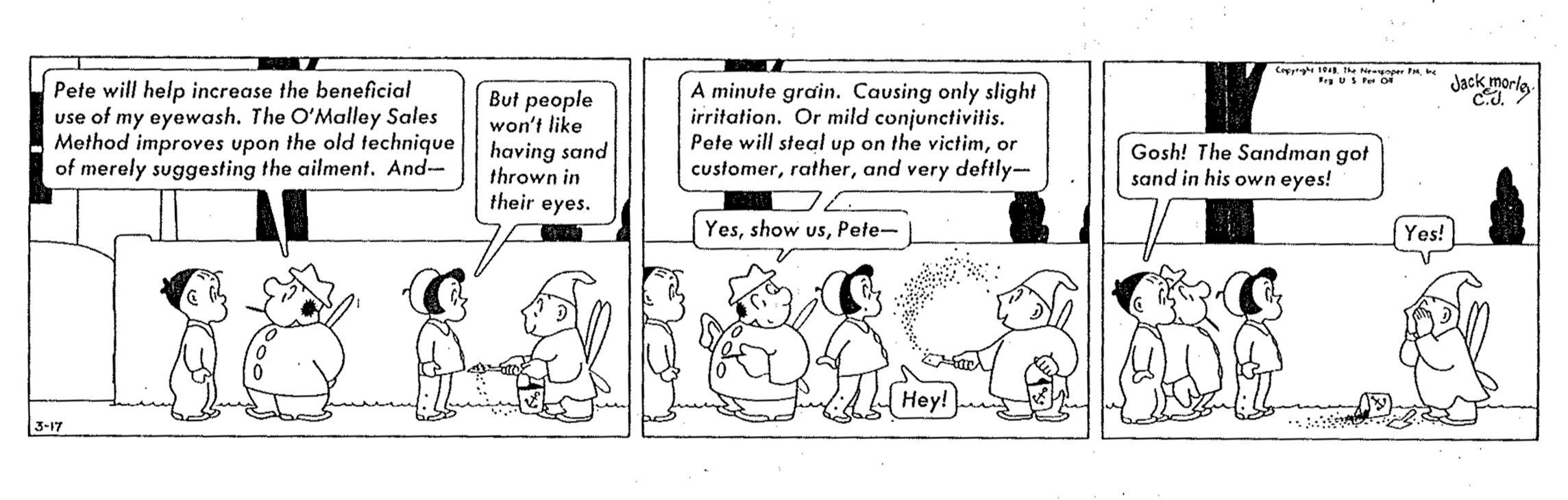
This (above) is one of the less accurate pages in the file.  In 1950, Crockett Johnson was not a “concealed Communist” or even an open one.  Also, Barnaby was never written by Jack Morley.  At this point, Johnson was writing the scripts for Barnaby and providing rather detailed sketches to guide Morley’s art.  So, although the strip’s byline at this point read “Jack Morley and CJ,” it would have been more accurate to credit it to “Crockett Johnson and Jack Morley.”  The page is correct, however, in identifying Ruth I. Krauss as his wife, and noting his association with the Independent Citizens’ Committee of the Arts, Sciences, and Professions (ICCASP).

Crockett Johnson's FBI file, page 2

The claims on this page appear to be accurate.  Johnson was a New Masses editor from 1936 to 1940, attended the Cultural and Scientific Conference for World Peace, supported the American Committee for Spanish Freedom. I don’t know whether the Jefferson School of Social Science considered him for a lecturer, but that strikes me as well within the range of possibility. In Johnson’s case, the FBI was very good at identifying organizations with which he was associated, but rather poor at gauging his loyalty to the country.

Crockett Johnson's FBI file, page 3

I’ve verified most of the claims on this page, and the FBI is accurate.  They fail to note (for example) that the American Committee for Spanish Freedom was supporting the democratically elected government of Spain against the Fascist usurpers — surely the sort of activity that the U.S. government should support.  But it’s true that Johnson supported that group; the Win the Peace Conference; the Cultural and Scientific Conference for World Peace; and Benjamin Davis, a Communist who represented Harlem on the New York City Council from 1943 to 1949.

Crockett Johnson's FBI file, page 4

Again, though their assumptions about his loyalty are off the mark, the FBI has correctly identified Johnson’s political affiliations.  The Daily Worker issues mentioned do provide the information that the file alleges.

Crockett Johnson's FBI file, page 5

The FBI here have done their homework, once more.  Crockett Johnson not only attended William Gropper‘s 47th birthday party (Gropper’s papers, held by Syracuse University, verify that both he and Ruth Krauss were there), but — as noted above — art-edited the Communist weekly New Masses, 1936-1940.

Crockett Johnson's FBI file, page 6

The FBI has here found an entirely different “Ruth Krauss.”  This Ruth Kraus is not the Ruth Krauss married to Crockett Johnson.  Oops.

Crockett Johnson's FBI file, page 7

Informants’ names redacted.  Not all pages in an FBI file contain interesting information.  However, sometimes they forget to redact info. — a later page reveals that professional informant Louis Budenz was one of the people who supplied information impugning Johnson’s loyalty.  Though Budenz was eventually discredited as unreliable, for a few years he made a good living as a government witness.

Crockett Johnson's FBI file, page 8

Except for his party affiliation, this page (above) is accurate.

Crockett Johnson's FBI file, page 9

I can’t verify the $100 donation, but everything else here checks out.

Crockett Johnson's FBI file, page 10

Crockett “is derived from an old family name relating to the subject,” eh?  That’s a new one on me, fellas.  Also, Johnson moved to Connecticut in 1942, not 1941.  But apart from those claims, the above info. appears to check out.

I picture neatly dressed FBI agents surrounded by stacks of radical newsletters, busily compiling lists of alleged offenses.  A rather dull job, but on this page, the G-Men have done fairly well.  That said, I can’t verify each and every claim, and it’s worth noting that they’re doing a lot of “guilt by association.”  Crockett Johnson and [name redacted] were both at an ICCASP meeting; [name redacted] was also active in the Norwalk Communist Party.  The suggestion, then, is that Crockett Johnson may have been also active in the Norwalk Branch of the CP.  I have no evidence that he was, though he was definitely a member of the ICCASP, and I suspect that the FBI is correct in placing him at that meeting, and at other ICCASP events.

Crockett Johnson's FBI file, page 12

As noted previously, the report of Johnson’s affiliations with ICCASP and “Win the Peace” are both accurate.

Crockett Johnson's FBI file, page 13

Johnson did indeed support Henry Wallace and the PCA.  He also appeared at the event for the American Society for Russian Relief.

Crockett Johnson's FBI file, page 14

These items can be verified.  However, as in many of the other items here, the FBI’s interpretation of Johnson’s affiliations is not as strong as their ability to uncover those affiliations (which is quite good).  For example, the Equal Justice for Mrs. Recy Taylor Committee (below) was the inverse of the Scottsboro Boys trial: African-American woman (Taylor) raped, but white perpetrators get off scott free.  Johnson’s support of equal justice under the law is laudatory, and should be read as such.  From the FBI’s point of view, Communists were in the forefront in their support of Civil Rights for African-Americans; so, in their eyes, Johnson’s support of justice for Mrs. Taylor reads as a “red” activity.

Crockett Johnson's FBI file, page 15

As you might expect, I have mixed feelings about “collaborating” with the FBI on my biography of Crockett Johnson and Ruth Krauss (coming this September). On the one hand, Crockett Johnson’s FBI file displays the dangers of unchecked power, and reminds us why the Patriot Act was and is a reckless idea. On the other hand, the file is a wonderful resource and I am grateful for the FBI’s assistance. Though information in FBI files is not always reliable and their allegations about Johnson’s loyalty are false, their tracking of causes he supported is accurate.  I verified everything I could, and the New Haven G-Men tailing Johnson did thorough work.

The entire file runs 114 pages — relatively small, as FBI files go.  If I find the time, I may post other pages.

Crockett Johnson and Ruth Krauss: How an Unlikely Couple Found Love, Dodged the FBI, and Transformed Children’s Literature will be published this fall by the the University Press of Mississippi.

Leave a Comment

Research, Writing, and Getting a Life

Edmund de Waal, The Hare with Amber EyesOne of the many pleasures of Edmund de Waal’s The Hare with Amber Eyes: A Hidden Inheritance (2010) is its evocation of the thrill of research. As he traces the history of his family’s netsuke (small Japanese ivory and wood carvings), de Waal describes great-great-great grandfather Charles Ephrussi’s art-collecting in nineteenth-century Paris as “‘vagabonding’ … done with real intensity”:

Vagabonding was his word. It sounds recreational rather than diligent or professional…. But it does get the pleasure of the searching right, the way you lose your sense of time when you are researching, are pulled on by whims as much as by intent. It makes me think of the rummaging that I am doing through his life as I track the netsuke, the noting of other people’s annotations in the margins. I vagabond in libraries, trace where he went and why. I follow the leads of whom he knew, whom he wrote about, whose pictures he bought. In Paris I go and stand outside his old offices in the rue Favart in the summer rain like some sad art-historical gumshoe and wait to see who comes out. (72-73)

That’s exactly right. Writing a biography — or, truly, intense research of any kind — is detective work. It’s extremely absorbing, getting a lead, following it to a new source, finding connections between lives and ideas. You are on a quest, and you must keep going until you finish!

New York Times Magazine, 15 April 2012But dedication to the quest also takes its toll. As Charles McGrath reports in today’s New York Times Magazine profile of master biographer Robert Caro, researching and writing the third volume of The Years of Lyndon Johnson had taken so long that Caro and his wife went broke. She sold their Long Island home, found them a cheaper apartment in the Bronx, and got a teaching job to help pay the bills. The biographer — obsessive, driven, seeking every last detail — often depends upon a patient, supportive spouse. It’s no coincidence that my forthcoming biography, Crockett Johnson and Ruth Krauss: How an Unlikely Couple Found Love, Dodged the FBI, and Transformed Children’s Literature, is dedicated to Karin. Who else but one’s partner would put up with such fanatical devotion to a book?

This process recalls a line in a recent Times Higher Education piece on academics: “the idealised academic has no ties or responsibilities to limit their capacity to work.” This is equally true of the biographer. For both the professor and the biographer, there is no boundary between life and work. Your life is your work and your work is your life. Or, in the case of the biographer, your work is someone else’s life.

I’m not arguing that one’s work should be all-consuming, though I would note that Caro’s work on LBJ and Edmund de Waal’s absorbing family history are both excellent because each writer is so very thorough, obsessive, and meticulous — in both the research and the writing. McGrath notes that Caro and his editor Robert Gottlieb “argue about length, but they also argue about prose, even about punctuation.”  As Gottlieb says,

You know that insane old expression, “The quality of his defect is the defect of his quality,” or something like that? That’s really true of Bob [Caro]. What makes him such a genius of research and reliability is that everything is of exactly the same importance to him. The smallest thing is as consequential as the biggest. A semicolon matters as much as, I don’t know, whether Johnson was gay.

Beyond providing a helpful context for my own battles with Walter (my editor for the bio), this explains my own process to me. It’s not just about perfectionism. It’s about getting it right. And everything matters: Structure, word choice, punctuation, which detail gets retained and which one gets cut.

Caro had to cut 350,000 words from The Power Broker: Robert Moses and the Fall of New York. He tells McGrath sadly, “There were things cut out of ‘The Power Broker’ that should not have been cut out,” and then shows him “his personal copy of the book, dog-eared and broken-backed, filled with underlining and corrections written in between the lines. Caro is a little like Balzac, who kept fussing over his books even after they were published.” It would be an understatement to say I can relate to that. Though I had to cut far fewer words from my biography of Crockett Johnson and Ruth Krauss, there were things cut that should not have been cut. And I’ve seriously thought of marking up a published copy (due this September) to fix those omissions, or infelicitous changes in phrasing introduced during the copyediting (the copyeditor was unusually fond of passive voice). In looking at the proofs, I thought: Why did I allow the excision of Johnson’s favorite book, George and Weedon Grossmith’s The Diary of a Nobody?  My main reason was (and is) the fact that I can include it — and its satirical style’s influence on Johnson — in one of the afterwords for the 5-volume The Complete Barnaby. It’s hard to let this go, and I’m fortunate to have the luxury to hang on a bit longer. As de Waal writes near the end of his book, he has the feeling that he should “Just go home and leave these stories be. But leaving be is hard” (346).

Most of all, when reading Caro or de Waal, I think: my God, I wish I could write like them! I’m not in their league. Indeed, my league couldn’t find their league on a map. Describing the motorcade in Dallas on 22 November 1963, Caro writes,

Lyndon Johnson was far enough behind the Presidential limousine that the cheering for the Kennedys and the Connallys — for John Connally, some of it, for his onetime assistant, who had become his rival in Texas — was dying down by the time his car passed, and most of the faces in the crowd were still turned to follow the Presidential car as it drove away from them. So that, as Lyndon Johnson’s car made its slow way down the canyon, what lay ahead of him in that motorcade could, in a way, have been seen by someone observing his life as a foretaste of what might lie ahead if he remained Vice-President: five years of trailing behind another man, humiliated, almost ignored, and powerless.  The Vice-Presidency, “filled with trips . . . chauffeurs, men saluting, people clapping . . . in the end it is nothing,” as he later put it. (“The Transition,” The New Yorker, 2 Apr. 2012, 35-36)

Masterful.  I favor tighter sentences myself, but his epic style works well with his subject. We readers know that, in a few moments, President Kennedy will be assassinated; later that day, LBJ will become president. And Caro knows we know. So, he allows our knowledge to inform the scene, and instead focuses on creating Johnson’s (likely) experience at that moment — enduring the relative powerlessness of the Vice-Presidency.

De Waal writes lyrically and with great insight into what it means to be human. Early in the book, he observes, “Melancholy, I think, is a sort of default vagueness, a get-out clause, a smothering lack of focus. And this netsuke is a small, tough explosion of exactitude. It deserves this kind of exactitude in return” (16).  Later, he considers his great grandparents, in Vienna, in the early 19-teens.  The “more assimilated Jews [the great grandparents] worry about these newcomers,” he writes: “their speech and dress and customs are not aligned to the Bildung of the Viennese. There is anxiety that they will impede assimilation.” At the end of this paragraph, de Waal concludes, “Maybe, I think, this is anxiety from the recently arrived towards the very newly arrived.  They are still in transit” (188). Describing his grandmother’s decision to burn letters from her mother (in part, he suggests, because they may mention the great-grandmother’s lovers), de Waal confesses, “There is something about burning all of those letters that gives me pause: why should everything be made clear and brought into the light? Why keep things, archive your intimacies? … Just because you have it does not mean you have to pass it on. Losing things can sometimes gain a space in which to live” (347).

This is the big conundrum of the researcher. To throw out or to keep? I tend towards the latter. (If I throw it out, I might need it later.) But de Waal is right: being encumbered by research (books, articles, photocopies from archives, etc.) grants one little space to live. Further, the time required to sustain research affords little time to winnow out and throw out. It’s hard to manage your archives and move forward with the next project — to say nothing of grading, teaching, editing, committee work, or, say, having a life.

So we keep things. However, as Robin Bernstein observes in her Racial Innocence: Performing American Childhood from Slavery to Civil Rights (2011), things are bearers of stories.  And, as de Waal notes, “It is not just that things carry stories with them. Stories are a kind of thing, too” (349).

They are. And they’ve been on my mind because — for any of my readers who may be in or near Manhattan Kansas next week — I’m giving a talk on this very subject, at 4pm, Tuesday, April 24, in the K-Sate Student Union’s Little Theatre.  The title is “Collaborating with the FBI, Reading Other People’s Mail and Taking Children’s Literature Seriously: Tales from Writing the Biography of Crockett Johnson and Ruth Krauss.” Free and open to the public. My talk will run about half an hour. There’ll be lots of stories.

Comments (1)

Harold and the Purple TARDIS

Karen Hallion mashes Dr. Who with Crockett Johnson‘s Harold and the Purple Crayon!  An apt comparison.  Just as the crayon guides Harold through improbable distances, so does the Tardis — its ability to navigate the universe is as impressive as that purple crayon.

Harold and the Purple Screwdriver

Hat tip to Fashionably Geek and Gene Kanenberg Jr. (on Facebook).  The t-shirt is available here.

Comments (1)

Potter in Pittsburgh, Johnson & Krauss in Normal

I’ve managed to schedule two invited talks within three days of one another.  I believe both are open to the public.  The Johnson-Krauss talk (Normal, IL, 26 Mar.) definitely is open to the public, and the Harry Potter talk (Pittsburgh, PA, 23 Mar.) offers no indication that public needs permission to attend.  So, if you’re in the area, stop on by!  Here are more details.


March 23, 2012

University of Pittsburgh, Pittsburgh, PA

I’ll be speaking on “Harry Potter: A Cultural Biography” at 1:30 pm, in 324 Cathedral of Learning.  This is part of a day-long Harry Potter conference attended by University of Pittsburgh students.  Karin Westman is also giving a lecture, “Harry Potter and the Object of Art,” in the same location at 3:15 pm.  You can learn more about the event on this University of Pittsburgh webpage.


March 26, 2012

Illinois State University, Normal, IL

I’ll be speaking on “Crockett Johnson and Ruth Krauss: How an Unlikely Couple Found Love, Dodged the FBI, and Transformed Children’s Literature” at  7 p.m., in 138 Schroeder Hall.  This is the spring’s Lois Lenski Lecture, and it will allow me to premiere what will be the “book talk” for my biography of Johnson and Krauss (which, not incidentally, has the same title as the talk).  You can learn more about the talk here.  They’ve got a spiffy poster for the event, too!

Philip Nel: Lois Lenski Lecture, Illinois State University, 2012

Leave a Comment

Children’s Literature + Music = Great Album Covers

Many children’s writers and illustrators have created covers for albums.  Below, we’ll look at a dozen or so of these artists.  As is ever the case with any art posted on this website, the artwork belongs to the artists.  Visit their websites!  Buy prints!  Buy their books!  (I’ve included websites for each artist.)  Enjoy!


Saul Bass

Recently republished, Bass‘s Henri’s Walk to Paris (1962, words by Leonore Klein) is fantastic. If he did other children’s books, I’m unaware of them. He did, however, do many famous album covers.  Here are his covers for Elmer Bernstein’s The Man with the Golden Arm (1956), Duke Ellington’s Anatomy of a Murder (1959), and Leonard Bernstein and Stephen Sondheim’s West Side Story (soundtrack, 1961).

The Man with the Golden Arm soundtrack (art by Saul Bass)

Anatomy of a Murder (art by Saul Bass)

West Side Story soundtrack (art by Saul Bass)


Guy Billout

The author-illustrator of The Frog Who Wanted to See the Sea (2007) and Something’s Not Quite Right (2002), Billout has also done album covers. I’m reproducing one below — Crack the Sky’s Animal Notes (1976).  I know I’ve seen other covers, but just cant put my finger on where I’ve seen them.

Crack the Sky, Animal Notes (art by Guy Billout)


R. Gregory Christie

Christie has won Coretta Scott King Honor Awards for his children’s books Palm of My Heart: Poetry by African-American Children (1996), Only Passing Through: The Story of Sojourner Truth (2000), and Brothers in Hope: The Story of the Lost Boys of Sudan (2006). Here are his covers for Justice System’s Rooftop Soundcheck (1994) and John Coltrane’s Complete 1961 Village Vanguard Recordings (1997).

Justice System, Rooftop Soundcheck (art by R. Gregory Christie)

John Coltrane, Complete 1961 Village Vanguard Recordings (art by R. Gregory Christie)
Hat tip to Jules Walker Danielson for this one! And check out her interview with Christie at Seven Impossible Things Before Breakfast.


Marcel Dzama

As far as I know, Dzama has illustrated only one children’s book — They Might Be Giants’ Bed Bed Bed (2003). Admittedly, that makes him a less likely candidate than most of the other artists included here.  Here are his covers for the Weakerthans’ Reconstruction Site (2003), Beck’s Guero (2005), and They Might Be Giants’ The Else (2007)

The Weakerthans, Reconstruction Site (art by Marcel Dzama)

Beck, Guero (art by Marcel Dzama)

They Might Be Giants, The Else (art by Marcel Dzama)


Carson Ellis

Ellis (married to the Decemberists’ front man, Colin Meloy) has created many Decemberists album covers, as well as a few for other artists.  More recently, she’s worked on some cool children’s books, illustrating the late Florence Parry Heide’s Dilweed’s Revenge (2010), Lemony Snicket’s The Composer Is Dead (2009), and Meloy’s Wildwood (2011), among others.

Here are three covers she’s done for the Decemberists.

Her Majesty The Decemberists (art by Carson Ellis)

The Decemberists, Hazards of Love (art by Carson Ellis)

The Decemberists, The King Is Dead (art by Carson Ellis)

And here’s the cover she did for Laura Viers’ July Flame (2010).

Laura Viers, July Flame (art by Carson Ellis)

Much, much more on Ellis’s website!  Also: Jules Walker Danielson did a great (and lavishly illustrated) interview with Ellis over on Seven Impossible Things Before Breakfast.  Indeed, if you care about children’s picture books, you must read Danielson’s blog — preferably, as frequently as you can.


Jim Flora

Flora had a long career designing album covers before the record industry’s preference for photographic covers (in the 1950s, at any rate) reduced demand for his work. At that point, he turned to children’s books, writing such loopy classics as The Fabulous Firework Family (1955), The Day the Cow Sneezed (1957) and many others.  Irwin Chusid has written (and co-written) some super books on Flora, and maintains a great Flora website, from which I’ve taken the following covers: Bix Beiderbecke and Frankie Trumbauer’s Bix and Tram (1947), Gene Krupa and His Orchestra (1947), and Mambo for Cats (1955).

Bix and Tram (art by James Flora)

Gene Krupa and His Orchestra (art by James Flora)

Mambo for Cats (art by James Flora)

You can buy prints of Flora’s album covers (and other artwork) from the website.


Crockett Johnson

I’m mostly avoiding children’s records, but Johnson‘s art for the adaptation of Ruth Krauss’s The Carrot Seed (1950) differs from the cover he did for the book (1945, which he also illustrated).  So, I thought I’d bend my rule a little and include it here.  The recording was performed by baritone-voiced Broadway actor Norman Rose, and was released by Young People’s Records and the Children’s Record Guild.

The Carrot Seed (art by Crockett Johnson)


Richard McGuire

McGuire is a renaissance man.  He wrote and (with his band, Liquid Liquid) performed “Cavern,” the song that became the music for the classic hip-hop track “White Lines,” by Grandmaster Flash and the Furious Five.  He’s created one of the most innovative experiments in comics, “Here” (1989).  He’s created four picture books, including The Orange Book (1993) and What Goes Around Comes Around (1995).  And that’s not to mention his work in film or his New Yorker covers.  Here’s his cover for Liquid Liquid’s compilation Slip in & Out of Phenomenon (2008).

Liquid Liquid, Slip in & Out of the Phenomenon (art by Richard McGuire)


Dave McKean

The prolific Dave McKean is best known for his many collaborations with Neil Gaiman.  But he’s done lots more, including album covers.  Here are his covers for Counting Crows’ This Desert Life (1999), and the UK release of Tori Amos’s single, “God” (1994).

Counting Crows, This Desert Life (art by Dave McKean)

Tori Amos, "God" (art by Dave McKean)

Hat tip, again, to Jules Walker Danielson, whose interview with McKean you should check out — it has lots of art, and even more album covers.  Indeed, the album covers you see here were lifted from her interview.


Maurice Sendak

The greatest living author-artist of children’s books has done a few album covers — many in the early 1950s, but a few later in his career, too. Here’s his art for Cynthia Gooding Sings Turkish and Spanish Folk Songs (1953), Carole King’s Really Rosie (1975, lyrics by Sendak), and Shawn Colvin’s Holiday Songs and Lullabies (1988).

Cynthia Gooding Sings Turkish and Spanish Folk Songs (art by Maurice Sendak)

Carole King, Really Rosie (art by Maurice Sendak)

Shawn Colvin, Holiday Songs and Lullabies (art by Maurice Sendak)


Shel Silverstein

People remember Silverstein primarily for his many children’s books, but he was also a Playboy cartoonist, and songwriter — Johnny Cash’s “A Boy Named Sue” and Dr. Hook’s “On the Cover of Rolling Stone” were both Silverstein songs.  He recorded several albums of his songs for adults, including Drain My Brain (1967), for which he also created the cover below.

Shel Silverstein, Drain My Brain (art by Shel Silverstein)


Lane Smith

In 1983, Smith created album covers for the Dickies’ Stukas Over Disneyland and Oingo Bongo’s Good for Your Soul.

The Dickies, Stukas Over Disneyland (art by Lane Smith) Oingo Boingo, Good for Your Soul (art by Lane Smith)

He’s posted both of these and one other on his abandoned blog, Lane Smith’s Closet: Illustrations from My Drawers.  His other abandoned blogs are also great, but Curious Pages (co-curated with Bob Shea) is fantastic.


Art Spiegelman

Best known for his Pulitzer-Prize-winning Maus, Spiegelman has also worked on a few children’s books, including Open Me… I’m a Dog! (1997), and Jack in the Box (2008).  Here’s his art for Spiked! The Music of Spike Jones, which includes liner notes from Thomas Pynchon (!).

Spiked! The Music of Spike Jones (artwork by Art Spiegelman)


Mark Alan Stamaty

Better known for his cartoons, Stamaty has created a few children’s books, including: Who Needs Donuts? (1973), Minnie Maloney & Macaroni (1976), and Where’s My Hippopotamus? (1985). He also created the artwork for They Might Be Giants’ first album (1986).

They Might Be Giants (art by Mark Alan Stamaty)


Chris Ware

Sure, Mr. Ware is primarily known for his comics & graphic novels, but he did contribute “Fairy Tale Road Rage” to the first volume of Art Spiegelman and François Mouly’s Little Lit, he writes eloquently about childhood, and… well, I like his work.  In addition to other book covers, New Yorker covers (and covers for other magazines), brilliant design work for Fantagraphics and Drawn and Quarterly, he’s done a fair few album covers.  Here is his art for the Beau Hunks’ Manhattan Minuet (1996) and Reginald R. Robinson’s Euphonic Sounds (1998).

The Beau Hunks Sextette, Manhattan Minuet (art by Chris Ware)

Reginald R. Robinson, Euphonic Sounds (art by Chris Ware)

The Hammer Gallery’s Ware site has art for sale.


I assembled this page when I should have been doing other work.  Have I missed some artists of children’s books who also worked on album covers?  Yes, certainly.  Will people point this out in the comments section, below?  I certainly hope so!  Isn’t that what comments sections are for?

Comments (5)

That’s Not in the Book, You Know: The Absolutely, Positively, Possibly Final Post Concerning the Editing of the Biography of Crockett Johnson and Krauss

Crockett Johnson, "How to write a book," illus. from Ruth Krauss's How to Make an EarthquakeThe index and (now proofread!) page proofs for Crockett Johnson and Ruth Krauss: How an Unlikely Couple Found Love, Dodged the FBI, and Transformed Children’s Literature (forthcoming this September) are in the mail, heading back to the publisher.  To commemorate this occasion, here are yet more cuts and a few other changes — most of which I’m fine with, but others of which inspire more mixed feelings.

First, some cuts!  I started sketching categories for the index long before the book went into copy-editing phases; as a result, there were names in my draft of the index that no longer appear in the biography.  Here are some of those names and the cuts that prompted their omission.

Abrashkin, Ray

A reference to the co-creator of the Danny Dunn series got relegated to a footnote, then cut altogether.  Here’s the footnote version:

Ruth [Krauss] seems to have adapted her book herself: a draft of the lyrics, in her hand, appears on the back of some notes and sketches for Is This You?  That said, the Children’s Record Guild’s archives have an unsigned contract that credits Ray Abrashkin for writing the record.  Perhaps they collaborated?

I now believe that Krauss wrote the lyrics, though I wouldn’t completely rule out input from Abrashkin. One result of this omission is that the image of The Carrot Seed record now appears … nowhere near the place it’s mentioned in the book.  Originally, the record appeared twice in the text, once at the time it was released, and once when W.D. Snodgrass cited it in his essay on the poet’s tact.  The latter reference remains, but the earlier one (where the record’s image appears) has gone.  (For more about the Children’s Record Guild, check out David Bonner’s Revolutionizing Children’s Records.  Bonner, incidentally, is my source for that unsigned contract.)

Capote, Truman,

When it went into copyediting, the bio. also included this short paragraph (the “Marc” is Marc Simont, who illustrated four of Krauss’s books):

Ruth and Dave also saw Marc socially.  He recalled accompanying them to “a party in Greenwich Village, where a group of young men were doing a farewell party for Truman Capote.”  They had prepared “big signs saying ‘Ciao,’” suggesting that the party was in February 1949, when Capote was leaving for Italy.  But Capote didn’t show up.

If Capote had shown up, this would have been worth including.  He didn’t.  So, cutting this makes sense.

Diary of a Nobody, The,

One of Johnson’s favorite books.  Since I can work this into one of the Complete Barnaby afterwords, I agreed to omit it from the bio.  If I hadn’t had the Barnaby option, then I would have certainly argued that it remain — a writer’s favorite book should be included in the biography of that writer.

Ernst, Max,

Surrealist and father of Jimmy Ernst, who is in the book, as is Jimmy’s spouse, Dallas Ernst.

Flaxer, Abram,

Flaxer was a union organizer and the second husband of Crockett Johnson’s first wife.

Grossmith, George,

Grossmith, Weedon,

The co-authors of The Diary of a Nobody (see above).

Hirschfeld, Al,

In a draft from early May 2011, I still had a reference to Al Hirschfeld, but that disappeared prior to copy-editing phase.  The context was Johnson’s early New Masses cartoons (1934-1935):

            Stylistically, Johnson has not yet arrived at the Otto Soglow-esque minimalism for which he is famous. Although the detail is less abundant and the lines more fluid than his earliest work, these lines display more dramatic variations in thickness — beginning thin at an end, and then inflating to show the shadow of an elbow or to accentuate the nape of the neck, before slimming back down to a point. Unlike Crockett Johnson’s characteristic style, these lines often do not close, instead just suggesting the boundaries of a figure. The faces of those whom he satirizes even include elements of caricature. These features bring his early cartoons nearer to that of his contemporary Al Hirschfeld. Johnson lacks Hirschfeld’s delight in rendering minutiae, and uses a lesser degree of exaggeration, but there is an edge that softens in Johnson’s later, characteristic style — a style which would emerge in just a few years, and which he would not alter for the rest of his career.

No trace of this paragraph remains.

Johnson, Lyndon Baines,

The original paragraph provided a little more context for petitions Johnson and Krauss signed:

Before traveling abroad, Dave and Ruth began speaking out at home. Though they likely voted for President Johnson in 1964 (or, certainly, against Senator Barry Goldwater), Dave and Ruth started opposing Johnson’s foreign policy before his new term began. After the North Vietnamese’s alleged attack (which in fact never occurred) in the Gulf of Tonkin, the August 1964 Gulf of Tonkin Resolution gave the president carte blanche to escalate the Vietnam War.  Though the vast majority of Americans supported this, Dave and Ruth did not. In late December 1964 or early January 1965, Dave was among the 75 national initiating sponsors of the Assembly of Men and Women in the Arts, Concerned with Vietnam.  Joining him were old friends Kay Boyle, Antonio Frasconi, and Ad Reinhardt; New Masses-era colleagues Maurice Becker and Rockwell Kent; and Ray Bradbury, Lawrence Ferlinghetti, Allen Ginsburg, E. Y. Harburg, and Tillie Olsen.

Courtesy of the copy-editor (who, as I say, was charged with doing a lot of actual editing), the final version reads like this:

Before departing, however, they began speaking out against the Vietnam War, which had begun to escalate with the passage of the Gulf of Tonkin Resolution in August. In late December 1964 or early January 1965, Johnson was among the seventy-five national initiating sponsors of the Assembly of Men and Women in the Arts, Concerned with Vietnam.  Joining him were old friends Kay Boyle, Antonio Frasconi, and Ad Reinhardt; New Masses-era colleagues Maurice Becker and Rockwell Kent; and Ray Bradbury, Lawrence Ferlinghetti, Allen Ginsburg, E. Y. Harburg, and Tillie Olsen.

In retrospect, I wish I’d pushed back more on this one — and I encountered several such moments in the page proofs.  However, the copyedited text arrived with a quick deadline when I was already very, very busy.  I did my best, but had I more time to consider, I suspect I would have resisted a bit more.  Ah, well.  The copyeditor did make many improvements to the text.  At the page proofs phase, I of course notice only the changes that I dislike.  And I’ve changed some of those in the proofs phase — but only the critical ones, since changes at this stage require more labor from the press.

The Secret Life of Walter Mitty (1947): movie posterKaye, Danny,

Reviewers compared Ruth Krauss’s The Great Duffy (1946, illustrated by Mischa Richter) to James Thurber’s The Secret Life of Walter Mitty, which was adapted into a film starring Danny Kaye.  The Mitty film (1947), I had written, may be one reason why Krauss’s film treatment of her own The Great Duffy didn’t get picked up.  But that’s purely speculative.  Mention of her film treatment remains, but the Mitty movie has departed.

Kenny’s Window,

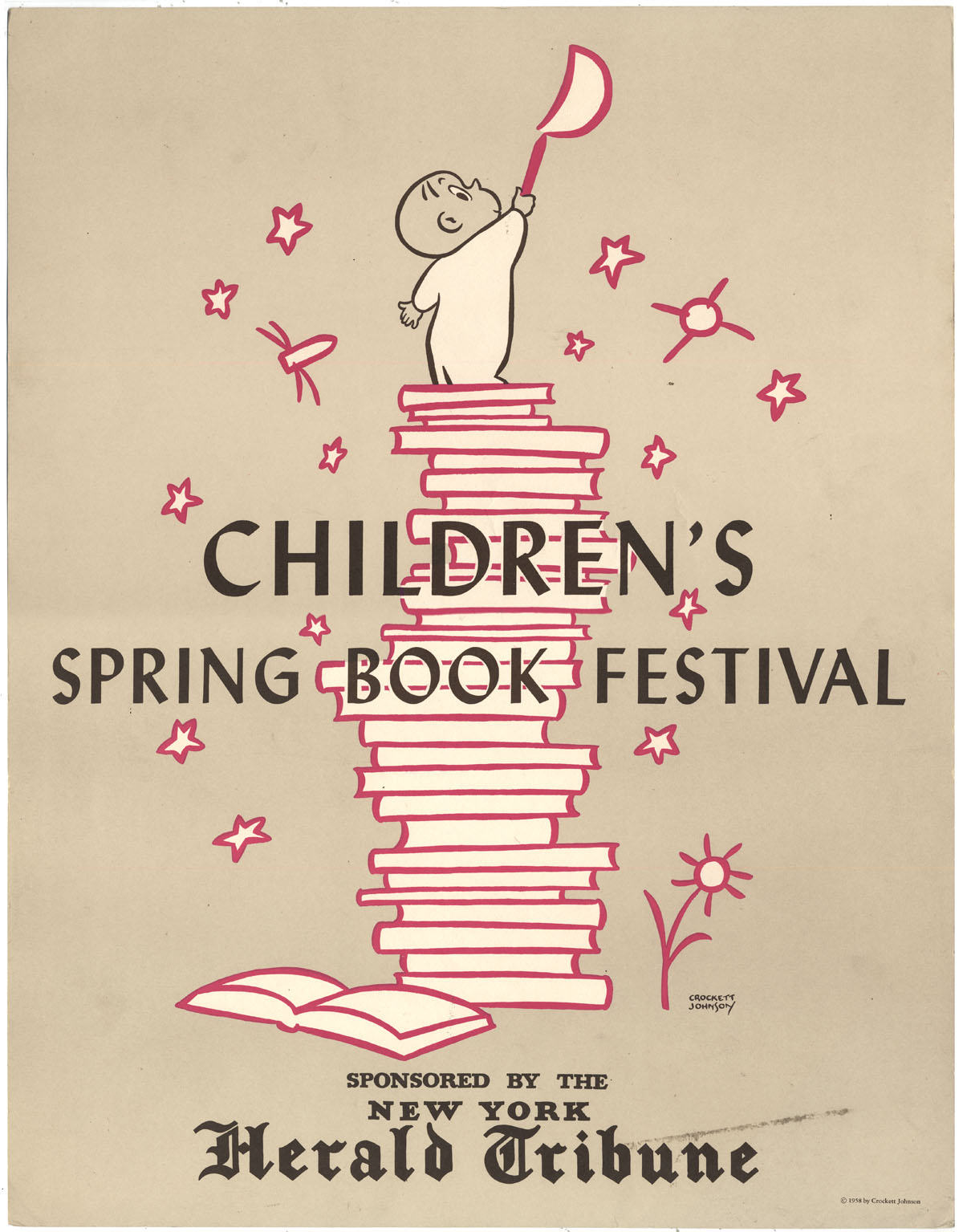
The first book written and illustrated by Maurice Sendak.  Introducing the reviews of Ruth Krauss’s I Want to Paint My Bathroom Blue (which he illustrated and which was published the same year), I had the following sentence: “Much praise went to Sendak, whose first picture book, Kenny’s Window (1956), won an honor award from the New York Herald Tribune Book festival that spring.”  That’s gone, and so is the need for this reference in the index.

Leask, Alexander,

A reference to an ancestor of David Johnson Leisk (Crockett Johnson).  I originally had a whole paragraph on this guy.  That got condensed to a passing reference here (David Sr. is Crockett Johnson’s father, and this scene takes place in the 19-teens):

At home, while the nieces played piano, David Sr. sang along, carrying the bass part on tunes like “Mother McCree” and “My Bonnie Lies Over the Ocean.”  The latter is a Scottish song allegedly composed by supporters of Charles Edward Stuart (“Bonnie Prince Charlie”) — the son of James Edward Stuart, whom Dave’s ancestor Alexander Leask supported two hundred years earlier

The first sentence remains in the book; the second sentence has been cut.  So, in this case, we’ve gone from a paragraph to a sentence fragment to… nothing!

A lot of family members have (wisely) been cut:

Leask, Arthur (CJ’s great-great grandfather),

Leask, Christina (CJ’s aunt),

Leask, John (CJ’s uncle),

Leask, Robert (CJ’s uncle),

Leask, Thomas (CJ’s uncle),

Leask, Thomas James (CJ’s great grandfather),

Leask, William (CJ’s distant ancestor),

Leisk, Ella (CJ’s cousin),

I was able to assemble quite a thorough genealogy of Crockett Johnson, but how interesting is this?  To me, very.  To others, not as much.  So, it’s gone.

Masses, The,

Art Young was a mainstay of The Masses, but also contributed to New Masses while Johnson was editor.  Young is still in the book, but the reference to his earlier career has left.

McCrea, Joel,

In a discussion of a 1948 Barnaby narrative, I’d invoked the great Preston Sturges film Sullivan’s Travels (1941, starring Joel McCrea) as a point of comparison.  The entire paragraph is gone, but a version of it will return in The Complete Barnaby, Vol. 4: 1948-1949.

Mencken, H. L.,

I’m completely fine with this cut.  Krauss studied violin at the Peabody Conservatory of Music — Mencken was a frequent visitor at the time.  Himself a pianist, he was also friends with Gustav Strube, Peabody teacher (and conductor of the newly established Baltimore Symphony).  And he knew some of Krauss’s teachers at Peabody, too.  This deserved to be cut because the connection to Krauss is far too tenuous: sure, she likely attended the same symphony concerts as Mencken, and may have been aware of his Peabody connections.  But these connections are not sufficient to keep Mr. Mencken in.

I Led 3 Lives (advert for TV program)Philbrick, Herbert,

I had a very brief reference to Mr. Philbrick (itself condensed from an even longer mention).  It appeared in the context of the FBI’s monitoring of Johnson:

As Herbert Philbrick notes in his memoir, I Led Three Lives (the basis for the Emmy-nominated TV series, 1953-1956), being a successful informant requires convincing the Communists of one’s loyalty: obvious visits from federal agents would give the game away.

Is it necessary?  No.  And so, it’s gone.

Psychoanalyst and the Artist, The,

Book by Daniel E. Schneider, Ruth Krauss’s psychoanalyst — the biography still includes a brief quotation from the book, but its title is now relegated to a citation.

Schwed, Peter,

Johnson was friends with Fred Schwed, Peter’s brother.  But Peter — a Simon & Schuster editor — appeared in the context of his fellow Simon & Schuster editor Jack Goodman.  Goodman & Fred Schwed remain in the book, but Peter’s gone.  Incidentally, Fred Schwed is author of the classic satirical look at Wall Street, Where Are the Customers’ Yachts? (1940, repub. 1955).

Searchinger, Marian,

Spouse of documentary filmmaker Gene Searchinger.  The Searchingers went on a vacation with Johnson and Krauss in the early 1950s, but that trip got cut.  Gene Searchinger is still in the book, though.  A number of his conversations with Johnson were quite illuminating.  I was saddened to discover, a few months ago, that Mr. Searchinger passed away in 2009.  I really enjoyed talking with him, and I think he would have enjoyed the biography.

Zigrosser, Carl,

In 1938, New Masses was planning an art supplement, thinking that such a feature might draw in more readers.  Johnson and contributing editor Herman Michelson went to the Weyhe Gallery to talk to Carl Zigrosser about this.  This entire paragraph has been cut.  Incidentally, someone looking for a project should consider publishing either all of or simply extracts from Zigrosser’s diaries.  I read them on microfilm in the Smithosnian’s Archives of American Art.  Meticulous, and fascinating.  Zigrosser knew everyone.

Zindel, Paul,

Ruth Krauss and Crockett Johnson went to parties thrown by Willard Maas and Marie Menken. So did Andy Warhol and Paul Zindel.  Warhol’s still in the book, but the copy-editor cut Zindel.  I let it stand, but now doubt that decision.


The changes that inspire the most mixed feelings are stylistic.  The copy-editor — who was also charged with editing the manuscript — made many helpful changes, which were valuable (and necessary) for reigning in my large manuscript.  Indeed, you can see many of the good changes in the list above, and in previous posts on this process.  In the copy-editing phase, I pushed back against some suggestions, and let others stand.  As noted above, the copy-edited manuscript arrived with a quick deadline when I lacked time to go through it with the degree of specificity I’d have preferred.  I did my best, but while reading the proofs I noticed some changes I wish I’d caught. I was able to correct some of them, but others had to remain.  With apologies to the copy-editor, these are some of the copy-editor’s changes that most rankled:

  1. Adding passive voice.  I suspect that this may from the copy-editor’s training in history, although I cannot say for certain.  I use passive only very rarely.  I restored most of my active voice, but sometimes let passive sentences stand.  In the proofs, I caught a number of instances in which traces of both sentences were there.  When I caught them, I crossed out the passive verb so that the text made sense.  I suspect, though, that I may have missed some.
  2. Making my sentences needlessly long.  I suspect that this, too, may derive from the copy-editor’s training in history — but I’m not sure.  My response may simply derive from the fact that I resist this trait common to an academic style. I dislike long, twisty academic sentences, and so I try to avoid them whenever I can.
  3. Making my paragraphs needlessly long.  I really want the book to have paragraphs of manageable length.
  4. Cramming all the dialogue together in a single paragraph instead of treating it as dialogue. Where possible, I’ve separated conversations out again.
  5. Cutting dialogue all together.  Dialogue helps create character.  Some of the conversations were clearly not neccessary.  But others,… I’m not so sure.  For example, I wish I’d retained more of Krauss’s last conversation with Sendak.

If I could have had a novelist (instead of an historian) as my copy-editor, that would have been ideal: I want this to read more like a novel, and less like a history. But, of course, I focus here on the changes that rankle because I forget the many (many!) beneficial changes instituted by the copy editor — who, let me repeat, made some very helpful suggestions.  I also focus on these things because I’ve been working on this book for over a dozen years, and (given that massive investment of time and energy) I want it to be the best that it can be. In sum, I focus on these things because I’m a perfectionist and thus have a hard time letting things go!

Crockett Johnson, "Fun at the Post Office" (from Ruth Krauss, How to Make an Earthquake)Anyway. Enough obsessing. It’s done. As I mentioned at the top, the marked-up page proofs and the index are on their way back to the publisher. And the biography will be out in the fall!  Even better, you won’t have to read yet another blog post in which I discuss writing the biography.  Probably.


Far, far too many posts on this blog relate to the writing of this biography.  Believe it or not, the list below does not even contain all such posts.  So, depending on your tolerance for tedium, you might proceed at your own risk here:

Posts tagged Crockett JohnsonRuth Krauss, or Biography may also be of interest.

Comments (2)

The Joy of Index

Crockett Johnson, "How to write a book," illus. from Ruth Krauss's How to Make an EarthquakeOK, “Joy” might be the wrong word — unless we modify that title to “The Anticipatory Joy of Finishing the Index” or “The Joy of Finding a Great Index.”  Creating an index can be a mind-numbing slog, and creating it while checking proofs (as I am doing right now) doesn’t make it any more fun.  But the index is also the most important part of any book.  It’s one reason that I tend to create my indices myself.  Sure, you can hire an indexer.*  But who knows your book better than you do?

Many people will enter Crockett Johnson and Ruth Krauss: How an Unlikely Couple Found Love, Dodged the FBI, and Transformed Children’s Literature (coming fall 2012) via the index. Sure, I like to flatter myself and imagine that people will read the book from cover to cover.  But many people won’t.  The index is there to guide them.

It’s also there to guide people who have read the book, and are trying to locate something they remember reading.  We’ve all done this: OK, I know the book mentions this, but where does it mention it?

So, my index is very detailed.  For the two central characters (Johnson and Krauss), I’ve even created sub-indices.  I’ve only indexed the manuscript up to page 202, but here’s what they look like right now:

Krauss, Ruth Ida:

aesthetics of, 28, 33, 148, 153, 155

athletics of, 12, 14, 25, 68, 154

anthropology and, 51-54, 58, 63-64, 66, 69, 71, 93-94

anti-racism of, 11, 52, 64, 66, 93-94, 102, 104, 120-121, 162, 182

artistic ability of, 29-31, 124

birth of, 9

celebrity of, 187-188

childhood of, 9-15, 25-27,

childlessness of, 97-98

childlike aspects retained by, 14

death of, 102

dogs owned by, 53, 191-192

education of, 12-15, 26-31

family background of, 9-10

fan mail received by,

finances of, 28, 31, 68, 72, 111, 116, 138-139, 166, 201

friendships of, 28

health of, 11, 13, 51, 143

jobs held by, 28, 31, 39

marriages of, 39-40, 58, 68

meets CJ, 54

as mentor, 7, 124, 179-180, 189, 202

music of, 14, 26-27

narcolepsy of, 58, 100

nicknames of, 25-26

phobias and anxieties of, 12, 99, 101, 159-160

physical appearance, 4, 54, 158

political beliefs of, 11, 52, 64, 69, 79, 88, 93-94, 102, 104, 111, 120-121, 199

pseudonyms used by, 39, 189, 200

psychoanalysis and, 159-160

rapport with children, 84, 97-98, 133, 140, 142, 148, 163

religious background of, 4, 10, 13, 42

residences of, 3, 9-10, 12-14, 28, 31, 38-40, 57, 59

and sex, 31, 158

sexism faced by, 15, 39, 58, 72, 104, 127, 181

as surrogate parent,

travels of, 40-42, 51-52, 95, 187, 202

Krauss, Ruth Ida, works of:

advertising, 111, 165, 193

alternate titles for, 80, 114, 122, 126, 144, 166, 180, 182, 189

anti-racist message in, 162

audience for, 66, 96, 142, 155, 162, 170, 181-183, 188, 194

awards and honors, 111

childhood influences on, 25, 121

children’s language in, 5-6, 26, 109, 117, 122, 126, 130-131, 142, 144, 148, 153-154, 188

creative process, 5-6, 13, 72, 82-85, 98-100, 103, 117, 122, 124, 126, 140, 144, 160, 169-171, 188

editor for, 115

fiction for adults, 39, 96

imagination in, 82, 89, 126, 131

as influence, 6, 165-166, 193

innovation in, 116-117, 122-123, 126-128, 137, 140, 142-143, 153-154, 190

moral themes in, 66-67, 69-70, 93-94, 111-112, 121, 126, 130, 137, 162, 199

plays,

poetry, 38-40, 110, 154, 170, 183, 189-191, 195, 197, 199-201

promotional efforts for, 72

revisions of, 82-85, 95-96

sales of, 80, 127, 130, 138, 166, 170

on stage,

on television,

in translation and foreign editions, 120, 176

unpublished, 69, 71, 90, 93-96, 99, 116, 162-163, 169-170

see also specific works.

Leisk, David Johnson (aka Crockett Johnson):

aesthetics of, 7, 17, 24, 33, 44, 49, 68, 72-73, 149, 177-178, 185-187

athletics of, 24, 33, 46

anti-racism of, 47, 54, 79, 88, 104, 119

artistic ability of, 19

birth of, 16

carpentry of, 102, 143

celebrity of, 72, 96, 187-188

childhood of, 16-24, 189

childlessness of, 98

death of,

dogs owned by, 17, 35, 53, 102-103, 156, 191-192

education of, 17, 23-24

family background of, 16-21

fan mail received by, 71, 129

finances of, 32, 34, 44, 72, 81, 92, 147, 157

health of, 59

humor of, 19, 103, 135, 158, 177

jobs held by, 32-34, 44

manner of speaking, 19

marriages of, 35, 50, 58, 68

and mathematics, 23, 73-75

meets RK, 54

as mentor, 7, 124, 158, 180, 202

nocturnal habits of, 67-68, 73, 101-102, 155

origins of name, 16, 19

physical appearance, 4, 33, 54, 57, 149, 158, 179

political beliefs of, 18, 34-37, 43-44, 46-50, 54-56, 58-59, 63, 66, 76-77, 79, 86-88, 95, 103, 106, 108-109, 113, 119, 161, 194, 197

pseudonyms used by, 19, 21, 23, 37

religious background of, 4, 19

residences of, 3, 16-18, 20, 32-33, 35, 38, 57, 59

and sailing, 17, 68, 80, 155, 176, 179

and smoking, 24, 67, 71

as surrogate parent, 143-144

travels of, 49, 95, 187, 202

and typography, 24, 32-33, 73, 88, 176

Leisk, David Johnson (aka Crockett Johnson), works of:

advertising, 32-33, 56, 71, 134-135, 178, 193, 197

alternate titles for, 180-181, 199

animation, 79

audience for, 62-65, 71, 74, 77-78, 180, 185-186, 189

awards and honors, 178

cartoons, 193

comics, 18-22, 35-37, 43, 46-49, 53-65, 67-68, 70-74, 77, 79-82, 86-87, 90-92, 103, 106, 108-109, 113-114, 128-129, 135-137

childhood influences on, 19, 149, 157, 189

creative process, 19, 60, 67-68, 82, 98, 103, 140, 169, 173, 189

editor for, 33-34, 44-45, 49-50

editor for RK’s work, 78, 88, 124

imagination in, 5, 21, 23-24, 46, 67, 114, 148-152, 169, 171, 184, 186

illustrations for others’ work, 47, 66, 72, 78, 88, 139-142, 158

as influence, 5, 7

innovation in, 73, 140, 142-143, 145, 160-162

inventions, 124, 129, 148-149, 155, 158, 180

mathematical theorems,

moral themes in, 35-37, 43, 53-56, 58-59, 66, 75-76, 79, 161, 175-176

paintings,

promotional efforts for, 71

revisions of, 145, 154-155

on radio, 81-82, 105

sales of, 5, 6, 130, 149, 164-165, 170, 180-181, 200

on stage, 79-81, 91-93, 95-96, 104-105

on television, 148

in translation and foreign editions, 156, 176

unpublished, 91, 140-141

see also specific works.

In addition to indexing the book all the way to the end, this index may yet change in other ways — some categories may get removed, and others may be added. But the above entries are one example of how I hope to make the book useful to others.  And the level of detail represented serve as an example of why authors — if they have the stamina — should create their own indices.


* For the record, Lissa Paul and I did hire an indexer for Keywords for Children’s Literature (2011). Jon Eben Field did a fine job.  But I did my own indices for Dr. Seuss: American Icon (2004) and The Avant-Garde and American Postmodernity: Small Incisive Shocks (2002).


An extraordinary number of posts on this blog relate to the writing of this biography.  I can’t imagine that all (or even most) of them will be of interest, but, for the heartier among you, here are most of them:

Posts tagged Crockett Johnson, Ruth Krauss, or Biography may also be of interest.

Comments (2)