Archive for Ruth Krauss

A Title Is to Read

Harold, the Purple Crayon, and Barnes & Noble

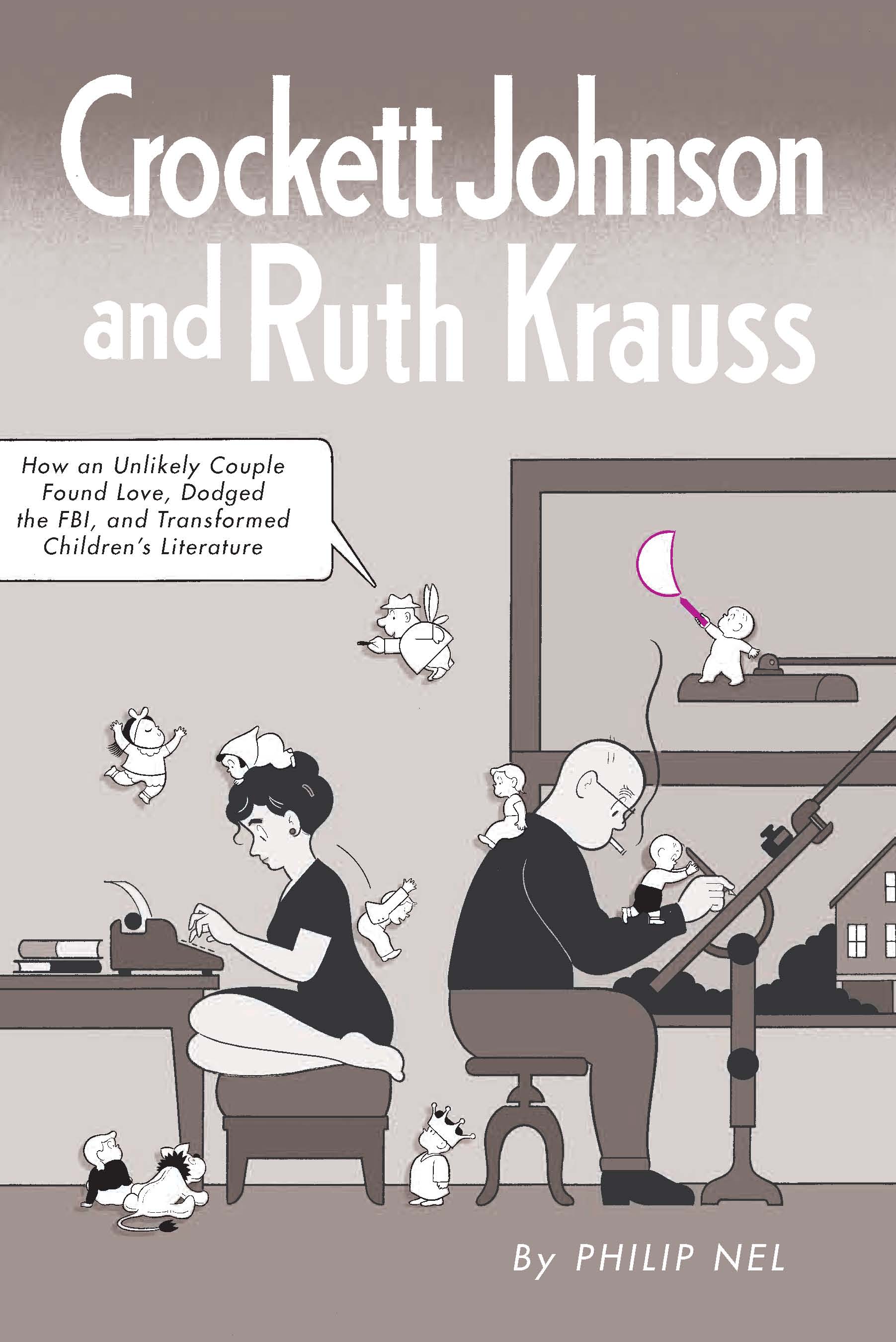
In honor of what would have been Crockett Johnson‘s 105th birthday, I can exclusively reveal both the title of the book and the name of the winner of my Invent Title for My Book, win a Signed Copy of the Book contest.  Yesterday (Wednesday), my editor emailed the title that he and his colleagues liked best:

Crockett Johnson and Ruth Krauss: How an Unlikely Couple Found Love, Dodged the FBI, and Transformed Children’s Literature

So… that’ll be the title.  How did we arrive at this title?  Back in late August, Walter (my editor) wrote to me: “I talked to my colleagues about it, and most of them find the main title problematic. It’s lengthy and isn’t evocative to anyone who isn’t already familiar with Johnson or Krauss, and so doesn’t draw the lay reader into the text. What other possibilities are there?” I posed the question to all of you, and thanks to your generous suggestions, we had a lot to choose from.

Since he wanted something that might be evocative to someone not already familiar with Johnson and Krauss, I was most struck by these suggestions, which came from my colleague Dan Hoyt, via email:

The Lives of Crockett Johnson and Ruth Krauss: How One Couple Found Lefty Love, Dodged the FBI, and Re-Invented Children’s literature

The Lives of Crockett Johnson and Ruth Krauss: How One Couple Gave Birth to Harold, A Hole to Dig, a New Strain of Children’s Literature, and even a Purple Crayon

I liked the narrative impulse — each title tells a story that might pique your curiosity even if you’re not already familiar with the work of Johnson or Krauss.  So, inspired by those suggestions, I sent Walter the following (with the top one as my top choice):

Crockett Johnson and Ruth Krauss: How an Unlikely Couple Found Love, Dodged the FBI, and Changed the Future of Children’s Literature.

Crockett Johnson and Ruth Krauss: How an Unlikely Couple Found Love, Dodged the FBI, and Reinvented the Modern Picture Book.

Crockett Johnson and Ruth Krauss: How an Unlikely Couple Found Love, Dodged the FBI, and Re-imagined Children’s Literature.

Crockett Johnson and Ruth Krauss: How an Unlikely Couple Found Love, Dodged the FBI, and Transformed Children’s Literature.

As you can see, he and his colleagues chose the final one above.  As you might also notice, these are all rather long — and he was worried about length.  So, I also picked a few “runners-up.”

The first one comes from cartoonist Paul Karasik (via the blog):

…And The Purple Crayon: Crockett Johnson, Ruth Krauss, and the Reinvention of the Modern Picture Book

You’ll note that I borrowed “the Modern Picture Book” for one of the rejected titles above.  I liked this one.  I liked the suggestiveness of the ellipses.  Also, I liked the fact that beginning a title with ellipses is rather unusual.  Off the top of my head, I can think only of …And Ladies of the Club (though I’m sure there are others).

The second runner-up comes from Dean Jacoby (via Facebook):

Two Crayons, One Art: The Children’s Literature and Marriage of Crockett and Krauss

I liked what comes before the colon, but I’d have changed what comes after the colon.  Maybe borrow from Karasik‘s suggestion for the post-colon part.  For the record, a version of this was also nearly the winner.  Before his colleagues persuaded him to go for what became the winning title, Walter was leaning towards “Two Crayons, One Art: Crockett Johnson, Ruth Krauss, and the Reinvention of Children’s Literature” or “Two Crayons, One Art: A Biography of Crockett Johnson and Ruth Krauss.”

Since his suggestion came closet to the title that was ultimately chosen, our contest winner is Dan Hoyt.  Congratulations, Dan!  A profound THANK YOU to everyone who participated.  I really enjoyed reading your suggestions.  You helped me arrive at a solution to a problem that has remain unsolved for a decade — what to call the book?!?

I’ll conclude with a hearty happy birthday to Crockett Johnson!  This time next year, we can celebrate by reading his and Ruth Krauss’s biography… because it’ll be out!

Comments (2)

10 Tips for Writing a Biography

Crockett Johnson, "How to write a book," illus. from Ruth Krauss's How to Make an EarthquakeAs we await a verdict from my editor on the official title of the book formerly known as The Purple Crayon and a Hole to Dig: The Lives of Crockett Johnson and Ruth Krauss (forthcoming 2012), I thought I’d share a few tips with any aspiring biographers out there. Since I’ve only written one biography (albeit a double biography), you should of course feel free to take this advice with a grain of salt.

1. Seek counsel from experts.  Biographers Leonard Marcus (Margaret Wise Brown), Michael Patrick Hearn (L. Frank Baum, forthcoming), Judith Morgan (Dr. Seuss) all kindly answered my questions.  For instance, Michael introduced me to editor Susan Hirschman, who knew (and edited) both Johnson and Krauss.  In addition to putting me in touch with HarperCollins’ archivist, Leonard also told me that scanning city directories (the predecessor to phone books) can help you track down where people lived.  I’ve spent an unusual amount of time at a microfilm reader, perusing city directories for Manhattan, Queens, and Baltimore.

2. Ask lots of questions.  You’ll need to learn much about subjects in which you’re not an expert. So, for instance, Mathematics Professor Emeritus J. B. Stroud explained the math behind the paintings to which Johnson devoted his final decade.  In addition to venturing beyond your areas of expertise, you’ll also learn of research methods you didn’t know existed. For example, my former neighbor Jerry Wigglesworth (a lawyer) told me that any probated will would be on file in probate court.  Acting on his advice, I obtained copies of Johnson’s and Krauss’s wills from the probate court in Westport, Connecticut.

3. Pick a subject who had a brief but interesting life.  During the dozen years I worked on my bio., I’ve often thought: “ah, how wise of Leonard Marcus to write about Margaret Wise Brown.  She only lived to be 42!”  In contrast, Crockett Johnson lived to be 68.  Ruth Krauss lived to be 91.  That’s a lot of years to cover!  Of course, I’m partially kidding about the age of your subject (and I know that Brown’s early death had nothing to do with Leonard’s decision to write her biography).  It’s most important that your subject be interesting to you: you’ll likely be spending a decade of your life getting to know him or her.  The length of a person’s life is less important, though it will affect how long it takes you to complete the book.

4. Are there any autobiographical records? Choosing someone who wrote some autobiographical narrative of her or his own will make your life a lot easier — even if the account proves only partially accurate, you would at least have something to go on.  Crockett Johnson lacked any autobiographical impulse; apart from occasional remarks in interviews (of which there are very few), he left no first-person accounts of his life.  Ruth, on the other hand, did write about herself.  She never wrote a full-length autobiography, but left a number of autobiographical fragments.  For this reason, it’s much easier to access a sense of her inner life.

5. Don’t delay! Start today! If you are serious about writing a biography, stop reading this post and start working on it right now.  I’m not telling you this because the process is going to take about ten years.  I’m telling you this because people are going to die.  Of course, if you’re writing about someone who died 100 or more years ago, the likelihood of finding living witnesses is rather slim. But, if you’re writing about someone born more recently, then get started!  I was very fortunate to talk with Mischa Richter (New Yorker cartoonist and good friend of Johnson), A. B. Magil (one of New Masses’ editors in the 1930s, as was Johnson), Syd Hoff (New Yorker cartoonist, children’s author, and New Masses cartoonist in the 1930s), Mary Elting Folsom (children’s author, member of Book and Magazine Union, also knew Johnson in the ’30s), Else Frank (Johnson’s sister), and many other folks who have since passed on.

But I narrowly missed talking with Kenneth Koch (whose poetry class Krauss took) and Hannah Baker (PM’s comics editor, who worked with Johnson on Barnaby).  Immediately after receiving a reply from Ms. Baker, I tried phoning her — she’d invited me to call, but included no number.  My attempts failed.  I immediately wrote again. A month later, a kind reply from her niece informed me that she’d passed on.  My letter to Mr. Koch arrived the day he died.  Shortly thereafter, I had such a vivid dream that Mr. Koch was talking with me (from beyond the grave!) that I got out of bed, ready to take notes on our interview… and then realized, ahhh, right, I was dreaming.  And I went back to bed.

6. Organize! In the dozen years I worked on this, I interviewed 84 people, investigated over three dozen archives and special collections, read everything written by or about Crockett Johnson and Ruth Krauss, and consulted additional hundreds of articles and books.  I looked at birth certificates, marriage certificates, census data, property deeds, wills, century-old insurance company maps, FBI files, photographs, and city directories for Baltimore, New York, Darien, Norwalk, and Westport, Connecticut.  That’s a lot of information to keep straight.  Two parallel systems evolved.  (1) Lots of file folders — both on the computer and in the physical world.  In the physical world, for instance, a separate folder went to: each interviewee or otherwise important person, reviews (this was actually two folders), biographical profiles and interviews, draft materials related to individual books, uncollected works (many file folders of Barnaby strips), census data, wills, and many more.  I’ve 6 file drawers full of materials.  And another three shelves full of printed work (books, magazines, etc).  Oh, and a box full of cassette tapes (containing interviews).  (2) A document I called “chronology.”  It has three columns: Year, Life, Published Work.  Here, for instance, is an unusually brief entry (for the year 1937):

Year Life Published Work
1937 RK not in Columbia University in the City of New York; Directory Number for the Sessions 1937-1938.  Including Registration to November 1, 1937.  Ruth Benedict is (p. 19).RK has adult measles, discovers Lionel’s infidelity, leaves Lionel.4 May: CJ at “New Masses party at Muriel Draper’s,” where he sees Donald Ogden Stewart make “a swell little talk on our [New Masses'] behalf.” (Dave Johnson to Rockwell K., 11 May 1937 Rockwell Kent Papers, Smithsonian, Reel 5217, Frame 0971). New Masses.  May 18: CJ is one of Associate Editors. 14 Dec.: CJ is one of Editors.  9 Nov. (p. 2): CJ identified as Art Editor.“Dutch Uncle of the Arts” (9 Nov. 1937): CJ review of The Arts by Willem Hendrik van Loon (Simon & Schuster).

I didn’t put everything in each year, but what I did put in there helped me locate events in time, gave me a sense of sequence.  Some items are approximately located — the manuscript reflects the fact that the break-up of Krauss’s first marriage likely occurred in 1938, but I neglected to correct that on the chronology document.

7. Leave No Stone Unturned…  As you interview more people and visit more archives, you’ll build up a vast network of contacts, and a rich nexus of information. Pursue those leads! I drove to Denmark, Maine’s Camp Walden, an all-girls camp where Ruth Krauss spent two formative summers: there, I found her first published writing in the 1919 issue of Splash, the camp yearbook. I went to Staten Island to meet 67-year-old Thomas Hamilton, who as 7-year-old Tommy Hamilton starred as Barnaby in the 1946 stage production of Crockett Johnson’s comic strip. He had clippings and the entire unpublished script for the play, all of which he let me copy.

8. … Except for the Stones That You Leave Alone.  At a certain point, you have to stop researching so that you can finish the book.  The research can be endless unless you make a conscious decision to curtail it.  One way to help contain the research process is to start writing while researching.  Doing so will help you get a sense of the shape the book will ultimately take.  As you start to glimpse the contours of the final volume, you’ll come to realize that — although interesting — there are some leads that can be put aside.

9. Learn to Write Narrative.  Read a lot of biographies.  Read “how to” books like Nigel Hamilton’s How to Do Biography: A Primer.  Talk to creative writers and, if you can, take a creative writing course.  (I was unable to take a class, but I did consult creative writers.)  I have no training in writing narrative or character … or creating any of the features of literary fiction.  I did my best to write a book that was both scholarly and told a good story, but this was very challenging.  Reading other non-fiction (especially biographies) and talking to my creative-writing colleagues helped me figure out how to do this.

10. Leap Before You Look. Finally, it may be helpful to forget much of what I’ve written here, and approach your task with a certain degree of ignorance. If you begin with a full awareness of what you are getting into, you might not start in the first place. Fortunately, if you are serious about writing a biography, nothing I’ve said here will deter you — because (1) difficulty is but a welcome challenge to the determined scholar, and (2) only by writing a biography can you truly appreciate how enormous the project is.  Even after reading this post, aspiring biographers should still be sufficiently unaware and thus able to approach their task with optimism.

Writing a biography is a painstaking, challenging, often plodding process.  As the narrator of Anthony Trollope’s Barchester Towers laments, “It is to be regretted that no mental method of daguerreotype or photography has yet been discovered, by which the characters of men can be reduced to writing and put into grammatical language with an erring precision of truthful description.” However, as he also notes, “such mechanical descriptive skill” would yield only a “dull, dead, unfeeling, inauspicious likeness.” In other words, difficulty is a necessary part of rendering a life: “There is no royal road to learning; no short cut to the acquirement of any valuable art. […] There is no way of writing well and also of writing easily.”1  But, to end on an upbeat note, while the biography of Crockett Johnson and Ruth Krauss has certainly been the most difficult book I’ve written, it has also been the most rewarding.  It’s pushed me, forced me to develop intellectual muscles I didn’t know existed, compelled me to improve my writing.  It’s the best book I’ve written, and may well be the best one I ever will write.


1. Anthony Trollope, Barchester Towers, Vol. 1 (Leipzig: Bernhard Tauchnitz, 1859), p. 232-233.

Comments (1)

“This is the kind of book I like”: Crockett Johnson, famous cartoonist & bookseller

Although I wouldn’t argue that once upon a time “illustrators were celebrities,” it’s definitely true that they were once more celebrated than they are now.  Predictably, one illustrator who comes to my mind is Crockett Johnson (my biography of Johnson and his wife Ruth Krauss will be published in the fall of 2012).  In 1947, Johnson’s casual remark during a visit to the offices of William Sloane Associates struck Sloane — who founded the publishing company the previous year, after leaving Henry Holt (where he had been Vice President) — as interesting enough to use in an advertisement.  (Click on the image to enlarge.)

William Sloane Associates: advertisement, New York Times, 26 Oct. 1947

Ward Moore, Greener Than You Think (1947)The book to which Johnson refers is Ward Moore‘s Greener Than You Think (1947), a science-fiction satire about a mutant strain of crabgrass that ultimately takes over the world.  Even by the standards of science fiction, it’s an unusual novel.

I know this because, when I found this advertisement (thanks to ProQuest’s Historical New York Times database), I sought a copy of Moore’s novel and read it. I wondered: Why would Crockett Johnson be drawn to such a curious book?  Or, indeed, was he drawn to it at all?  One should not take advertisements at face value, and, in any case, Johnson had a wry sense of humor.  Perhaps this off-hand quip was nothing more than just that.  Or, it may have simply been one of the many things in which he was interested.  Johnson’s curiosity covered a wide array of subjects; in his intellectual interests and abilities, he was very much a renaissance man.

Turns out that, in its claim of Johnson’s interest in the book, the advertisement appears to have been telling the truth.  In some 1947 notes written in an attempt to overcome writer’s block, Ruth Krauss mentions her husband’s interest in this book — which, she suspects, derives from his lifelong aversion to crab grass.  Though Johnson later gave up on gardening, in the 1940s he was an avid gardner.

I ultimately did include a few sentences on this book in the biography.  I did so because it illuminated an aspect of Johnson’s character, spoke to his wide-ranging interests, and located him in the offices of a publisher during a rough patch, professionally.  I speculated that he might have been in the offices of the former VP of Holt (which published his two Barnaby books) in order to discuss the planned but never published third Barnaby book.  It’s also mentioned in the bio. because it tells us that, in 1947, Johnson carried enough cultural caché to be quoted in a New York Times advertisement.

This little episode is but one of many reasons why this biography has taken so long to write. (I began working on it in the waning days of the Clinton Administration.) It’s also why, although I’m tempted to undertake another biography, actually doing so seems less likely.  Undertaking another one is likely another decade’s worth of commitment.

Posts tagged Crockett Johnson or Ruth Krauss or Biography will all send you to something connected to the biography.  If you’d like a more directed reading experience, here’s an incomplete list of other posts:

Leave a Comment

Crockett Johnson and Ruth Krauss Biography. Appendix D: End Your Silence

The final appendix omitted from my forthcoming biography of Crockett Johnson and Ruth Krauss (2012) also chronicles their early opposition to the war in Vietnam and — unusually — has Ruth’s name on it as well.  Why did she sign this one?  I think because she particularly abhorred violence.  One of her friends told me that even cartoon violence upset her.  As the previously posted Vietnam petition did, this one includes friends of Johnson and Krauss: Ad Reinhardt, Kay Boyle, Remy Charlip, Herman and Nina Schneider.

Appendix D

End Your Silence

[April 1965]

We are grieved by American policies in Vietnam.  We are opposed to American policies in Vietnam.  We will not remain silent before the world.  We call on those who wish to speak in a crucial and tragic moment in our history, to demand an immediate turning of the American policy in Vietnam to the methods of peace.

A Protest of Artists and Writers

Lionel Abel

Samuel M Adler

George Abbe

William Alfred

Theodore Amussen

Jack Anderson

Howard Ant

Emil Antonucci

Elise Asher

George Anthony

Rudolf Arnheim

David Antin

Hannah Arendt

Dore Ashton

Eliot Asinof

Edward Auert

Rudolf Baranik

Leonard Baskin

Ed Baynard

Jerome Beatty Jr

Harold Becker

Sylvia Berkman

William Berkson

Carol Berge

Wendell Berry

Elizabeth C Beston

Morris Bishop

Paul Blackburn

Sam Blum

Louise Bogan

Philip Bonosky

Philip Booth

David Boroff

Kay Boyle

Sam Bradley

George Brecht

Harvey Breit

Germaine Bree

Bessie Breuer

James Brooks

Michael E Brown

Robert Brustein

Stanley Buetens

J R de la Torre Bueno

Kenneth Burke

Margaret F Cabell

John Cage

Hortense Calisher

Victor Candell

Hayden Carruth

Emile Capouya

Giorgio Cavallon

Remy Charlip

Alan Churchill

Robert M Chute

Marvin Cherney

Robert Clairborne

Elizabeth Coatsworth

Robert M Coates

Arthur A Cohen

William Cole

J L Collier

Grandin Conover

Jane Cooper

Evan Connell

Philip Corner

M Jean Craig

Robert Creeley

Robert M Cronbach

Robert Dash

Wesley Day

June Oppen Degnan

Dorothy Denner

Elaine de Kooning

Guy Daniels

Babette Deutsch

Alexander Dobkin

Nola L Dolberg

Douglas F Dowd

David Dempsey

Robert Duncan

Barrows Dunham

Joe Early

Galen Eberl

George Economou

Richard Ellman

George P Elliott

Kenward Elmslie

Robert Engler

Sylvette Engel

Barbara Epstein

Jason Epstein

Seymour Epstein

Clayton Eshleman

Eleanor Estes

Gertrude Ezorsky

Howard Fast

Morton Feldman

Lawrence Ferlinghetti

Leslie Fiedler

Edward Field

Donald Finkel

Joseph Fiore

Richard B Fisher

Dudley Fits

Adrienne Foulke

Kathleen Fraser

Ronald Freelander

Ann Freilich

Lloyd Frankenberg

Anne Fremantle

Jean Forest

Sideo Fromboluti

Howard Fussiner

Jean Garrigue

Maxwell Geismar

Jack Gelber

Hugo Gellert

Hans H Gerth

William Gibson

Rochelle Gierson

Jean Gleason

Ralph J Gleason

Herbert Gold

Mimi Goldberg

Mitchell Goodman

Jonathan Greene

Jean Gould

Harold Greenfield

Seymour Gresser

Antonini Gronowicz

Chaim Gross

Rene Gross

Barbara Guest

Albert J Guerard

Robert Gwathmey

Yvonne Hagen

Donald Hall

James Baker Hall

Margaret Halsey

Sid Hammer

David Hare

James Harrison

Burt Hansen

Curtis Harnack

Robert Hatch

H R Hays

Robert C Hawley

Robert Hazel

Shirley Hazzard

MacDonald Harris

Al Held

Lillian Hellman

Joseph Heller

Nat Hentoff

John Hersey

Thomas B Hess

John H Hicks

Dick Higgins

Joseph Hirsch

George Hitchcock

Daniel Hoffman

Sandra Hochman

Paula Hocks

Margo Hoff

Henry Beetle Hough

Florence Howe

Irving Howe

Helen Howe

Leo Hurwitz

David Ignatow

Robert Indiana

Emmett Jarett

Paul Jacobs Jess

Eddre Johnson

Crockett Johnson

Matthew Josephson

Don Judd

Mervin Jules

H Peter Kahn

Joseph Kaplan

Allen Katzman

Leandro Katz

Stanley Kauffman

Alfred Kazin

William Melvin Kelley

Calvin Kentfield

Basil King

William D King

Katherine T Kinkead

Galway Kinnell

Freda Kirchway

George Kirstein

Erik Kiviat

Neil Kleinmann

Hans Konigsberger

Karl Knaths

Joseph Konzal

Albert Kresch

Seymour Kirm

Ruth Krauss

Louise Kruger

Katharine Kuh

Lee Krasner

Stanley Kunitz

Tuli Kupferberg

Vera R Lachman

Kenneth Lamott

John Lange

Jeremy Larner

Alexander Lattimore

Richmond Lattimore

Joe Lasker

Sidney Laufman

James Laughlin

Don La Viere Turner

Jacob Leed

Denise Levertov

Harry Levin

Jack Levine

Leonard C Lewen

Si Lewen

Oscar Lewis

Roy Lichtenstein

Betty Jean Lifton

Linda Lindberg

Ron Loewinsohn

Ephraim London

Robert Lowell

Walter Lowenfels

Lois Lowenstein

Robert M MacGregor

Iris Lezak MacLow

Jackson MacLow

Bernard Malamud

Leo Manso

Jack Marshall

David Mandell

Leonore G Marshall

Agnes Martin

David McReynolds

Carey McWilliams

Amy Mendelson

Eve Merriam

W S Merwin

Sidney Meyers

Robert Mezey

Arthur Miller

Edwin H Miller

Warren Miller

Jessica Mitford

Harry T Moore

Frederick Morgan

Ira Morris

Frederick Morton

Martin S Moskof

Stanley Moss

Robert Motherwell

Howard H Myer

Daniel Nagrin

Howard Nemerov

Alice Neel

Mary Perot Nichols

Robert Nichols

Iris Noble

Isamu Noguchi

James L Nusser

Ned O’Gorman

Georgia O’Keefe

Tilly [sic] Olsen

George Oppen

Mary Oppen

Joel Oppenheimer

Peter Orlovsky

Robert Osborn

Barbara Overmyer

Rochelle Owens

Alfredo De Palchi

Raymond Parker

Betty Parsons

Felix Pasilis

David Pascal

Merle Peek

Geri Pine

Paul Prensky

James Purdy

Simon Perchik

Henri Percikow

Prudencio De Pereda

Virgilia Peterson

George Plimpton

James Tenney

Anthony Toney

Edna Amadon Toney

Tony Towle

Paul Ellsworth Triem

Eve Triem

Niccolo Tucci

Marvin Tucker

John R Tunis

Jules Rabin

Philip Rahv

Henry Rago

Robert E Rambusch

Margaret Randal

F D Reeve

Anton Refregier

Ad Reinhardt

Philip Reisman

Kenneth Rexroth

Dan Rice

Adrienne Rich

Carol Ritter

Henry Robbins

Ralph Robin

M G Rogers

Meyers Rohowsky

Ned Rorem

W K Rose

Barney Rosset

Henry Roth

Philip Roth

Jerome Rothenberg

Mark Rothko

Rose Rosberg

Muriel Rukeyser

Arthur Sainer

Joop Sanders

Donald Schenker

Herman Schneider

Steven J Schneider

Nina Schneider

Carolee Schneeman

Armand Schwerner

Richard Seaver

Thalia Selz

Peter Selz

Anne Sexton

Bernard Seeman

Ben Shahn

Wilfred Sheed

Herman Shumlin

Maurice Sievan

Ernest J Simmons

Joel Sloman

Michael Smith

Joseph Solman

Jay Socin

Theodore Solotaroff

Susan Sontag

Virginia Sorenson

Gilbert Sorrentino

Terry Southern

Moses Soyer

Raphael Soyer

A B Spellman

Nora Speyer

Jean Stafford

George Starbuck

Francis Steegmuller

Frances Steloff

Stan Steiner

Emma G Sterne

Brita Stendahl

Ruth Stephan

Daniel Stern

May Stevens

Donald Stewart

Harold Strauss

George Sugarman

William Styron

Elizabeth Sutherland

Harvey Swados

Wylie Sypher

Greta Sultan

Mark Di Suvero

Louis Untermeyer

Constance Urdang

Stan Vanderbeek

Robert Vas Dias

Tony Vevers

Mariusa Ver Brugghe

Esteban Vicente

Elizabeth Gray Vining

Amos Vogel

Ivan Von Auw

Ira Wallach

Theodore Weiss

Nat Werner

Mildred Weston

Allen B Wheelis

Morton White

Dan Wickenden

Theodore Wilentz

Mrs Wm Carlos Williams

Edmund Wilson

Mitchell Wilson

Sol Wilson

Clara Winston

Richard Winston

Israel G Young

Marguerite Young

Jack Youngerman

Adja Yunkers

Louis Zukofsky

Many other signatures were received too late to be included

This statement was formulated three weeks before the President annoucned that he was willing to begin “unconditional discussions” with “the foe.”  Will his speech be followed by action? — peaceful, responsible action, NOT the further use of force?  The American people have begun, in letters to Washington and in the statements published by other concerned groups, to voice their horror at a policy of violence.  The President has replied to this expression of public opinion.  Let us not now relax our insistence on the immediate cessation of bombings in North Vietnam.  Let us support that part of Mr Johnson’s speech which seems to offer hope of negotiations, and at the same time let us persist energetically in expressing our opposition to any but peaceful policies.  WRITE TO THE PRESIDENT.

Co-secretaries: Denise Levertov : Mitchell Goodman : WRITERS AND ARTISTS PROTEST Post Office Box 1356 Church St. Station New York NY 10008.

Source: “END YOUR SILENCE,” advertisment, New York Times, 18 Apr. 1965, p. E5.

"End Your Silence," advertisement, New York Times, 18 April 1965

Posts tagged Crockett Johnson or Ruth Krauss or Biography will all likely lead you to something connected to the biography.  Trust me.  If you don’t trust me (and why would you?), here’s an incomplete list of other posts:

Leave a Comment

Crockett Johnson and Ruth Krauss Biography. Appendix C: Assembly of Men and Women in the Arts Concerned with Vietnam

A month or so back, I posted the first and second omitted appendices from my forthcoming biography of Crockett Johnson and Ruth Krauss (2012).  At the risk of trying your patience, here is the third.

Its importance is Johnson and Krauss’s early opposition to the war in Vietnam.  Krauss’s name is not on this petition, but she’s on another one from 1965.  (This fact is especially notable because she was less likely to sign petitions than he was.)  Below, you’ll see other like-minded people, some of whom — Kay Boyle, Ad Reinhardt, Antonio Frasconi — were friends of Johnson and Krauss.

Appendix C

Assembly of Men and Women in the Arts, Concerned with Vietnam

723 ½ North La Cienega Boulevard – Room 203   657-2854

National Initiating Sponsors (Incomplete List)

[c. December 1964/January 1965]

Harold Altman, painter, Pa.

Oliver Andrews, sculptor, So. Calif.

Saul Bass, graphic artist, designer, So. Calif.

Maurice Becker, painter, cartoonist, NY

Heschel Bernardi, actor, NYC

Neil Blaine, painter, NYC

Kay Boyle, author, NYC

Ray Bradbury, author, So. Calif.

Joan Brown, painter, So. Calif.

Coleen Browning, painter, NYC

Benny Carter, composer, concert artist, So. Calif.

John Collier, author, NYC

Lucille Corcos, painter, NYC

Robert Dash, painter, NYC

Richard Diebenkorn, painter, So. Calif.

Leonard Edmondson, painter, So. Calif.

Lawrence Ferlinghetti, writer, poet, No. Calif.

Mrs. Lion Feuchtwanger, So. Calif

Tully Filmus, painter, NY

Antonio Frasconi, graphic artist, Conn.

Gerald Fried, composer, So. Calif.

Sonia Gechtoff, painter, NYC

Allen Ginsberg, poet, NYC

Ernest Gold, composer, conductor, So. Calif.

Herbert Gold, author, No. Calif.

Les Goldman, producer, So. Calif.

Norm Gollin, graphic artist, So. Calif.

Sy Gomberg, film writer, So. Calif.

Balcomb Greene, painter, NYC

Stephen Greene, painter, NY

Robert Gwathmey, painter, NYC

E. Y. Harburg, writer, lyricist, NYC

Nat Hentoff, author, NYC

Crockett Johnson, artist, writer, Conn.

Millard Kaufman, writer, So. Calif.

Robert Kennard, A.I.A., architect, So. Calif.

Rockwell Kent, painter, graphic artist, NY

Gyorgy Kepes, painter, professor of visual deisgn, Mass.

Adolph Konrad, painter, NYC

Chaim Koppelman, graphic artist, NYC

Max Kozloff, critic, art editor, The Nation, NYC

Phil Leider, editor, ArtForum magazine, So. Calif.

Jack Levine, painter, NYC

Dwight MacDonald, journalist, NYC

Charles Mattox, sculptor, So. Calif.

Arnold Mesches, painter, So. Calif.

Robert P. Meyerhof, A.I.A., architect, So. Calif.

Jessica Mitford, author, No. Calif.

Lewis Mumford, writer, critic, Mass.

Tillie Olsen, author, No. Calif.

Gifford Phillips, associate publisher, The Nation, So. Calif.

Richard M. Powell, tv and film writer, So. Calif.

David Raskin, composer, conductor, So. Calif.

Anton Refregier, painter, NY

Carl Reiner, writer, director, So. Calif.

Ad Reinhardt, painter, NYC

Harold Rome, composer, NYC

Ed Ruscha, painter, So. Calif.

Robert Ryan, actor, NYC

Arthur Secunda, painter, sculptor, So. Calif.

Herman Shulmin, producer, NYC

Frank Silvera, actor, director, So. Calif.

Arthur H. Silvers, A.I.A., architect, So. Calif.

Louis Simpson, poet, winner Pulitzer Prize in American Poetry, 1964, No. Calif.

Whitney R. Smith, F.A.I.A., architect, So. Calif.

Raphael Soyer, painter, NYC

Stewart Stern, film writer, So. Calif.

David Stuart, art dealer, gallery owner, So. Calif.

Maurice Tuchman, curator, So. Calif.

Frederick J. Usher, graphic designer, So. Calif.

Robert Vaughn, actor, producer, So. Calif.

Geoffrey Wagner, novelist, NYC

Irving Wallace, author, So. Calif.

Lynd Ward, lithographer, writer, NJ

Charles White, painter, graphic-artist, So. Calif.

James Whitmore, actor, So. Calif.

Robert Wise, producer, director, So. Calif.

Tom Woodward, graphic designer, So. Calif.

Joseph Young, muralist, So. Calif.

Ned Young, film writer, So. Calif.


Source: reel N/69-101, Frame 82, Ad Reinhardt Papers, Archives of American Art, Smithsonian.

My goodness.  Look at all these other posts concerning what is currently called The Purple Crayon and a Hole to Dig: The Lives of Crockett Johnson and Ruth Krauss!  Or don’t look.  That’s up to you, really.

Leave a Comment

Preview: biography of Johnson and Krauss. First sentence & last sentence.

Crockett Johnson, "Fun at the Post Office" (from Ruth Krauss, How to Make an Earthquake)The manuscript is still going to be cut further, but — as it currently stands — here are the first and final sentences of the book.

First sentence (from the Introduction):

When a stranger knocked on Crockett Johnson’s front door one mild Friday in August 1950, he was not expecting was a visit from the FBI.

Final sentence (from the Epilogue):

There, they will find a very special house, where holes are to dig, walls are a canvas, and people are artists, drawing paths that take them anywhere they want to go.

Is that too much of a “tease”?  Yes?  Well, OK,… here’s a tiny bit more.  Each chapter begins with an epigraph from a work by Crockett Johnson or Ruth Krauss.  Here’s the first one (from the Introduction):

            “Few stories are completely perfect,” said the lion.

            “That’s true,” said Ellen, leaving the playroom. “And otherwise it’s a wonderful story. Thank you for telling it to me.”

— Crockett Johnson, The Lion’s Own Story (1963)

So, yes, technically, the first sentence is really “‘Few stories are completely perfect,’ said the lion.”  And, if we’re going to be truly precise, then I expect the last words of the book will probably come from the index.  Since the task of creating the index will not occur until after the book has been typeset, I’m not sure yet what the final entry will be, but my current guess is “Zolotow, Charlotte.”

And now, some actual news about the book:

  • Very grateful to everyone who has suggested alternate titles.  I’ve sent my leading contenders to my editor.  Should other promising suggestions come in, I will of course call his attention to them.  When we decide on the title, I will announce the winner on the blog.  Thanks to everyone who has participated!
  • Things are moving at last.  I submitted the completed manuscript at the end of 2010.  I revised it many times, with each revision turned back by the press as insufficient.  Some issues were stylistic, while others concerned length (I cut 23,000 words).  I submitted the vastly improved final version on June 16, 2011.  As of this past Friday (August 26), I learned that it is now going to the copyeditor, who — in addition to copyediting — will help trim the manuscript further.  Earlier this month, I received an epic Author’s Questionnaire: I turned in all 25 pages of it today.  Also last week, I received (form the press) the sorts of queries that signal a project moving into the next phase.  I’d mislabeled a couple of images; three other images were at scanned at too low a resolution (and so I’m working on getting hi-res ones); there were a few questions about permissions (now resolved); and so on.
  • The above is good news, but it also means that the publication date will not be April 2012 (as I’d initially reported), nor June 2012 (as I’d next reported).  Expect the book no sooner than August or September of 2012.  Thank you for your continued patience!

And thanks to everyone who has helped!  The Acknowledgements lists literally hundreds of people, some of whom are no longer with us.  Thank you to all!

Should you have the stamina, you might wish to peruse the abundance of other posts tagged…

Comments (1)

Invent Title for My Book, Win Signed Copy of the Book

Crockett Johnson, "How to write a book," illus. from Ruth Krauss's How to Make an EarthquakeThe title is currently The Purple Crayon and a Hole to Dig: The Lives of Crockett Johnson and Ruth Krauss.  Today, my editor writes that he and his colleagues “find the main title problematic. It’s lengthy and isn’t evocative to anyone who isn’t already familiar with Johnson or Krauss, and so doesn’t draw the lay reader into the text. What other possibilities are there?”

He has a point: a more pithy, catchy title might help draw people to the book.  My only problem is I don’t have any other good ideas.  So, let me appeal to you, who have not been writing this book for the last dozen years.  Perhaps you can offer a fresh perspective?

Here’s the deal.  If you come up with the best title (or if you come closest to what the press and I decide is the best title), I will thank you by name in the book’s Acknowledgements and send you a signed copy of the book — expected out in late summer/early fall of 2012.  Post your idea for the title in the comments below, though be aware that the comment may not appear immediately (it’s a moderated blog, and I’m the sole moderator!).  Or, if you prefer, you may write me directly.  I will post the winning title on the blog.  If the winner grants me permission to do so, I will also post his/her name on the blog, by way of congratulations.

To help you on your way to a winning title, here are some of my less-winning ones, with an explanation of what I think works and does not work about each.

The Purple Crayon and a Hole to Dig: The Lives of Crockett Johnson and Ruth Krauss.

  • What works. The authors’ best-known books appear in the title: Johnson’s Harold and the Purple Crayon and Krauss’s A Hole Is to Dig.  People who know these books may be interested to pick up a biography about the books’ creators.
  • What doesn’t work.  As my editor notes, the title is cumbersome and doesn’t appeal to the lay reader.  I worry about removing what Johnson and Krauss are best known for, but… I take his point.  If we can come up with something better, I’m all for it.

Complimentary Opposites: The Lives of Crockett Johnson and Ruth Krauss

  • What works.  The phrase describes Johnson and Krauss’s relationship.  They were complimentary opposites, and that’s why the relationship worked.  Where he tended to be calm, she was more anxious.  He was nearly six feet tall, a soft-spoken man with a wry sense of humor.  She was five feet, four inches tall, exuberant, and outspoken.  And so on.
  • What doesn’t work.  “Complimentary Opposites” has no zazz.  It’s not catchy.  It doesn’t make you want to pick up the book.  Sure, it’s accurate.  But it’s also a bit of a snoozer.

Art for Life’s Sake: The Lives of Crockett Johnson and Ruth Krauss.

  • What works.  It’s general, and it speaks to something about each of them: Johnson’s politically motivated work, Krauss’s work that draws from the lives of real children, works by both of them that celebrate children’s imaginations.  It’s suggestive in productive ways.  Actually, I think that one possible route to a successful title may well be taking a common phrase (“art for art’s sake,” in this case) and turning it to make it feel both fresh and applicable to Johnson and Krauss.
  • What doesn’t work.  It’s a little glib, and I’m not sure about its evocation of “art for art’s sake,” a phrase which does not quite match either of them.  I mean, it does in some ways: Krauss definitely had a need to pursue her own muse, and one could read Johnson’s Harold books as an affirmation of art for its own sake, for the sheer joy of creation.  But they were both also interested in the social dimensions of art.  So… that’s why I’m not sure.

Books Are to Write: The Lives of Crockett Johnson and Ruth Krauss

  • What works.  The title echoes Krauss’s A Hole Is to Dig, which is nice.  And it’s fairly open-ended, suggesting something about their creative lives (writing books).
  • What doesn’t work.  The title doesn’t echo anything about Johnson.  And that’s a recurring problem I’ve had — I’ll come up with something that works well for one, but fails for the other.  And, since the book is a double biography, the title should speak to both Johnson and Krauss.  Indeed, I’ve considered using A Double Biography of Crockett Johnson and Ruth Krauss as the subtitle, but decided that it’s too much.  Lives of works better.

Fantastic Companions: The Lives of Crockett Johnson and Ruth Krauss.

  • What works.  In addition to being the title of a 1955 essay by Johnson, “Fantastic Companions” points to their relationship, and — in the word “Fantastic” — hints at fantasy.
  • What doesn’t work.  No one knows this essay by Johnson; the allusion will be lost on all except the Johnson fanatic.  And, of course, even if they did, it would only be referring to something by him… and nothing by her.

A Very Special House: The Lives of Crockett Johnson and Ruth Krauss.

  • What works.  Title includes one of Krauss’s books, and (in so doing) evokes home — specifically, the house they lived in, the place they created many of their works.
  • What doesn’t work.  Title refers only to her, and not to him.  Apart from children’s book people, I don’t think A Very Special House will ring a bell.  Also, the book isn’t about their house!  For a title, this is weak.

There are many other failed titles.  I thought about trying to define them by their careers — Artist & Poet, perhaps?  But he was a cartoonist, creator of children’s books, and painter; she was a writer for children, poet, and playwright.  So, no.  Power in a Union reflects both their affiliation with progressive causes (especially Johnson’s) and to the union that is their marriage, but it makes them sound like labor organizers.  Again, no.

Well, that’s a partial list of my failures.  Think you can do better?  I’d love to hear your ideas.

Though I can’t promise that they’ll be interesting, here are other posts concerning what is currently called The Purple Crayon and a Hole to Dig: The Lives of Crockett Johnson and Ruth Krauss:

Comments (27)

Going Back to High School — 90 Years Back

Newtown High School Handbook, 1921-1923: coverWhat was high school like 90 years ago?  This Newtown High School Handbook provides some sense of what it was like in Newtown, Queens in 1921, when Crockett Johnson (a.k.a. David Leisk) was a student there.  No yearbooks from the Newtown class of 1924 (Johnson’s graduating class) survive, but plenty of things do: The Queens Public Library’s Long Island History Division has a class of ’24 photo, and one issue of the Newtown H.S. Lantern from the period. Via eBay, I obtained other copies of the Lantern — in which you can find Crockett Johnson’s earliest cartoons (see this earlier blog post on the subject).  Reading through copies of the Daily Star (the local paper) also helped.

I had to do a lot more of this sort of work for Crockett Johnson than I did for Ruth Krauss. She wrote about herself, and attended private schools that kept records. He did not write about himself and attended public schools. The children of the wealthy leave more traces than the children of the working class.  Anyway, this little book only yielded a couple of paragraphs in The Purple Crayon and a Hole to Dig: The Lives of Crockett Johnson and Ruth Krauss (forthcoming 2012 from the University Press of Mississippi), but it’s a fascinating document.

At 5 ½ in. (14.5 cm.) tall x 3 3/8 in. (8.5 cm.) wide x ¼ in. (7 mm.) thick, the book fits easily into a pocket — which perhaps contributed to the rounded and slightly frayed edges of my copy.

Newtown High School Handbook, 1921-1923: pp. 2-3

Note that the aims include “Training for American citizenship” (patriotic), “Training for a life career” (vocational), and “Training for service” (civic).  I’m not sure whether Newtown High School still publishes a handbook, but the school’s website now describes it as “a school that consists of ambitious and intellectual students who are willing to do the best they can in order to accomplish their goals in life.”  That strikes me as roughly parallel to the “aims” section of the handbook.

Newtown High School Handbook, 1921-1923: pp. 4-5

Newtown High School Handbook, 1921-1923: pp. 8-9

Then, the school day began at 8:55 a.m. and ended at 2:57 p.m.  Now, the day begins at 7:30 a.m. and ends at 3:51 p.m. – about 1 hour and 20 minutes longer than it used to be.  So, whether education now is less rigorous than it once was (as some contend), students at Newtown do receive it for a greater period of time than they once did.

Newtown High School Handbook, 1921-1923: pp. 12-13

I find this inter-period exercise drill fascinating:

Newtown High School Handbook, 1921-1923: pp. 16-17

Also: though regimented nature of the “two-minute drill” has an oddly military flavor, a little calisthenics between periods strikes me as a promising idea.  It would help wake students up a bit.  I know that, as a student, I often needed a bit of waking up.  (Since adolescence, I’ve been chronically short of sleep.)

Newtown High School Handbook, 1921-1923: pp. 18-19

Note the expectations conveyed by “Home Study” and “Employment,” above.  The handbook recommends 2-3 hours (no more, no less) of study each day.  Students seeking remunerative employment “after school or on Saturdays” need to be at least 16 years old.  If they are not, then they require “working certificates.”  And check out the strict prohibition against cheating (below): “Any pupil detected in cheating will receive ZERO FOR ALL HIS TESTS THIS SESSION.”  They don’t mess around at Newtown.

Newtown High School Handbook, 1921-1923: pp. 20-21

The current Newtown High School’s rules has a prohibition against cell phones.  In 1921, “The office telephone may not be used for any other than official business.  Pupil will not be summoned to answer any telephone  calls whatever; nor will telephone messages be delivered to pupils except in cases of extreme emergency, and then only through the principal.”

Newtown High School Handbook, 1921-1923: pp. 22-23

And the curriculum! Unlike today’s Newtown High School, there’s Biology, Chemistry,…

Newtown High School Handbook, 1921-1923: pp. 24-25

… and Freehand Drawing. Given his work for the school literary magazine and his later success as “Crockett Johnson,” I imagine that young Dave Leisk took these classes.

Newtown High School Handbook, 1921-1923: pp. 26-27

More curricula: Mechanical Drawing, General Science,…

Newtown High School Handbook, 1921-1923: pp. 28-29

… History and Civics, and Household Arts — which, you’ll note, “may be elected by girls in all courses, as a substitute for an academic subject, and counts toward graduation.”  Just by girls, mind you.  Boys have to take the “academic subjects.”

Newtown High School Handbook, 1921-1923: pp. 30-31

The “Cookery and nursing” course in Household Arts “aims to make the girl a good homemaker and enthusiastic expert in home administration, who will put new life and interest into the old story of ‘Cooking’ and ‘Housekeeping.”  Ah, socialization — and, very likely, one reason that you’ve heard of Crockett Johnson, but not of his sister Else.

Newtown High School Handbook, 1921-1923: pp. 32-33

On to English!  As a professor of English, I’m most intrigued by the one I don’t understand: “U — Unity.  Rewrite the sentence.”  Although I’ve certainly encountered sentences that lack unity, this directive doesn’t convey why the sentence lacks unity.  And I get a big kick out of “MS — Manuscript Slovenly.”  Sure, we’ve all seen these, but I expect that few of us have used this particular locution to describe their substandard condition.

Newtown High School Handbook, 1921-1923: pp. 34-35

Following these rules, a “Spelling List” extends for eight pages, with groups of words in sub-lists identified by different types of common errors … all of which are (sadly) common at the college level today.  You can see the first two types above (“Possessives,” “Apostrophe for Omission”).  Below, “Capitals,” “Groups,” “EI and IE,” “Compounds,” and “Homonyms”:

Newtown High School Handbook, 1921-1923: pp. 36-37

That Newtown High School was racially integrated makes particularly interesting the inclusion (in the 7th item of “Groups”) of “mulattoes, negroes.”  Such words would have been viewed as “neutral” to the faculty who assembled the handbook — “mulatto” indicated someone of “mixed race,” and “negro” described someone “black” or “African-American.”  I’m placing all of these racial terms in inverted commas because they’re social constructs: When it comes to human beings, “race” is purely imaginary (we’re all part of the human race).  However, as this handbook suggests, people deploy such imaginary categories in very real ways.  That two of fourteen examples are racial classifications suggest that these racial designations were in common use.

In addition to serving as a grammar textbook, the Newtown High School Handbook was a literary anthology.  Its “Memory Selections” offer a sense of what were considered “canonical” literary works for high school students in 1921:

Newtown High School Handbook, 1921-1923: pp. 42-43

Newtown High School Handbook, 1921-1923: pp. 44-45

Newtown High School Handbook, 1921-1923: pp. 44-45

Newtown High School Handbook, 1921-1923: pp. 48-49

Newtown High School Handbook, 1921-1923: pp. 50-51

Newtown High School Handbook, 1921-1923: pp. 52-53

Newtown High School Handbook, 1921-1923: pp. 54-55

Here’s a breakdown of canonical works by author:

  • 3 from William Wordsworth.
  • 2 from Robert Louis Stevenson, William Shakespeare.
  • 1 from Samuel Francis Smith, Samuel Taylor Coleridge, James Russell Lowell, John McCrae, Robert Browning, Francis Scott Key, Henry Van Dyke, Edmund Vance Cooke, George Eliot, Thomas Gray, Abraham Lincoln, John Masefield, Ralph Waldo Emerson, Alfred Lord Tennyson, Edward Rowland Sill, John Milton, Daniel Webster, Josiah Gilbert Holland, Winifred Mary Letts.

By gender:

  • Works by men: 24.
  • Works by women: 2

By nationality:

  • Works by English authors: 15
  • Works by American authors: 10
  • Work by Canadian author: 1

By date:

  • The most recent works are Letts’ “The Spires of Oxford” (1916) and McCrae’s “In Flanders Fields” (1915), both patriotic poems in support of the Allied effort in World War I.
  • The earliest works are the excerpts from Shakespeare’s Macbeth (c. 1603-1606) and A Midsummer Night’s Dream (c. 1594-1596)

Newtown High School Handbook, 1921-1923: pp. 56-57

An on it goes, up to page 128 — the final six pages are advertisements.  Had we but world enough and time (a poem not included here), I’d take you through the second half.  But we do not.  Indeed, I would be surprised if anyone is reading these final few sentences.  This is, I know, a rather long post.

Newtown High School Handbook, 1921-1923: back cover

Comments (1)

Crockett Johnson and Ruth Krauss Biography. Appendix B: We Are for Wallace

WE are for Wallace, 20 Oct. 1948: headerAt the risk of further alienating this blog’s modest readership, here is the second of four appendices cut from The Purple Crayon and a Hole to Dig: The Lives of Crockett Johnson and Ruth Krauss (forthcoming from University Press of Mississippi, 2012).  As is true of Appendix A, this one also registers Johnson’s alliance with the Popular Front, an anti-Fascist coalition of leftists, liberals, and even some moderates.  (For more on the subject, please see Michael Denning’s The Cultural Front [Verso, 1998]; for more on children’s literature and the Popular Front, check out Julia Mickenberg’s Learning from the Left: Children’s Literature, the Cold War, and Radical Politics in the United States [Oxford UP, 2006].)  At this point (1948), however, the onset of the Cold War had begun to unravel the Popular Front — Wallace, FDR’s former Vice President, now garnered the support primarily of those on the left.  Liberals and some moderates went for Truman.

The results of this presidential election (1948) confirm the Popular Front’s demise: Progressive Party candidate Wallace came in fourth, just behind Dixiecrat Strom Thurmond.  Republican candidate Dewey came in second (as he had done in 1944), and the Democratic nominee Truman won.

Appendix B

WE Are for Wallace

[October 1948]

WE BELIEVE deeply that the words of Henry A. Wallace hold the promise of peace.

“There is no misunderstanding or difficulty between the U. S. A. and the U. S. S. R. which can be settled by force or fear and there is no difference which cannot be settled by peaceful, hopeful negotiations.  There is no American principle or public interest, and there is no Russian principle or public interest which would have to be sacrificed to end the cold war and open up the Century of Peace which the Century of the Common Man demands.”

WE BELIEVE with Henry Wallace that the major parties and their candidates — Thomas E. Dewey and Harry S. Truman — in bi-partisan alliance have brought us to the brink of war and fascism; that they represent in their policies the interests of the few at the expense of the many; that to a Democratic and a Republican Congress must be attributed inflation (Truman killed price control and the Republicans buried it); fear and intimidation (Truman’s Loyalty Order and the Republicans’ Thomas Committee); repression of labor (Truman charted the course for the Taft-Hartley law when he broke the railroad strike in 1946).

WE BELIEVE with Henry Wallace that America cannot be free until all men, regardless of race, color or creed, can live and work together without fear of discrimination.

WE BELIEVE with Henry Wallace that science, art, literature and education cannot flourish in an atmosphere of intimidation and policed opinion.

WE BELIEVE with Henry Wallace that the United Nations must be made effective, not by-passed or used by us or others, as a pawn in the game of power politics.

WE ARE AMERICANS loyal to our nation’s heritage.  We are deeply convinced that full realization of progress and freedom are possible for the people of this nation.  We believe that this is inherent in the program of policy of Henry A. Wallace.  As independents, and as artists, scientists and professionals, we are proud to pledge our support to his candidacy.

This advertisement is issued by the

NATIONAL COUNCIL OF ARTS SCIENCES AND PROFESSIONS

Harlow Shipley, Chairman             Jo Davidson, Honorary Chairman

Victor Samrock, Treasurer

Don’t miss our Election Eve broadcast with Henry

Wallace, Glen Taylor and a host of celebrities.

Monday evening, Nov. 1st, 9:30 P. M.

over the American Broadcasting System

Bernice Abbott

Rev. Charles B. Ackley

Louis Adamic

Dr. Thomas Addis

Larry Adler

Gregory Ain

Prof. James W. Alexander

George Antheil

Edith Atwater

Prof. Irwin Ross Beuer

Marc Blitzstein

Kermit Bloomgarden

Peter Blume

Edward Bromberg

Richard Burgin

David Burliuk

Dr. Allan M. Butler

Dr. George D. Cannon

Morris Carnovsky

Vera Caspary

Edward Chodorov

Dr. S. W. Clausen

Nicolai Cikovsky

W. G. Clugston

Robert M. Coates

Lee J. Cobb

George Colouris

Betty Comden

Fanny Cook

Aaron Copland

Dr. Samuel Corson

Howard da Silva

Jo Davidson

Dr. John de Boer

Adolph Dehn

Martha Dodd

Prof. Dorothy W. Douglas

Olin Downes

Paul Draper

W. E. B. DuBois

Roscoe Dunjee

Prof. L. C. Dunn

Clifford J. Durr

Arnaud D’Usseau

Dr. Thomas Emerson

Lehman Engel

Philip Evergood

Prof. Henry-Pratt Fairchild

Fyke Farmer

Howard Fast

Prof. Joseph Fletcher

Leatrice Joy Gilbert

Jay Gorney

Morton Gould

James Gow

Charles P. Graham

William Gropper

Wrnest O. Grunsfeld

Robert Gwathmey

Prof. David Haber

Uta Hagen

Talbot Hamlin

Dashiell Hammett

E. Y. Harburg

Minna Harkavy

Prof. Fowler Harper

Dr. Marion Hathaway

Lillian Hellman

Joseph Hirsch

Ira Hirschman

Judy Holliday

Libby Holman

Mary Hunter

John Huston

Burl Ives

Sam Jaffe

Crockett Johnson

Dean Joseph L. Johnson

Reginald Johnson

Matthew Josephson

Robert Josephy

Garson Kanin

William Katzell

Nora Kaye

Stetson Kennedy

Robert W. Kenny

Rockwell Kent

Arthur Kober

Carl Koch

Howard Koch

Alfred Kreymborg

Alexander Laing

Millard Lampell

John Latouche

Richard Lauterbach

John Howard Lawson

James D. Le Cron

Canada Lee

Robert E. Lee

Alan Lipscott

Harry L. Lurie

Aline MacMahon

Norman Mailer

Albert Maltz

Thomas Mann

Fletcher Martin

John Martin

Prof. F. O. Matthiessen

Dr. Leo Mayer

Frederic G. Melcher

Lewis Milestone

Arthur Miller

Dr. Clyde R. Miller

Sam Moore

Prof. Philip Morrison

Willard Motley

Isamu Noguchi

Clifford Odets

Prof. Frank Oppenheimer

John O’Shaugnessy

Shaemas O’Sheel

Prof. Erwin Panofsky

Prof. Linus Pauling

I. Rice Pereira

S. J. Perelman

Jennings Perry

Minerva Pious

Abraham L. Pomerantz

Prof. Walter Rautenstrauch

Anton Refregier

Anne Revere

Bertha C. Reynolds

Mischa Richter

Wallingford Riegger

William M. Robson

Harold Rome

Prof. Theodor Rosebury

Norman Rosten

Muriel Rukeyser

Fred Saidy

Dr. Bela Schick

Artur Schnabel

Budd Schulberg

Prof. Frederick L. Schuman

Adrian Scott

Edwin Seaver

Ben Shahn

Artie Shaw

Herman Shulmin

Prof. Ernest J. Simmons

Louis Slobodkin

Maud Slye

Agnes Smedley

Moses Soyer

Raphael Soyer

Alfred K. Stern

Philip Van Doren Stern

I. F. Stone

Paul Strand

Prof. Dirk J. Struik

William M. Sweets

Arthur Szyk

Helen Tamiris

Louis Untermeyer

Mark Van Doren

Mary Van Kleeck

Pierre Van Paasen

Prof. Oswald Veblen

Prof. Eda Lou Walton

Lynd Ward

Theodore Ward

Prof. Colston E. Warne

Dr. Goodwin Watson

Max Weber

Charles Weidman

Dr. F. W. Went

Edward Weston

Frank W. Weymouth

Prof. Norbert Wiener

James Waterman Wise

Prof. Thomas Moody

Frank Lloyd Wright

William Zorach

Leane Zugsmith


. . . and thousands of other artists, scientists and professionals whom space does not permit listing.

If you agree with us, help spread this message in newspapers throughout the country and help broadcast Henry Wallace’s message to millions of Americans in a final Election Eve broadcast.

[Following the above sentence, the ad includes a form to clip and send — with a contribution — to the National Council of the Arts, Sciences and Professions]

Source: “WE are for Wallace,” advertisement, New York Times, 20 Oct. 1948, p. 32.

WE Are For Wallace, 20 Oct. 1948

Some on the above list wrote or illustrated books for young readers: In addition to Johnson, there’s Louis Slobodkin, Mischa Richter, and Lynd Ward.  Abraham L. Pomerantz was the father of future children’s author Charlotte Pomerantz.  Careful readers might also notice three of the group who would be known as “The Hollywood Ten“: John Howard Lawson, Albert Maltz, and Adrian Scott.

If you liked this post, you might find the following entries mildly intriguing, since all concern The Purple Crayon and a Hole to Dig: The Lives of Crockett Johnson and Ruth Krauss:

Comments (2)

Crockett Johnson and Ruth Krauss Biography. Appendix A: American Committee for Spanish Freedom

Crockett Johnson studied typography from Frederic Goudy, Ruth Krauss learned about anthropology from Ruth Benedict, and they both knew Ad Reinhardt (who was a particular friend of Johnson’s).  Their acquaintances with the influential typographer, anthropologist, and abstract impressionist are all in the book — The Purple Crayon and a Hole to Dig: The Lives of Crockett Johnson and Ruth Krauss (forthcoming 2012). Because I’m fascinated by such intersections between people’s lives, here is the first of a series of connections I’ve had to omit.  Originally, I thought I might include these appendices, but the book is already longer than the publisher would like, and these would just take up more pages.

So, with links to relevant information about some of the names, here’s one on the American Committee for Spanish Freedom — a Popular Front group that opposed Franco’s fascists, and supported the Abraham Lincoln Brigades and others fighting for a democratic Spain.

Appendix A

American Committee for Spanish Freedom

55 West 42nd Street • New York 18, N.Y. • Lackawanna 4-9814

[December 1945]


NATIONAL OFFICERS

Bishop Lewis O. Hartman

Chairman

Dr. Ruth Nanda Anshen

Vice-Chairman

S. L. M. Barlow

Vice-Chairman

Hon. John M. Coffee

Vice-Chairman

Bartley C. Crum

Vice-Chairman

Allan Chase

Secretary

Samuel J. Novick

Treasurer

Joseph Sweat

Director


EXECUTIVE BOARD

Thomas Bouchard

Dr. Louis Finger

Leon Pomerance

Martin Popper

Edward Robinson

Herbert A. Wise


Artists & Scientists Committee

Bennett Cerf

Olin Downes

Paula Laurence

Yella Pessl


Interfaith Committee

Rev. W. Ellis Davies

Dr. T. S. Harten

Dr. John A. Mackay

Rev. William Howard Melish

Dr. A. Clayton Powell, Jr.

Dr. W. Stanley Rycroft

Dr. Robert W. Searle


Labor Committee

Eugene P. Connolly

Joseph Curran

Jay Rubin


Women’s Committee

Mrs. Ferdinand de Bermingham

Mrs. Burton Emmett

Mrs. B. W. Huebsch

Alice Jayson

Mrs. George Marshall

Mrs. Lionel Perera, Jr.

Mrs. Vincent Sheehan


SPONSORS

Rev. Melvin Abson

Rev. Charles B. Ackley

Louis Adamic

Samuel Hopkins Adams

James Luther Adams

Stella Adler

Marian Anderson

Claudio Arrau

Bishop J. C. Baker

Wade Crawford Barclay

S.N. Behrman

Albert Bein

William Rose Benet

Elmer A. Benson

Mrs. Nicolai Berezovsky

Leonard Bernstein

Alvah Bessie

Rev. L. M. Birkhead

Algernon D. Black

Anita Block

Isidore Blumberg

Dr. Ernst P. Boas

Alexander Brallowsky

Joseph Brainin

Van Wyck Brooks

Prof. Edwin Berry Burgum

Sam Burt

Merlyn A. Chaffel

Stewart Chaney

Jerome Chodorov

Thomas Christensen

Rev. Karl M. Chworowsky

Walter Van Tillburg Clark

Mrs. Alma Clayburgh

Charles Collins

Rev. T. C. Cooper

Aaron Copland

Bishop Fred P. Corson

Norman Corwin

William Cosgrove

John H. Cowles

Dr. Leo M. Davidoff

Jo Davidson

Rev. A. Powell Davies

M. R. Davis

Dale Dewitt

Howard Dietz

Dr. R. E. Diffendorfer

Dean Dixon

Mrs. Louis Dolivet

Guy Pene DuBois

Vernon Duke

Frederick May Eliot

Clifford Evans

William Feinberg

Lawrence Fernsworth

Jose Ferrer

Betty Field

Mrs. W. Osgood Field

Abram Flaxer

Eleanor Fowler

Charles Friedman

Walter Frisbie

Stephen H. Fritchman

William S. Gailmor

Hugo Gellert

Mortimer Gellis

Irving Gilman

Mrs. Harold K. Ginzburg

H. Glintemkamp

Louis Goldblatt

Mrs. Israel Goldstein

Ruth Gordon

D. W. Greene

James Griesi

Wiliam Gropper

Chaim Gross

Rev. Albert R. Hahn

E. Y. Harburg

Mrs. J. Borden Harriman

Moss Hart

The Very Rev. H. S. Hathaway

Mrs. William C. Hayes

Rev. Stanley B. Hazzard

Dr. I. W. Held

Lillian Hellman

Rev. Warren C. Herrick

George R. Hewlett

H. G. Hightower

Randall S. Hilton

Rev Chester E. Hodgson

Libby Holman

Leo Huberman

Alice Hughes

Rev. M. P. Huntington

Mrs. Raymond V. Ingersoll

Stanley M. Isaacs

Burl Ives

Nathan Jacobson

Sam Jaffe

Crockett Johnson

Albert E. Kahn

Aben Kandel

George S. Kaufman

Dr. Foster Kennedy

Rockwell Kent

James V. King

Alexander Kipnis

Dr. C. Franklin Koch

Rev. John M. Krumm

Mrs. James L. Laidlaw

Harold Lane

Wilbur Laroe, Jr.

Kenneth Leslie

Rabbi Israel Leventhal

Samuel Lewis

David Lord

Rev. Donald G. Lothrop

Louis Lozowick

Pierre Luboshutz

Dr. John A. MacCallum

Fritz Mahler

Albert Maltz

Alicia Markova

Benjamin C. Marsh

Elsa Maxwell

Dorothy McConnell

Bishop Francis J. McConnell

John T. McManus

Lewis Merrill

Nathan Milstein

Hortense Monath

Rev. G. Moore Morgan

Dr. John R. Mott

Zero Mostel

Morris Muster

Frederick N. Myers

Mrs. Richard Myers

Rabbi F. Neuman

Rev. William L. Nieman

Isamu Noguchi

Rev. Rowland F. Nye

Clifford Odets

Sarah Oppenheimer

Sono Osato

Bishop G. Bromley Oxnam

Jack Paley

Cyrus R. Pangborn

Rev. E. W. Parmelee

Rev. Edward L. Parsons

Rev. B. Pascale

Elliot Paul

Dr. Norman Vincent Peale

Dr. John M. Pearson

Wilfrid Pelletier

W. W. Peters

A. C. Petty

Mishel Piastro

Gregor Piatigorsky

Dr. Louis W. Pitt

Rabbi Benjamin Plotkin

Dr. Gordon Poteat

Rabbi Julius J. Price

Michael J. Quill

Rev. David Ralston

Minnie F. Rands

Samson Raphaelson

Kenneth G. Read

Anton Refregier

Rev. Thomas Rehorn

Mrs. Bernard Reiss

Elmer Rice

Rev. B. C. Robeson

Raymond Robins

Mrs. Nathaniel Ross

Rev. John Saunders

Dr. Bela Schik

Mrs. William J. Schieffelin

Artur Schnabel

Mrs. M. Lincoln Schuster

Bernard Segal

Joseph Selly

Lisa Sergio

D. R. Sharpe

Dr. Guy Emery Shipler

William L. Shirer

Mrs. William L. Shirer

Herman Shumlin

Mrs. Kenneth F. Simpson

Dr. Joseph R. Sizoo

Edgar Snow

Dr. Ralph Sockman

Moses Soyer

Raphael Soyer

Dr. Sigmund Spaeth

Joseph Stack

Johannes Steel

Estelle M. Sternberger

Donald Ogden Stewart

Rev. Stanley I. Stuber

F. M. Swing

Genevieve Taggard

Alva W. Taylor

Frank E. Taylor

Max Torchin

Mark Van Doren

Pierre Van Passen

Erwin Wagner

Nym Wales

J. Raymond Walsh

Charles Weidman

Kurt Weill

Louis Weinstock

Henry N. Wieman

Rev. Claude Williams

James Waterman Wise

Mrs. Stephen S. Wise

Dr. Gregory Zilborg

Mrs. Gregory Zilborg

William Zorach

Source: letterhead and list of sponsors, on letter from Milton Wolff, National Commander, Veterans of the Abraham Lincoln Brigade, to Miss Shirley Johnson (Rockwell Kent’s secretary), 6 Dec. 1945, reel 5155, frame 181-182, Rockwell Kent Papers, Archives of American Art, Smithsonian.

If you liked this post, you might find the following entries marginally interesting, since all concern the creation of The Purple Crayon and a Hole to Dig: The Lives of Crockett Johnson and Ruth Krauss:

Comments (2)