
It’s Opposites Day at The Chronicle of Higher Education. The headline reads, “Edwin Mellen Press Drops Lawsuit Against University Librarian.”
The article reports that Edwin Mellen Press has withdrawn the suit against McMaster University and Dale Askey, BUT Edwin Mellen Press is still suing Dale Askey. Beyond the fact that the Chronicle should have let its readers know it was celebrating Opposites Day, this development raises several questions about the allegedly scholarly press known as Edwin Mellen Press.
The news release’s internal contradictions are remarkable. Without any irony whatsoever, Edwin Mellen Press in its press release says that “EMP remains resolute that all have the right to free speech.” How is suing a librarian for $1 million an affirmation of that principle? For that matter, how did suing Lingua Franca over its characterization of Edwin Mellen Press uphold “the right to free speech”? This doesn’t make any sense. And when you follow that claim about “right to free speech” in the very next sentence with “all have the right to take steps, including legal action, to protect their good names and reputation,” you’re reminding your audience that Edwin Mellen Press launches lawsuits at its critics in order to shut them up. So, not a very effective piece of rhetoric.
Even before Edwin Mellen Press launched this suit, it did not have a “good reputation.” As Timothy A. Lepcyzk pointed out at EduHacker, when Edwin Mellen Press launched this suit against Askey, punching the words “Edwin Mellen Press” into Google would elicit the following suggestions: “edwin mellen press quality,” “edwin mellen press review,” “edwin mellen press reputation,” “edwin mellen press vanity,” “edwin mellen press vanity press.” Edwin Mellen’s news release speaks of “EMP’s good reputation” and of the right to protect that reputation. However, it didn’t have a good reputation when it filed this suit, and its reputation has only declined since then.
You can’t erase the internet. When you punch the publisher’s name into Google now, you get these automatic suggestions: ”edwin mellen press,” “edwin mellen press reputation,” “edwin mellen press review,” and “edwin mellen press vanity.” Below that, the first hit is the press’s website, but all other hits are other websites, each of which reference the press’s litigious behavior. There are scores of articles on the Press, and they’re not flattering. Did it seek to cement its reputation as a litigious bully or further delegitimize its allegation that it’s a “scholarly press” (a claim made in its latest press release)? If so, then it has succeeded. If it had other aims, it’s failed.
If the press cannot manage its own damage control, what does that say about its publicity department? If dropping one suit (but not the other) was an attempt to control some of the damage that Edwin Mellen Press has inflicted on itself, it has instead inspired further speculation about its incompetence. As Rick Anderson notes in his really nice close-reading of the Mellen news release, the publisher’s behavior “is simply bizarre.”
This isn’t over yet. Sign the petition! There are currently over 3100 names on the petition. Let’s keep those numbers rising.
Finally, the Streisand Effect should be renamed the Edwin Mellen Effect. This PR debacle that the press has chosen to inflict upon itself will, I suspect, ultimately result in its undoing. Its attempts to silence its critics have only amplified those critics’ voices.
More information on Edwin Mellen Press & Its Attempts to Silence Its Critics:
Dale Askey, “Thank you for the support.”Bibliobrary, 21 Feb. 2013. List of the many organizations that are standing behind Askey (including links to statements).
Why? The suit alleges that Askey is guilty of libel for calling Edwin Mellen Press “a vanity press” and suggesting that it lacks “academic credibility.” There are several problems with this claim.
In the blog post in question (since removed, but still available via Archive.org), Askey does not call Edwin Mellen Press “a vanity press.” He acknowledges that “they are not technically a vanity publisher” because they don’t require authors to underwrite the cost of their books.
A serious academic press values academic freedom. It does not (for example) try to silence its critics with a multi-million dollar lawsuit. A serious academic press builds its reputation on reputable titles. If Edwin Mellen Press seeks to earn the title of “litigious bully,” filing this lawsuit will aid its cause. However, if it seeks to improve its reputation, such legal action seems unlikely to further its aims. As Inside Higher Ed and Academic Librarian have both reported, this is not the first time it has filed a lawsuit to defend its reputation. The press’s last such lawsuit failed. (A 1993 article in Lingua Franca called Edwin Mellen “a quasi-vanity press cunningly disguised as an academic publishing house.”)
Making judgments about the quality of scholarship is a professional librarian’s job.As Leslie Green notes, Askey in a 2010 blog post said “that Mellen was a poor publisher with a weak list of low-quality books, scarcely edited, cheaply produced, but at exorbitant prices. Librarians are expert at making such judgments; that’s what universities pay them to do. And the post made a key point about the public interest: ‘in a time when libraries cannot purchase so much of the first-class scholarship, there is simply no reason to support such ventures.’”
Academics do not take threats to academic freedom lightly. Librarians, Professors, and other academic professionals can advise their libraries not to buy books published by Edwin Mellen Press. One way to do this would be to ask that, if a library’s vendor has Edwin Mellen Press on a list of books to be purchased automatically, then it should ask that the books of Edwin Mellen Press be removed from this “automatically purchase” arrangement. What it might do instead is, should a faculty member (or, to set the threshold a little higher, several faculty members) recommend a particular book, then the library will purchase it. But the library will only purchase specific volumes recommended by faculty members — or by a particular number of faculty members. That way, should Edwin Mellen Press publish reputable scholarship (which it does do, on occasion), a library could purchase it. But Edwin Mellen could no longer rely upon automatic purchases from libraries.
The Streisand effect. As in the case of Barbra Streisand’s attempt to remove a photograph of her house from the web, the Edwin Mellen Press’s attempts to silence Dale Askey’s criticism has simply given more publicity to that criticism. In sum, the more we blog about this and the more it gets report, the more that people will learn about the critique and the behavior of Edwin Mellen Press. John Dupuis’s post “Publisher hits new low” has collected all of these links, and is adding new ones as Mr. Dupuis becomes aware of them. Update: This point added on 11 Feb. 2013.
I can think of no evidence to contradict Askey’s claim that while “they occasionally publish a worthy title,… so much of what they publish is simply second-class scholarship (and that is being kind in some cases).” To judge from the comments I’ve seen elsewhere as well as from informal conversations with peers, this view of Edwin Mellen Press is widely held. As William Pannapacker tweeted in response to the lawsuit against Askey and McMaster,
Heck, the website is so poorly edited that it misspells the institutional affiliation of a professor who endorses it (see image above right). The word is Massachusetts, not Massachusettes.
What We Can Do to Help
So, for those of us who value academic freedom and feel comfortable speaking up, there are several steps we might take:
Who is paying for Dale Askey’s legal costs?McMaster has just published a statement affirming their commitment to academic freedom, but Inside Higher Ed notes that Askey is paying for his own legal fees. Full disclosure: I’ve met Dale Askey before and am a friend of his wife’s. (They both used to work at Kansas State.) Earlier today, she indicated on my Facebook wall that they were indeed paying for their own legal fees. Should that still be the case, could someone with knowledge of how these things work please set up a site where we might contribute to cover his legal fees? Call it the “Dale Askey Legal Defense Fund,” perhaps. And when you do this, please let me know so that I can add a link, here. Thank you.
Let other concerned people know about it. Use Facebook, Twitter, blogs, and so on. I’ve been using the #FreeDaleAskey hashtag each time I tweet about it. Perhaps we might adopt that? Would be great to see this trending on Twitter.
Speaking of legal fees, I wonder if this is the sort of case which someone like Lawrence Lessig might take on? I realize that Professor Lessig is a busy man, and I have never met him myself. So, I don’t mean to suggest that he’s obligated to add to what is already a considerable workload, but perhaps he — or someone like him — might take an interest in the case?
As you probably already know, Forbes‘ Susan Adams contributed to the professors-don’t-really-work myth in naming “University Professor” the “Least Stressful Job of 2013″ (Forbes, 3 Jan. 2013). After learning that this is utter nonsense, Ms. Adams did at least have the decency to publish an “addendum,” in which she acknowledges that the survey on which she was reporting “didn’t measure things like hours worked and the stresses that come from trying to get papers published in a competitive environment or writing grants to fund research.”
That’s a start. But I want to refute this “oh, professors have it easy” myth once and for all.
I realize that’s a tall order. The myth persists in popular culture, aided — in America, at least — by a public that views knowledge with suspicion. So, I can document how many hours I work (as I did, here and here). Others can do this sort of thing, too. We can also speak up when we see alleged journalists spreading this nonsense. But how much effect are we having? And while we cannot spend our careers putting out the flames of ignorance each time they ignite, if we don’t do this… the fire spreads.
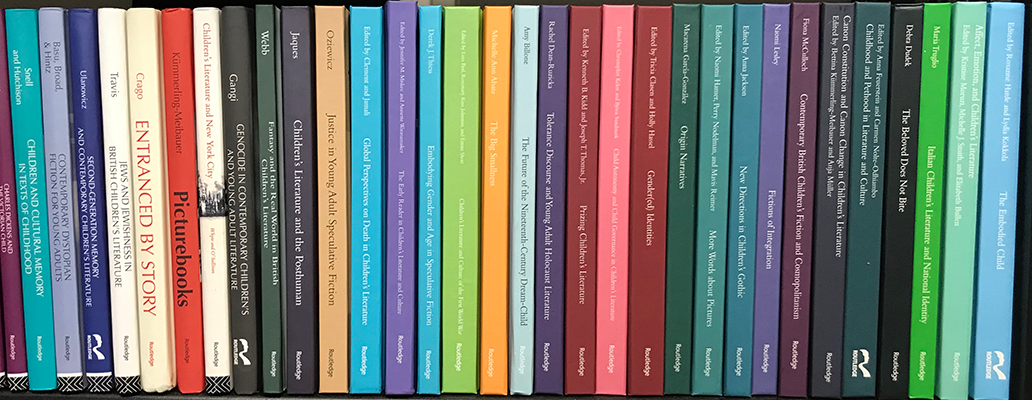
So, for instance, I’m ostensibly “on vacation” right now (because I’m not teaching), but it took me a few days to respond to this because I was in Boston, attending the Modern Language Association convention and at Harvard gathering materials for my next book. In the days before the Spring 2013 term begins, I need to finish assembling an American Studies Association proposal, get my syllabi together, get my course packs together, revise an essay and send it out, write an abstract for a summer conference (abstract is due Jan. 15th), send an abstract for a conference at which I’m giving a talk (this is due today), do some Routledge editing (I edit Children’s Literature and Culture series), get plane tickets for the two invited talks I’m giving in March, write at least one of two grants, start working on the Afterword and Notes for Barnaby Vol. 2, and… that’s all I can remember right now. But I’m sure there are items I’m forgetting.
While I doubt that this brief response will have any discernable effect on the general public’s level of knowledge about what professors do, responding seemed better than letting ignorance go unchecked. If there’s a better way to educate the public about academic labor, I’m open to suggestions.
Related content (on this blog):
What Do Professors Do All Week? (Feb. 2011) Reflections on tracking my labor for a typical work week, with links to the diaries I kept each day.
Summertime, and the Living Is Busy (May 2012). Reflections on tracking my labor for a typical summer work week, with links to the logs I kept each day.
For those heading to the MLA in Boston (3-6 January 2013), here’s a handy list of panel sessions on either children’s literature or comics/graphic novels. I compiled the list below by searching the MLA’s program for children’s literature (so, I may have missed some), and by re-posting the comics/graphic novels sessions from the MLA Comics/Graphic Narratives Discussion Group: sessions sponsored by the group & other comics/graphic novels events — I strongly encourage you to visit those pages for more information. The second of the two pages also lists individual papers on comics and graphic narratives.
90. Paintings and Photographs Remediated in Film, Graphic Narrative, and Newspaper
Program arranged by the Division on Children’s Literature
Presiding: Abbye Meyer, Univ. of Connecticut, Storrs
“Curiosity Killed the Kid: The Drive for Knowledge in Early Readers,” Jennifer M. Miskec, Longwood Univ.
“Empathy and the Developing Reader,” Karen Coats, Illinois State Univ.
“From ‘Loose Baggy Monsters’ to ‘Terrific Fun!’: Adaptations of Victorian Novels for Young Readers,” Katie R. Peel, Univ. of North Carolina, Wilmington
Program arranged by the Discussion Group on Comics and Graphic Narratives
Presiding: Qiana Joelle Whitted, Univ. of South Carolina, Columbia
“(In)Visible Bodies: Rewriting the Politics of Passing in Incognegro, a Graphic Mystery by Mat Johnson and Warren Pleece,” Christophe Dony, Univ. of Liège
“Birth of an Imperium: Tragedy, Comedy, and the Graphic Representation of African American History,” Jonathan W. Gray, John Jay Coll. of Criminal Justice, CUNY
“A Work of Its Time and a Timeless Work: The Spirit, Ebony White, and Will Eisner’s Legacy,” Andrew James Kunka, Univ. of South Carolina, Sumter
201. Margin Call: The Marginalization of (Children’s) Poetry
Program arranged by the Division on Twentieth-Century Latin American Literature
Presiding: Hilda Chacón, Nazareth Coll. of Rochester
“Unbecoming Cuban American: Representations of Female Subjectivity in Bad Habits: A Love Story, by Cristy Road,” Irune del Rio Gabiola, Butler Univ.
“Ashes and Masks: Gender according to Gilbert Hernandez,” Christopher Pizzino, Univ. of Georgia
“Trans-nepantlista Visual Geographies and the Inked Latina Body: Ana Mendieta’s Graphic Life Writing,” Emma Ruth García, Colby Coll.; Magdalena M. Maiz-Peña, Davidson Coll.
657. Cash Bar Arranged by the Discussion Group on Comics and Graphic Narratives
To quote the description from the MLA Discussion Group on Comics and Graphic Narratives’ blog, “Please join us for this informal mixer—and help us chart our future! Members of the Discussion Group’s Executive Committee will be on hand to chat about our programming, our plans, and the further growth of comics studies at the MLA. We invite your input, and hope to connect with all those who are interested in comics scholarship. Not to be missed!”
“A Credit to Their People: Race and Resilient Rebirth in Ntozake Shange’s Whitewash and Alma Flor Ada’s My Name Is Maria Isabel,” Ada McKenzie, Coll. of the Bahamas
“Battling for Opportunity: The Girl Soldiers of Shuttered Windows and Warriors Don’t Cry,”Sara Schwebel, Univ. of South Carolina, Columbia
“Fired Up: Compromising Social Justice in the Figure of the Girl,” Sarah Sahn, Univ. of Illinois, Urbana
Presiding: Nicholas Sammond, Univ. of Toronto; Paul D. Young, Vanderbilt Univ.
“Autobiographical Constructions: Authorial Absence and Presence in Julie Doucet and Michel Gondry’s My New New York Diary,” Frederik Køhlert, Univ. of Montreal
“Avatar: The Last Airbender and Shifting Intermedial Spaces,” Sandra K. Stanley, California State Univ., Northridge
“Spiegelman’s Home Movie: Art at Auschwitz,” Brad Prager, Univ. of Missouri, Columbia
When I started writing what was then a biography of Crockett Johnson (back in the late 1990s), I thought: When I finish this, I really will have achieved something. Even as I wrote other books, I continued to think of the biography — which became a double biography of Johnson and Krauss — as The Big Achievement. Sure, Dr. Seuss: American Icon (my third book, published 2004) was OK, and, yes, the media attention it received was certainly flattering. But the biography would be the Truly Important Work.
So, you might (or might not) be asking: (1) Why make this distinction between the biography and my other work? (2) Do I still make this distinction? (3) And, now that the biography is published, does it feel as “Truly Important” as I thought it would?
1. Why make this distinction?
The degree of original research required far surpassed that needed for my other books. I interviewed over 80 people, investigated over three dozen archives and special collections, read everything written by or about Crockett Johnson and Ruth Krauss, and consulted additional hundreds of articles and books. I looked at birth certificates, marriage certificates, census data, property deeds, wills, century-old insurance company maps, and Johnson’s FBI file. If I hadn’t gathered (some of) this information, it would be lost forever. Coping with the mortality of one’s sources is a big challenge for the biographer. Maurice Sendak, Remy Charlip, Syd Hoff, Mischa Richter, Else Frank (Johnson’s sister), Mary Elting Folsom (author who knew Johnson in the 1930s), Gene Searchinger (filmmaker who knew them both), and so many others taught me much about Johnson and Krauss. They have since passed away. If I hadn’t recorded their stories, that information would be gone.
The biography has been more challenging than any other project I’ve tackled, bar none. As I’ve observed before (probably on this blog, and certainly in the talk I gave last month at the New York Public Library), a biography is a jigsaw puzzle, but this puzzle has no box, missing pieces, and no sense of how many pieces you’ll need. There are also the challenges of creating character, knowing which details to omit, and finding a narrative structure. Life has no narrative, but biography has to have a narrative. I have no training in creative writing, but — for this book — I had to try to think like a creative writer.
In sum, there are reasons that a biography takes so long to write….
2. Do I still make this distinction?
Sort of. The distinction reflects a tendency to devalue the discipline in which I was trained — the sense that Dr. Seuss: American Icon, though it does draw on considerable original research, is ultimately “just interpreting texts.” In contrast, rigorous historical research, actually uncovering new information, is much more important work. But I say “sort of” because of course there are truly insightful ways of interpreting texts, illuminating formal strategies, transformative critical approaches — Robin Bernstein’s Racial Innocence is one such book. It’s a paradigm-shifter. As I’ve noted before, I don’t have the kind of mind that writes a paradigm-shifting book.
My strength is that I work hard. A biography plays to that particular strength — and perhaps this is one reason that it interests me. It interests me for other reasons, too (the “detective work” part, for example). But it is one intellectual arena where I can do something well: work really hard. Superior intelligence may elude me, but I can put in the hours! So, in some ways I still make the distinction (the amount of research, the box-less puzzle, etc.), but in other ways I do not.
3. Now that it’s published, does it feel like such a Big Achievement?
The response (mostly positive) has been a good feeling. In addition to nice reviews from Anita Silvey, Roger Sutton, Maria Tatar, Kirkus, and the Wall Street Journal, other Notable People Whose Work I Admire have been very complimentary. With apologies for the name-dropping, those people include Chris Ware (who also created the beautiful cover), Dan Clowes, Mark Newgarden, Paul Karasik, Lane Smith, Susan Hirschman, George Nicholson, and Michael Patrick Hearn. Given that Maurice Sendak even responded positively to an early, detail-clogged, incomplete draft, it is of course possible that these folks are simply being kind, and forgiving the book’s many infelicities (as I expect Maurice was). But I’m accepting their kind assessments as genuine because, well, it makes me happy to do so!
That said, as I’ve documented on this blog, the editing process was not entirely harmonious. Some cuts were good ones; others were not. My copy-editor was an historian by training; I needed a writer of fiction. My changes to her edits resulted in some errors, including (as one audience member pointed out at the NYPL last month) a typo in the first sentence. The press refused to change some errors I found in the page proofs (though it did change others). The paperback is priced not at $27, as I had originally been told it would be, but at $40 — this makes it harder to schedule signings because who buys a $40 paperback? These problems make me not want to think about the book at all.
I realize that I should let this go. Publishers introduce errors into manuscripts. Bureaucracies do not always function smoothly. Humans are prone to error, fatigue, and failures of judgment.
Fortunately, despite my irritations, the book does feel like an achievement. Given how long it took to write (I started in 1999), it is thus far my life’s work. It is a big deal.
But there is little time to dwell upon one’s achievements. There are new projects (such as The Complete Barnaby, volume 1 of which is due out early next year), tenure-and-promotion letters to write, letters of recommendation to write, (other people’s) book proposals to review and manuscript to edit, (my) conference abstracts to create and talks to write, planes to catch, meetings to attend, syllabi to revise, syllabi to invent, papers to grade, classes to teach, students to meet. Being an academic is a great job, the work is rewarding, and I feel privileged to do it — even though I rarely have the time to notice those rewards or recognize that privilege. It’s one of the paradoxes of being a professor.
Though I often attempt to dispense advice from this blog, I now have a question of my own. How much is too much?
There’s one request that I never turn down: when I am asked to write a letter on behalf of someone going up for tenure and/or promotion, I always say “yes.” I don’t care how busy I am. This sort of request is simply too important to decline.
However, I’ve just received the fourth request for such a letter, due in September. I’ve already said “yes” to three (one for promotion to full, two for tenure) that are due this fall. On top of that, this will be the busiest fall semester I’ve ever had. Three different invited talks in three different countries (one of which is the U.S.), two conferences (one in Maryland, one in Puerto Rico). I’m hoping for some publicity surrounding the publication of the Crockett Johnson-Ruth Krauss bio. and (a couple of months later) The Complete Barnaby Vol. 1. Having just edited my first full manuscript for Routledge’s Children’s Literature and Culture Series, I discovered Monday that three more full manuscripts await my attention. I’ve also started another book project, for which I’m working on a proposal & have a planned research trip (also this fall). And, obviously, there will be teaching, committees, and many things I can’t right now recall — things that will announce their due dates unexpectedly, and too promptly.
So. It’s easier to turn down (for example) invitations to contribute to books, or to join this or that committee. After all, rarely is anyone’s job is at stake there. But is it ever OK to say “no” to a tenure-and-promotion request? My general sense is “no,” & that I should just do it. As I wrestle with my guilt and sense of obligation, I think about the other people have written such letters on my behalf & who continue to write for me. And … I conclude that I should keep “paying it forward.”
Children’s literature is literature. Intelligent adults already know this. However, as those of you who study or write or teach children’s literature are well aware, the world is full of alleged grown-ups who insist on spreading the myth that children’s literature is not literature, and (thus) cannot be studied as such.
A week or so back, journalist Alison Flood reported on a conference alleged to be “Billed as the world’s first conference to discuss Harry Potter strictly as a literary text.” Presumably, that’s a swipe at the fan-organized conferences, the first of which was (I believe) Nimbus 2003: The Harry Potter Symposium, held nearly 9 years ago. While fan conferences do discuss the books as literary texts, it’s also true that they cover other, less traditionally “academic” subjects. (Full disclosure: I’ve been an invited speaker at two of the fan conferences, including Nimbus 2003.) However, it seems a bit of a stretch to say that this was “the world’s first conference to discuss Harry Potter strictly as a literary text.” It was not.
Ms. Flood also seems unaware of the vast body of scholarship on Rowling’s series — which Cornelia Remi has for years diligently tracked on her exemplary bibliography. While Potter scholarship does vary in quality, the ignorance of Professor John Mullan — who is quoted in the article — is truly exemplary. There’s a rare purity in his empty prejudices, shaped without knowledge or reflection. According to Flood’s article, Mullan said, “I’m not against Harry Potter, my children loved it, [but] Harry Potter is for children, not for grownups…. It’s all the fault of cultural studies: anything that is consumed with any appearance of appetite by people becomes an object of academic study.” Professor Mullan concludes that the academics attending the conference “should be reading Milton and Tristram Shandy: that’s what they’re paid to do.” In one sense, it’s apt that a poorly informed article would be supported with a quotation from a poorly informed academic. In another sense, one might pity Mullan and Flood for being ill-equipped to complete their tasks — in his case, intelligent commentary, and, in hers, responsible journalism. As Clementine Beauvais noted in her report on the conference, “It isn’t just careless, or uninformed, to dismiss the Harry Potter series as a serious object of analysis; it is intellectually dishonest.”
One suspects that Mullan and Flood would be surprised to learn that — in addition to the scores of books and articles about Rowling’s series — a portion of the manuscript for Harry Potter and the Philosopher’s Stone (Sorcerer’s Stone for American readers) is currently on display in the British Library, alongside works by Chaucer, Edmund Spenser, William Blake, Virginia Woolf, Samuel Taylor Coleridge, William Wordsworth, Kazuo Ishiguro, Ted Hughes, and George Eliot. Indeed, the exhibit — Writing Britain: Wastelands to Wonderlands — does not segregate children’s literature from “adult literature,” a decision which would likely distress Professor Mullan. In addition to Rowling, the British Library’s exhibit features Kenneth Graham’s Wind in the Willows, A. A. Milne’s Winnie the Pooh, J.R.R. Tolkien’s The Hobbit, Arthur Ransom’s Swallowdale, Susan Cooper’s Greenwitch, and Lewis Carroll’s Alice’s Adventures Under Ground (the book which, in revised form, became Alice’s Adventures in Wonderland). It also includes comics by Neil Gaiman and Alan Moore. It’s a fascinating, well-curated exhibit.
Rowling’s manuscript pages (written in longhand) display an earlier version of Chapter 6’s first page (67, in the Bloomsbury edition). In the published chapter, the second paragraph begins, “Harry kept to his room with his new owl for company. He had decided to call her Hedwig, a name he had found in A History of Magic” After another three sentences, the paragraph concludes:
Every night before he went to sleep, Harry ticked off another day on the piece of paper he had pinned to the wall, counting down to September the first.
On the last day of August, he thought he’d better speak to his aunt and uncle about getting to King’s Cross station next day, so he went down to the living-room, where they were watching a quiz show on television. He cleared his throat to let them know he was there, and Dudley screamed and ran from the room.
‘Er — Uncle Vernon?’
Uncle Vernon grunted to show he was listening.
In Rowling’s handwritten manuscript, the second paragraph begins, “Harry spent most of his time in his room with Widdicombe his owl.” Then, there’s some crossed-out material that’s hard to read with added harder-to-read tiny new material above it, after which Rowling writes:
He pinned a piece of paper on the wall, thinking of the days before he went to September the first marked on it, and he ticked them off every night. On the thirty first of August he thought he’d better speak to his uncle about getting to King’s Cross next day. So he went down to the living room, where the Dursleys were watching a quiz show on television.
Harry cleared his throat to tell them he was there, and Dudley screamed and ran from the room.
“Er — Uncle Vernon?”
Uncle Vernon grunted to show he was listening.
The revisions to the above offer a glimpse into Rowling’s creative process.
Three items stand out.
First, the original name for Harry’s owl was not Hedwig, but Widdicombe. Hedwig was a medieval saint. Widecombe-in-the-Moor is a town in Devon, England. Ann Widdecombe is a British Conservative Party politician; however, given the distance between Rowling’s views and hers, as well as the close relationship between Harry and his owl, the socially conservative former member of Parliament is likely not the inspiration for the character of Harry’s owl. The town is the most likely source because Rowling collects words she likes, including those from street signs — Snape’s surname came from an English town. The new name for Harry’s owl offers stronger thematic resonances with the character, a noble owl who endures much suffering on Harry’s behalf. The change to the original name also reminds us how carefully Rowling considers her characters’ names. As is the case with Dickens’ names, Rowling’s names often telegraph a key trait of the character.
Second, based on this selection, Rowling struggles more with descriptive passages than she does with characterization. The books’ sentences — which combine vivid detail with fast-paced narrative — derive from Rowling’s diligent editing. “He pinned a piece of paper on the wall, thinking of the days before September the first marked on it, and he ticked them off every night” becomes “Every night before he went to sleep, Harry ticked off another day on the piece of paper he had pinned to the wall, counting down to September the first.” Though only two words shorter than the earlier version, the published sentence is more sharply constructed. Its opening clause establishes place and time of day, allowing us to visualize where Harry is: “Every night before he went to bed” tells us that he’s in his bedroom, formerly “Dudley’s second bedroom” (32). It also establishes this ticking-off-days as a repeated behavior, occurring “Every night.” Where the original version begins by directing our attention to the paper on the wall, the new version first sets the scene before bringing in the subject of the sentence (our title character) and his nightly activity: “Harry ticked off another day.” It does not need to tell us that he is “thinking of the days before” school begins because the nightly counting-down clearly conveys that the subject is on his mind. The new sentence also ends with “September the first,” placing emphasis on the day Harry awaits, and providing an effective transition to the next sentence, which begins with “the last day of August.”
Third, I say that characterization comes more easily to Rowling (based on this admittedly limited sample) because she makes very few changes to the descriptions of the Dursleys. In both, they are “watching a quiz show on television,” which (for Rowling) signals their shallowness. Always rude to his nephew, “Uncle Vernon grunted to show he was listening” (in both). Still spooked by his recent encounter with magic, “Dudley screamed and ran from the room” (in both). How apt that Rowling should have greater facility with character. Though she has a fully imagined secondary world, key to readers’ enjoyment are characters to whom they can relate. Rowling’s debt to the mystery genre helps make her books page-turners, but she has such avid fans because she’s able to make people care about Harry, Hermione, Ron, Sirius, Ginny, Dumbledore, Neville, and others.
I concede that my off-the-cuff analysis of a few textual differences could be more robust. But my larger point here is that of course Harry Potter can be — and often is — the subject of academic analysis. Indeed, for roughly a dozen years, it has attracted a great deal of attention from literary critics. If we are interested in the craft of the most popular and influential writer of her generation, then it’s worth taking J. K. Rowling’s work seriously. If we care about the adults today’s children will become, then we need to take children’s literature seriously. Stories provide children with their earliest ideas about how the world works, and about what literature is and why it matters. Professor Mullan should care about books for the young because the children who enjoy reading are the ones most likely to grow into adults willing to read Laurence Sterne and John Milton. But we all should care about children’s books not merely because they help create literate grown-ups. We should care about them, study them, hold conferences on them, and write them because they are Art.
The week’s chronicle of precisely how an academic (specifically, me) spends each summer day is now complete. Those who followed this admittedly dull exercise might have some questions. Those who couldn’t bear following it can save themselves both time and tedium by skimming through the Q+A below.
Q: How many hours did you work this week?
A: 56 hours, 15 minutes.
Q: Oh, come on. Surely, you exaggerated your work hours.
A: Oddly enough, I did the opposite. About halfway through the week, I noticed that I was underreporting my time. I did not go back and adjust my daily totals upward, but I was — in the latter half of the week — more willing to count as work both (a) work that was fun, and (b) work that I hadn’t fully realized was work. To explain, the great benefit of this job is that it’s genuinely interesting. I ended up not counting seeing The Avengers, but part of my job actually is keeping up with popular culture connected to comics and to children’s literature. So, I could have counted that. The parts of my job that are tedious are easy to notice as work, but the parts that aren’t tedious sometimes slip by unnoticed. For example, I do write during a jog or in the shower — this happens in my head, and I write it down later. While doing something mundane, I will often also be thinking of something connected to my work.
I also underreported a bit because that’s just what I tend to do. If I lose track of how many sit-ups I’ve done, then I just add another ten. That is, if I think I’ve done 50, but I’m not sure, then I’ll count myself as only being at 40, and keep going. It’s dispositional.
Q: Were you surprised by how much time you spent working?
A: Yes. I spent more time working than I thought I would. I believed that, during the summer months, I would actually spend less time working than I do during the school year — say 40-hour or maybe 50-hour weeks, instead of 60-hour weeks. I did spend less time working than during the school year, but only by a little bit. This surprised me.
More surprising is how difficult it is to track academic labor. There’s no off-switch. Lots of small tasks overlap with larger ones. One item temporarily interrupts another, which then leads you to a third before you resume working on the first. And thinking never stops.
Q: How’s life in the panopticon?
A: One of the greatest things about having concluded this experiment is that I’m out of that %$#! panopticon. As I noted the last time I did this experiment, I do not enjoy living in a glass cage. I don’t like making my daily life quite so public. However, once I commit to something, I follow it through to the end. So,… I felt I had to continue until the week concluded. I hope this exercise achieved its (admittedly modest) goal of making summertime academic labor visible, but I don’t plan to do it again.
Q: But doesn’t living under the panopticon make you more productive?
A: Maybe. It makes you more conscious of how you use each minute. But it also makes it harder to relax, harder to take the time to think deeply. In some ways, the experience simply amplifies my neuroses.
Q: Oh, come on. Do you really think your week-long summer diary is going to change anyone’s mind?
A: Realistically, I think it unlikely. But academics have to try to explain what our job entails. The general public thinks we have summers off, and (since the vast majority of us teach at what are euphemistically called “state” institutions) are thus living it up on the taxpayer’s dime. In truth, we do work during the summers, and most of us do not get paid for that work. As noted in my first post, the university does not pay me during the summers. If I elected to teach summer classes, it would. However, as many “state” universities do, Kansas State University dos not classify time spent doing research or service as labor for which one should be compensated. I intend that as a criticism of the system in general, and not of Kansas State University in particular. Indeed, I keep placing “state” in inverted commas because only 23%-24% of the university’s budget comes from the state. The state’s decision to divest from public higher education has left erstwhile public universities with little money for salaries or even for general maintenance. But, we live in a representative democracy, and the majority of Kansans voted for a governor hell-bent on cutting taxes for the wealthy and for corporations, but raising the cost of living for everyone else — all while creating massive budget deficits. This is neither sound fiscal policy nor sound social policy. However, these are the policies under which higher education (and all publicly supported social endeavors) must exist — or not.
Q: Still, though, being a professor is a good gig, right?
A: Yes, it really is. I’m fortunate to have work which I find meaningful. Any career is going to be more demanding than an ordinary job. Doctor, musician, teacher, lawyer, artist, paleontologist, writer — if it’s a career, it’s part of your identity. And we’re more willing to invest in work if it’s part of who we are.
Q: You certainly listen to a lot of different music.
A: I do! I enjoy all (or nearly all) varieties of music. And I’m glad to have a bit more time to listen to music during the summers. So, let’s conclude with another song. Here’s a song I discovered via Seth’s It’s a Good Life, if You Don’t Weaken. That book’s title references a WWI-era phrase which became the title of the song “It’s a Great Life (If You Don’t Weaken)” (lyrics by Leo Robin, music by Richard Whiting and Newell Chase). Performing the song, here’s Lou Gold and His Orchestra, with a vocal by Irving Kafuman.
To experience the full tedium of this week’s chronicle, you might explore the links below, where you’ll also find another, equally tedious, week-long public diary.
The very last day of my summertime academic chronicle. The work will go on, but I’m only recording a week’s worth of it on the blog. If you’re just tuning in, for the past week (starting on Saturday), I’ve kept track of my daily activities in order to answer the age-old question: What do professors do all summer? Tomorrow, I’ll offer a few reflections on the whole experience. But, for now, here’s what I did on …
Friday, 18 May 2012
12:00 – 12:05 am. Was so absorbed in the comics-and-picture-books essay that I didn’t notice the hour had passed midnight. Am going to send to Charles Hatfield for his input. I think it’s developed nicely, and (fortunately) remains below the 5000 words we’ve been allocated for this issue. But, you know, one could always benefit from a second set of eyes!
12:05 – 12:30 am. Finished yesterday’s post. Shared it with Facebook & Twitter. Emailed Charles H. a copy of that essay.
12:30 – 12:45 am. Washed some dishes in sink, started dishwasher for others. Put away some of the books I was working with today.
12:45 – 1:30 am. Evening ablutions, bed, read G. Neri and Randy DuBurke’s Yummy: The Last Days of a Southside Shorty (2010), which I’m considering for the fall’s graphic novel class (thanks to Gretchen Papazian for the suggestion!).
8:05 – 8:40 am. Got up, checked email. Enjoyed a brief video of niece Emily (thanks to sister Linda!). Logged into Facebook & answered an email there. Read Francisco X. Stork’s essay on depression (hat tip to Jules Walker Danielson). Very good piece, whether or not you’ve ever struggled with depression. Read it. Also read Stork’s books. I’ve only read two, but both — The Last Summer of the Death Warriors and Marcello in the Real World — are really good. I also checked out the schedule of Hillary Chute’s comics extravaganza. Spiegelman keynote tonight! Going to watch on-line.
8:40 – 9:00 am. Jumping jacks, stretched, etc. Getting off to a later start this morning.
9:00 – 9:50 am. Ran 4 miles, and did the exercises at the playground en route — one set of chin-ups, one of upside-down-push-ups. I’m sure the latter has a real name, but I don’t know what to call it. If anyone is confused and wishes not to be, I described the exercise on Saturday’s post. Today’s was a more contemplative, slower sort of run. Noticed a yellow and black… finch? Small bird. Saw four bunnies (technically, hares) during the course of my run, which is more than I’d've expected, given my late start. (Bunnies, a.k.a. hares, are nocturnal.) During the run, in my head, I also started to write the Sendak book proposal and table of contents. This is one reason why it’s hard to keep track of work time. I’m always thinking, and often such intellectual labor is connected to my professional work.
9:50 – 10:30 am. Checked email, discovered that the scans of Jeff Smith’s art have arrived (in my campus mail box) from Cartoon Books. Thanks, Kathleen! This means that I can get the Moby-Dick-and-Bone article (co-written with Jennifer Hughes) submitted today. Or, I hope it means that. The only question I have is: will the journal’s website be able to cope with such a large image size? Decided I should write down some of the book proposal before it leaves my head — though I don’t honestly think it will. I think it’s incubating, and will continue to develop, whether or not I write anything down. Spent some time writing down a few notes. Realized I was hungry.
10:30 – 10:45 am. There will be no post-running exercises today. Breakfast & writing. This is one way in which the scholarly process is similar to the creative process: you write because you have an idea. You do not write because you know it’s a good idea or because someone will want to publish your idea. You write because the idea is there and must be expressed. As I noted in this blog’s inaugural post, I’ve had many ideas for books. Nearly half of all my proposed books have not found a publisher. I don’t yet know what will become of this one.
10:45 – 10:50 am. Cleaned up some of the html in yesterday’s post. I noticed that there wasn’t a space between each entry, and, in the html, discovered that “div” tags seem to be the culprit. Where did they come from? I don’t know. I’ve removed them, and now the page looks fine.
10:50 – 11:00 am. Responded to email (professional).
11:00 – 11:25 am. Checked into Facebook. Read this and this, both of which are related to my job. From the first piece (a smart essay by Stephen J. Mexal) we learn that “When conservatives declare that English classes don’t teach literature anymore, what they’re really trying to do is deprofessionalize the profession of college-level English.” We also learn that Andrew Breitbart continues to be an idiot. From the second (a report on an academic Harry Potter conference), we learn that some scholars of older popular literature (Shakespeare, say) wish to delegitimize the study of newer popular literature and of books for children. The article also provides strong evidence that John Mullan may be a fool. The article quotes Mullan as saying: “I’m not against Harry Potter, my children loved it, [but] Harry Potter is for children, not for grownups. … It’s all the fault of cultural studies: anything that is consumed with any appearance of appetite by people becomes an object of academic study.” He also says that academics “should be reading Milton and Tristram Shandy: that’s what they’re paid to do.” Hmm, “fool” is not quite the right epithet. The word “ignorant” better describes Professor Mullan, as would the words “completely unqualified to offer such pronouncements.”
11:25 – 11:35 am. Up next, after my shower: Routledge editorial work. Figured out what I need to look at. Have two items which require responses — these only date from earlier in the month, and both are revisions. After I respond to these, I will be caught up with Routledge work.
12:10 – 12:40 pm. Misc. email. Thanks to Jules Walker Danielson, read Richard Michelson’s remembrance of Maurice Sendak. Hadn’t seen this one! Added link to bottom of this page. Also wrote to see if I could purchase a copy of Hunger Mountain‘s special June issue on Maurice Sendak. Wrote back to Jules, too.
12:40 – 12:45 pm. Added another sentence to the comics-and-picture-books essay. Thought I was “done” with this draft. Apparently not.
12:45 – 2:00 pm. Lunch. Started reading Ho Che Anderson’s King: A Comics Biography (Special Edition, 2010; orig. published 1993-2002), and in fact spent most of this segment of time reading it. I’m considering this book for my graphic novels class. It’s excellent. The sole problem is that the hardcover costs $35. I didn’t see a paperback. I prefer not to assign hardcover books. I made an exception once to assign Guus Kuijer’s The Book of Everything, but that was much less costly. And I still want to see Kuijer’s novel come out in paperback.
2:00 – 2:30 pm. Finally getting down to the Routledge work! But… not doing well at it. Falling asleep sitting up. Too tired to focus properly.
2:30 – 3:00 pm. Nap.
3:00 – 3:45 pm. Energized by nap, was able to offer much more clear response. One report done! Also wrote another professional email on a different subject.
3:45 – 4:45 pm. Responded to another Routledge piece. Also, a little after 4, tuned into WFMU (on-line, via iTunes radio), caught Laura Cantrell hosting & playing records by Ana Egge (“Bad Blood,” “Hole in Your Halo”), The Mastersons (“Tell Me It’s Alright”), Lianne Smith (“Bicycle”), Chris Erickson (“All I Need”). Really great alt-country. Richard Flynn would enjoy this. Also enjoyed Sara Watkins’ “You and Me.”
4:45 – 4:55 pm. Internet issues. Rebooted the cable box & the wireless router. Everything’s working except for my MacMail (and thus I cannot send my second Routledge report). Can’t figure out why, but suspect that Kansas State University’s email is down again. Tried rebooting.
4:55 – 5:05 pm. Fundraising call from Obama for America. The president has been more a politician than the statesman I hoped he would be. However, I support the human rights of gays and lesbians (which include the right to marry, and to serve openly in the military), I appreciate his understanding that trickle-down economics is a myth (even if he failed to pursue repeal of what I now think of as the Bush-Obama Tax Cut), I support his efforts to reform health care (even if they did not go far enough and may well be struck down by the conservative majority on the Supreme Court), am glad he has gotten us out of Iraq (and wish he would also withdraw troops from Afghanistan, too). In sum, if his record is mixed, he has had significant accomplishments, and is certainly better than Governor Mitt “I’ll say anything” Romney. So, I made a modest contribution to his re-election effort — which, by my estimation, has about a 50-50 chance of succeeding.
5:05 – 5:25 pm. Rebooting seems to have worked. I can send email again. Wrote up some of the preceding.
5:25 – 5:40 pm. Guitar. Played a bit more of “Dancing in the Dark” (Springsteen) before hand forced me to abandon the effort. It’s definitely improving, but just not as fast as I’d like. Played “Run On for a Long Time” (traditional, Moby’s “Run On” samples the version by Bill Landford & The Landfordaires, but the Blind Boys of Alabama have a great version as does Johnny Cash [under the title "God's Gonna Cut You Down"]), “She’s Got a New Spell” (Billy Bragg), and “Bizarre Love Triangle” (New Order).
5:40 – 6:00 pm. Professional email sent. Also started on submitting the images for the Moby-Dick-&-Bone article.
6:00 – 6:30 pm. Tuned in to HillaryCon, in anticipation of Art Spiegelman’s talk. Finished uploading Moby-Dick-&-Bone article.
6:30 - 8:00 pm. Turned full attention to HillaryCon, so I could watch as well as hear her intro & then Art Spiegelman’s talk. Really fantastic conversation between WJT Mitchell and Art Spiegelman. My hope is that — in addition to being broadcast — it has also been recorded. I also took notes.
“I discovered the parody before I knew the original”
— Art Spiegelman on MAD
“It’s important to have work that isn’t easy to assimilate”
— Art Spiegelman on comics & the classroom (one of his concerns was that, in gaining legitimacy, and finding their way into the classroom, some comics [a.k.a. graphic novels] are written to be taught rather than to be art)
“If children like something, adults get very concerned and try to control it.”
— Art Spiegelman (this quote, for me, also explains any attempt to ban or otherwise regulate a popular children’s book)
“I learned to read trying to figure out whether Batman was a good guy or a bad guy”
— Art Spiegelman, in the context of comics now being seen as an aid to literacy (and also alluding to Toon Books).
“In 1908, you could easily earn $20 to $200 as a cartoonist. What’s amazing is that it’s still true!”
— Art Spiegelman, in a remark inspired by an 1908 advertisement he had projected up on the screen.
“The avant-garde of comics is moving very much into the visual side of comics.”
— Art Spiegelman, on where comics is headed in the future.
“I have to get past my schoolboy snarl and admit that it’s not only bad stuff that happens in classrooms.”
— Art Spiegelman, responding to a question about an earlier comment he’d made on having comics taught in classrooms
I know what it’s like to have the technology not work as planned, but Art Spiegelman’s frustration with the latest version of PowerPoint particularly resonated with me. He had everything all ready to go on an earlier version of PowerPoint, but the new version (on the computer up on stage) removed the control he’d been expecting. This is exactly why Microsoft products are so frustrating. Each new iteration screws something up from a previous iteration. It’s always one step forward and two steps back. Or, to be more accurate, it’s one step forward, and the menu you need to take the two steps back is now hidden under a new category which you can find if you place your mouse over that word, or, as a short cut, over an entirely different word, or, etc. etc.
Let me also say that Chris Ware’s poster for the conference is a thing of beauty. (Click for a larger image. No, seriously. You have to click on it. It’s amazing.)
8:00 – 8:20 pm. Wrote up the preceding.
8:20 – 8:45 pm. Responded to couple of Facebook items, but most of this time was devoted to professional correspondence (which, yes, is also personal because, as I frequently have mentioned in this chronicle, most of my colleagues are also my friends!).
9:00 – 9:20 pm. Made Chris Ware’s cover of my forthcoming biography my “cover photo” on Facebook. He does such beautiful work. I’ve said it before, but it bears repeating: I’ve never had such a beautiful cover for one of my books, and nor am I likely to ever again. Also looked at photos of my niece Emily, via my sister’s Facebook page. And chose a couple of videos to end this day’s post.
9:30 – 10:00 pm. Once I started writing, I couldn’t stop. Kept drafting those reflections. Also checked into Facebook again because I wanted to find an article I saw earlier.
10:00 – 10:25 pm. More professional correspondence (some of which, yeah, is personal, for noted before, etc.).
10:25 – 10:45 pm. Couldn’t resist tinkering further with the comics-&-picture-books essay. And so,… I did. Evidently, I am not done with it. Also more correspondence. Received from Eric the list of Barnaby strips we have. I now need to go through and figure out which ones we’re missing.
10:45 – 11:25 pm. Read more of Ho Che Anderson’s King: A Comics Biography, which is really well done.
11:25 – 11:45 pm. Correspondence. My friendly email debate with Michael Patrick Hearn continues. I don’t think either of us is convincing the other one, but it’s a conversation worth having (or I hope so, anyway).
11:45 – 12:00 pm. Started dishwasher. Looked at this photo of the comics “brain trust” at HillaryCon. Wish I were there! Also: Preparing for bed!
Coming tomorrow: Reflections on this week’s experiment.
Total hours worked: 10 hours, 30 minutes.
I’d embed the Cure’s “Friday, I’m in Love” here, but YouTube has disabled embedding “by request” (by request from whom? Polydor posted the video). My next thought was Serge Gainsbourg’s video for “Comic Strip” (featuring Brigitte Bardot), but embedding has also been disabled for that one. So, instead here’s one of Gainsbourg and Mireille Darc lip-synching “Comic Strip” on French TV.
Or, if you prefer a song with a specific “Friday” reference, you might like last season’s Sing-Off contestants performing a mash-up of the Verve’s “Bittersweet Symphony,” the Who’s “Baba O’Reilly,” Gwen Stefani’s “Hollaback Girl,” and Katy Perry’s “Last Friday Night.” Sadly, NBC has cancelled The Sing-Off.
What’s that you say? You haven’t had your fill of banality? Well, then, you might explore the links below. If symptoms persist, please consult your physician. Thank you.
Welcome to te penultimate day of this week-long excursion into the summer work schedule of academics — or, really, one academic. Me. If you’ve come this far, I’ll presume you’ve read the earlier entries (links at end of this piece). If you haven’t, the whole thing starts back on Saturday. You might begin there. Or find something more interesting to do with your time. I wouldn’t be offended if you did. Heck, (unless you tell me) I wouldn’t even know.
Thursday, 17 May 2012
12:00 – 12:55 a.m. Prepared for bed, checked Facebook & posted yesterday’s post. Also posted it to Twitter. Read all of Daniel Clowes’ Wilson. (I’ve fallen behind on my Clowes reading! This came out in 2010!) Each time I teach my graphic novel class, I seem to assign a different Clowes: Ice Haven one year, Ghost World another. Will it be Wilson this year? Not sure. I like it for some of the same reasons I like (and taught) Ice Haven. It filters serious narrative themes through the format of a gag-driven comic strip. The tension between form and content works really well. I find Wilson’s misanthropy to be funny, though I suspect most of my students will be less amused — the humor depends, to some degree, upon life experience. However, this is true of many of the works they read in that class So. Wilson? Ice Haven? Ghost World? Something else? Will decide soon.
12:55 – 4:30 a.m. Asleep! I got to bed a little earlier. Excellent. Here’s a good end-of-day song — Fats Waller’s “The Jitterbug Waltz.”
4:30 – 4:50 am. Awake. Got up, added some items to tomorrow’s to-do list. Tried to clear my mind. Perhaps I should have posted this song (“Tired of Sleeping”).
4:50 – 7:30 am. Asleep.
7:30 – 7:50 am. Up, ate breakfast, read email, responded to comments on Facebook wall.
8:50 – 9:20 am. Car swap with Karin (since we share a car, and since my left hand’s still not quite up to working the brake on the bike). Also retrieved books from office that I need for the comics-and-picture-books piece.
9:20 – 9:45 am. Prepared to mail a couple of packages (quite easy, since USPS on-line enables you to print out the labels at home). Put them in mailbox for pick-up.
9:45 – 11:05 am. To Manhattan Running Co. for lightweight windbreaker. Then, to gym (which is right next door), where I exercised for 45 mins.
11:05 – 11:20 am. Drove home, drank water, checked email (latter two not during the drive, obviously).
11:20 – 11: 50 am. Shower + shave + dress = me, (more or less) presentable to public.
11:50 am – 12:40 pm. Created codicil for will, modifying first article (Beneficiaries). Gist of the change is that, should Karin predecease me, then instead of bequeathing all to my father, mother, and sister, I bequeath all to my niece Emily Calame. (Obviously, if Karin outlives me, then nothing changes.) Need to have Karin review this & then sign it before witnesses. Also did some business-related correspondence.
Followed up again with Eric. Until I receive required info. from Fantagraphics, I’m unable to pursue Complete Barnaby tasks for which I volunteered. I realize, of course, that the publisher is working on many books and not just this one. Still, though: bring out Complete Barnaby Vol. 1 (Fantagraphics, fall 2012?) and Crockett Johnson and Ruth Krauss: How an Unlikely Couple, Found Love, Dodged the FBI, and Transformed Children’s Literature (UP Mississippi, Sept. 2012) at the same time, and you have cross-promotional opportunities. Both publishers stand to sell more books. An investment of time in this project now would pay dividends in the future, I’m sure of it. I may fail in this endeavor, but I need at least to keep trying. 12:40 – 1:10 pm. Read that Donna Summer has died. The first songs of hers I remember hearing were “Hot Stuff” and “Bad Girls.” Toot-toot, ahhh, beep-beep! Broke for lunch. During lunch, began rereading Bill Moebius’s classic “Introduction to Picturebook Codes” (in connection with my comics-picture-books essay).
1:10 – 3:50 pm. Finished rereading Moebius, and wove him into the essay. Also did other editing, re-read some of op de Beeck’s Suspended Animation (which I highly recommend), and developed a new paragraph around her “mode of production” definition (for the picture book). Re-read Charles Hatfield’s “Defining Comics in the Classroom; or, The Pros and Cons of Unfixability” (in Tabachnick’s Teaching the Graphic Novel), and Perry Nodelman’s brilliant close-reading of John Burningham’s Mr. Gumpy’s Outing in “Decoding the images: How picture books work” (Understanding Children’s Literature, edited by Peter Hunt).
3:50 – 4:05 pm. Email, including response to Eric, who still awaits Barnaby info.,… thus preventing me from helping move this project forward. Though I will continue to try to make a fall release possible, I suspect that the planned synergy between the Johnson-Krauss bio. and Barnaby Vol. 1 will not occur. And that’s a HUGE lost opportunity.
4:05 – 4:15 pm. Email, and conferred with Karin re: picking her up and heading to bank (which is actually a credit union).
4:15 – 4:25 pm. Guitar break. Abandoned “Dancing in the Dark” (Springsteen, not Astaire) after a few bars because of the B-major barre chord (bothers left hand, which is slow in its recovery). Played “(What’s So Funny ‘Bout) Peace, Love, and Understanding” (written by Nick Lowe, first performed by Brinsley Schwarz, made famous by Elvis Costello) and “Love Train” (the O’Jays).
4:25 – 4:50 pm. Picked up Karin, went to bank (credit union), returned home. Most of that time was spent waiting at the credit union.
4:50 – 5:10 pm. Brought in mail, read email, wrote email to Jeff Smith’s assistant. Had expected to receive images by now; had hoped to be able to submit them (and thus the entire Moby Dick / Bone article, co-written with my friend Jennifer Hughes) this week. It’s all done,… save for those. And the journal’s website wants me to submit everything at the same time.
5:10 – 5:30 pm. Started adding literary works cited to works cited of comics-and-picture-books essay. Have I listed the title? In case not, the current title is “Same Genus, Different Species?: Comics and Picture Books.”
5:30 – 6:30 pm. Miscellaneous stuff, including printing out codicil & bringing it over (along with a CD I’m loaning Jerry) to Deborah Murray & Jerry Dees, so that they can witness my signing it and affix their signatures, too. Wrote family to inform them of this legal change — which, as noted above, only takes effect if Karin predeceases me or if, say, a plane we are both on goes down over the Atlantic. (Yes, I think about these things. Oh, I’m a barrel of laughs in an airplane, let me tell ya.)
6:30 – 7:50 pm. Read Going Bovine to Karin during dinner prep. During dinner, we watched the Stephen Colbert portion of a recent Jimmy Fallon program, and then talked about work, and looked at who is playing at Nashville’s Ryman auditorium (’cause Karin’s on their mailing list).
7:50 – 8:00 pm. Professional correspondence — which, as I’ve noted on earlier days, is always partly personal (because most of my professional correspondents are also friends!).
8:00 – 9:45 pm. Finished that bibliography for the comics-and-picture-books essay. Tedious! Answered an email or two.
9:45 – 10:25 pm. Checked into Facebook, & read interesting things. I should have made plans to attend Hillary Chute’s comics extravaganza in Chicago this weekend. The roster of participants is truly stunning: Barry, Bechdel, Brunetti, Burns, Clowes, Crumb, Gloeckner, Kachor, Sacco, Seth, Spiegelman, Ware. And that’s not even a full list. Incredible. The whole thing will be streaming on the conference website, starting tomorrow. Gonna tune in, catch some of it, at least. Also, enjoyed Robert Krulwich’s post on Richard Feynman, which includes this embedded video.
10:25 – 11:05 pm. Added section headers to the comics-and-picture-books essay. Revised, edited. Re-read portions of Perry Nodelman’s Words About Pictures — Chapter 7, especially.
11:05 – 11:20 pm. Discussed travel plans with Karin.
11:20 – 12:00 pm. Worked more on comics-and-picture-books essay. Maybe it’s done now? It’s certainly better than it was last night at this time.
Total work time: 8 hours, 45 minutes.
For the song of the day, how about Pizzicato 5′s “Sweet Thursday”? This appears to be a fan-made video, below.
What does the term “glutton for punishment” mean? I’m glad you ask. In your case, it would mean reading more blog posts on this same theme.
Mp3s are for sampling purposes. If you like what you hear, please go and buy it. Go to the artists' concerts. Tell your friends about them. If you represent an artist or a label and would prefer that I remove a link to an mp3, please email me: philnel at gmail dot com.