
Archive for January, 2011

Mix: I Can Hear Music

Mix: I Can Hear MusicWhen I began this blog, I thought I would post more of the many mixes I make.  I haven’t.  But here’s the first uptempo mix of 2011 — a happy way to begin the year, and (for those educators and students out there) the new semester.

1)    William Tell Overture Sixth Wave (2004)      1:07

The first of two cover songs on this mix, a cappella group Sixth Wave gives their jazzy version of Rossini’s overture.
2)    Turning Up the Radio Weezer (2010)      3:37

From the second Weezer album released in 2010 — the earlier one was a new studio record, but this track comes from the collection of unreleased material called Death to False Metal.

3)    Do You Remember Rock ‘n’ Roll Radio? Ramones (1980)      3:51

Phil Spector grafts his wall-of-sound production onto punk rock.

4)    Bright Lights Bigger City Cee Lo Green (2010)      3:38

Adapting the bass line from Michael Jackson’s “Billie Jean,” a title from Jay McInerney’s Bright Lights, Big City (1984), and synthesizers from Gary Numan (well, that’s what they sound like to me), Cee Lo Green gives us some New Wave soul.  It sounds like a lost soul classic from the early 1980s.

5)    Radar Detector Darwin Deez (2010)      3:10

This Darwin Deez song also has a bit of a 1980s sound to it.  And a happy lyric.  REMOVED BY REQUEST.  The video is below, and here’s a link to a Soundcloud file of the song.

6)    Venus Shocking Blue (1969)      3:05

The original hit version, Shocking Blue’s “Venus” reached #1 on the Billboard charts in 1970.  In 1986, Bananarama had a #1 hit with a cover of the song.

7)    Alien Girl The Mother Truckers (2010)      3:15

“Now we’re coming down to destroy you. / This experiment has come to an end.” And: “Stop your crying. / It’s just the end of your world.”  Below, the Mother Truckers perform the song live.

8)    L.O.V. Fitz and The Tantrums (2010)      3:40

Fitz and the Tantrums bring you a nice slice of retro soul.

9)    Our Love Will Change The World Outrageous Cherry (2005)      3:43

Power pop from Outrageous Cherry.

10) Top of the World Shonen Knife (1994)      3:56

From the compilation If I Were a Carpenter.

11) I Can Do That The Futureheads (2010)      3:43

Can they channel Gang of Four and especially early XTC? Yes, the Futureheads can do that.  From The Chaos.

12) Without a Fight Janelle Monáe (2010)      3:36

From the For Colored Girls soundtrack

13) I’ve Got the Music in Me The Kiki Dee Band (1974)      5:01

One of Kiki Dee’s first big hits.

14) Block After Block Matt & Kim (2010)      2:54

From their latest, Sidewalks.

15) Garden Grow Our Broken Garden (2010)      4:14

From Our Broken Garden‘s Golden Sea, a slightly darker song on this otherwise upbeat mix.  It’s uptempo, but … well the playfully macabre video (below) highlights some sinister undercurrents.

16) The Fountain of Youth Boy Crisis (2009)      4:42

Boy Crisis has released many catchy singles, but never (to my knowledge) a full album. Perhaps they will one day?

17) A New Shore Steven Page (2010)      3:49

Former Barenaked Ladies frontman Steven Page is setting sail for a new shore.  Let’s join him, shall we?  Below, he performs on the CBC’s Q, and then chats with host (and former Fruvous!) Jian Ghomeshi.

18) We Will Swim Together Kimberley Rew (2002)      2:56

If you know about the Soft Boys, it’s probably because you know the work of the band’s lead singer and songwriter Robyn Hitchcock.  But Soft Boys guitarist Kimberley Rew also has a knack for writing quirky pop.  In addition to the smash hit “Walking on Sunshine” (after the Soft Boys, Rew was in Katrina and the Waves), he’s also released several solo records that are well worth your while.

19) The Stars Jukebox the Ghost (2010)      4:53

No sophomore slump for Jukebox the GhostEverything Under the Sun is an even stronger record than their debut.  Recommended.

20) White Nights Oh Land (2010)      3:46

“Son of a Gun” was my introduction to Oh Land, but this is a strong song, too.  There’s also a video, with white balloons, white lights, and Oh Land dancing around.

21) What’s So Bad (About Feeling Good)? Ben Lee (2009)      4:42

Ah, Ben Lee, here to bring good cheer.  Lee has a knack for a hook.  In a better world, some of his catchy songs would also be big hits.

22) I Can Hear Music The Beach Boys (1969)      2:37

From 20/20, some post-Pet Sounds Beach Boys.

Leave a Comment

Suck It Up. Enhance Production.

numbersA number of folks at MLA 2011 were kind enough to mention that they’ve found my “advice” postings useful.  In the hopes of continuing to help, here’s one more before I veer back to other blog topics (children’s literature, comics, biography, music, etc.).  Today’s topic is: how do you develop a robust CV quickly?

As noted in “Up from Adjuncthood,” this was a matter of some urgency: when I earned the Ph.D. in 1997, I had zero publications.  To escape terminal adjuncthood, I’d need to transform an anemic CV into a healthy one.  I found Michael Bérubé‘s CV on-line (a full version was on-line back then), and decided to emulate him.  I knew I was neither as smart nor as talented a writer as he, but (I reasoned) I could at least strive to be as productive.

It’s a simple calculus.  If you publish one article a year, then in five years you have five articles; two a year, then you have ten in the same period.  Similarly, if you can publish a book every five years, then in a decade, you’ll have two. I never literally followed this x-articles-per-year model. The idea was not to meet annual quotas. It was to think about the long term. If you maintain a steady rate of production, then, over time, publications add up.

And they have.

I’ve already blogged about How to Publish Your Book.  It occurs to me that I ought to write another post on How to Publish Your Articles.  Too often, I think, we academics take for granted that aspiring scholars already know the ins and outs of how academia works — forgetting that we had to learn this, too.  So…, I’ll do an Article-Publishing post soon.

Oh, and bonus points for anyone who guesses the song quoted in the post’s title.  Need a hint?  It’s included on Never Say Die: A Mix for Job-Seekers (posted back in September).

Comments (3)

Huckleberry Finn, Tom Sawyer, and Offensiveness

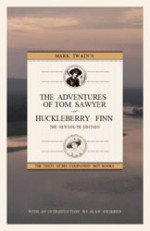
NewSouth's Bowdlerized edition of Mark TwainYes, you’ve all heard about NewSouth Press publishing Huckleberry Finn and Tom Sawyer without the “n” word.  But a couple of important points are getting lost in all the uproar.

As Natalia Cecire points out on her blog, the “political correctness” circus-goers are missing the point. I find it more noteworthy that such Bowdlerization is a common practice in children’s literature, but that it takes the Bowdlerization of a “classic” to make the news. The uproar focuses on Huckleberry Finn, the book canonized as a classic (i.e., for discerning grown-ups), and not Tom Sawyer, the book deemed “for children only” — even though both books have been altered in this new edition. (As Bev Clark has pointed out, at the time of their publication both books were considered both “boys’ books” and literature [for adults].)  The implication here is that it’s more acceptable to Bowdlerize the children’s book (Tom Sawyer) than it is to Bowdlerize the classic (Huckleberry Finn).

Also, people should be more offended not by so-called “political correctness” but by our unwillingness to help children make sense of offensiveness. Though Mark Twain was progressive on race for a 19th-century white male, his books ought to offend current sensibilities. If reading Huckleberry Finn or Tom Sawyer in the 21st-century fails to offend, then we’re not really reading these books. And that’s a subject worthy of further discussion.

Comments (3)

How Did I Get Here? Part II: Into Professorland

In yesterday’s post, I skipped past the actual getting of the job.  (Oops.)  Today, I’ll talk about that.

Oh, but enough about me.  What do you think of me?

— old joke

4. To Market, to Market, to Get Me a Job

Chicago, where the 1999 MLA was heldIn 1999, I had three interviews.  The first was pleasant enough.  The second was unpleasant.  Indeed, if I’d already had a job, then halfway into that interview I would have said, “Based our conversation so far, I expect you’re looking for a different candidate.  Thanks very much for taking the time to meet me, and best of luck with your search.” Then I would have shook hands, offered thank-yous, and left. But I didn’t have a job.  So, I stuck it out, and — when I returned from the conference — wrote the obligatory thank-you note, even though there was no way I’d get a campus visit.

The third interview was a lot of fun. Before I explain why, I should also tell you how I prepared for all three interviews.  Since each hiring committee told me who would be on the interview team, I read the scholarship of each interviewer.  I should have spent more time on the websites looking at course offerings, but I did develop sample syllabi so that I could be prepared to answer questions like “What would you teach in a Children’s Literature course?” or “If you could teach your dream graduate seminar, what would it be on?” and so on.  In retrospect, I probably should have made copies of these syllabi to give to my interviewers, but the preparation enabled me to talk about these imaginary classes.  (I had neither taught nor formally studied Children’s Literature prior to my arrival at Kansas State.)  I also, of course, had the dissertation soundbite. I’d rehearsed answers to other possible questions — and, by rehearsed, I mean not only learned, but actually practiced speaking them out loud.  (Yes, acting is key to success!) Anyway, my point is that I went into each interview prepared.

So, if I was equally prepared for all interviews, then why was the third interview so much fun?  In this one, the interview team was prepared for me.  They’d read my writing sample closely, and asked informed questions that conveyed (what I took to be) genuine interest.  The interviewers clearly got along with each other.  Their comfort made for a comfortable interview experience.  They also knew what they were looking for in a children’s lit hire: I didn’t sense dissent or opposing “camps.”  Having since been through other interviews (on both sides), the best interviews are a like a good chat with smart people at a cocktail party.  You may have heard that comparison before.  Well, it’s true — only, of course, without the cocktails.

By the way, here’s one unanticipated question I remember from this third interview: “Which do you prefer — teaching, research, or service?”  I began my answer with: “Gosh, that’s a tough question.”  Then, I described merits of all three.  I knew that academia ranks research highest, and that my own personal preferences would rank both it and teaching ahead of service.  But admitting that would not have been the most persuasive thing to say.  In any case, we have do to all three, and I’m a team player: I expected to do all three. So, best to express my willingness to do all parts of the job.  Which I did.

A couple of weeks after the interview — or perhaps even sooner than that — the department head phoned me to set up the campus visit.

5. The Semi-Finals; or, the Campus Visit

Getting invited to campus is like making the semi-finals. You haven’t got the job, but you’re among the top two or three candidates.

Anderson Hall, Kansas State UniversityTo prepare, I visited the website, and read up on the place.  I also printed out a list of all the faculty members, and tried to familiarize myself with their names and specialties.  When I had downtime during the visit, I would make notes on the printout — what we talked about, anything that would help me remember the person’s name.  (I’m terrible with names!  I really have to work at learning them.)  And, the job talk.  I kept it to the length specified by the department head — 30 minutes.  (Note: if they don’t tell you the length, then ask them! You don’t want to run long or be too brief.)  I keyed up my script (the talk) to the images.  I rehearsed the talk until it felt fluent, and rehearsed answers to any other possible questions I thought I might face.

The campus visit was fun, if intense: as you might expect, you are “on” all the time.  And nearly all of your time is scheduled.  My hosts were friendly, personable, and — as the hiring committee was at the MLA interview — genuinely interested in me and my work.  When I left after three days (I think it was three), I was tired but pleased.  I didn’t know whether I’d get the job, but I felt that I’d put forth a solid effort, and sensed that, irrespective of the outcome of the search, I’d stay in touch with some of the people I met there.

A few weeks later, after the First Choice candidate turned the job down, they made me (Mr. Second Choice) an offer.  I accepted.

6. Tenure for Two

But this is not as simple as I’m making it out to be.  If you read yesterday’s post, you’ll remember that there’s also a spouse involved.  When we went to the College of Charleston, I was the trailing spouse.  If we were going to Kansas State University (which, as you’ve probably figured out by now, was the third interview and sole campus visit), we did not want to have a repeat of our experience at the College of Charleston.

We know now that we could have handled that situation differently. Although our College of Charleston English Department Chair expressed indifference to my professional situation, Karin (my spouse) and I might have negotiated at the time of her offer. After all, the worst answer you can get is “No,” and you might get something better.  Two years later, as I went on the market and received the campus interview, we should have been more proactive and told the department chair and dean.  Doing so would have given the College time to assemble a counter-offer, should it wish to retain us in the face of a campus visit becoming a job offer. However, we didn’t tell any of the higher-ups and so, when the Kansas offer came, the College was not prepared to make a counter-offer.  Having a counter-offer would have been useful for two reasons.  First, if Karin and I had wanted to stay in Charleston, a tenure-track job for me would have made that possible. (Though Charleston’s Confederate fetish is a bit disturbing, we had — and have — many friends there, and we were sorry to leave them.)  Second, having a counter-offer could have provided a bargaining chip to use with Kansas State — we might have been able to use it to get Karin immediately on the tenure-track, or we might have been able to use it to negotiate a higher salary for myself, and/or to negotiate other things.  If you’re in a situation where more than one institution wants you, then your market value rises and you’re in a position to bargain for more.

Though we didn’t know any of these strategies then, we were nonetheless determined to make the move to Kansas State a happier situation for both of us. In case the subject came up, I had brought a few copies of Karin’s CV with me on the campus visit. Officially, they’re not allowed to ask about spouses or partners, so you might need to listen for hints and opportunities. One morning over breakfast, the Department Head mentioned that he had just written an article on the need to take spousal needs into account, which I interpreted as a fairly broad hint (though it was also true; he had written the article).  I suspect that a Department Head in a slightly more remote location (such as Manhattan, Kansas) may be need to be more sensitive to such an issue, but — whatever the reason — he was sympathetic.  So, I gave him a copy of her CV, and spoke a little about her work. She subsequently provided a letter of interest, writing sample, and dossier for the department’s review.

When the offer came, we managed to get Karin hired as a Visiting Assistant Professor — non-tenure-track, but with the understanding that the Department would try to move her back onto the tenure track.  So that she had a backdoor, Karin negotiated a year’s leave of absence (instead of quitting) from the College of Charleston, and we moved to Manhattan, KS in July of 2000.  Karin made herself indispensable to the Department, becoming the Department’s Technology Coordinator.  This position didn’t officially exist, but Karin saw a need and stepped in to fill that need.  She also participated fully in the life of the Department, going to faculty meetings, serving on committees, and generally being a team player.  Of course, she kept teaching and publishing, too.  At the end of our first year, we set up a meeting with the Department Head to ask how we could get Karin back on the tenure track.  He advised both of us to go on the job market.  Meanwhile, the Department would do a national job search for 20th Century British Literature (Karin’s field, in which she has a sub-specialty in contemporary British literature, an area not otherwise covered in the Department).

Thus, Karin and I went on the market in the fall of 2001.  I had an MLA interview and a campus visit; Karin had two MLA interviews and two campus visits, one of which was Kansas State.  During visits, we mentioned the need for two tenure-track jobs as one reason for our seeking the position. When it was time for Karin’s campus visit at Kansas State, I did not see her talk (I was advised not to attend), and nor could I vote on her hire, but the Department judged her the best of the three candidates, and made her an offer.  Rather than wait for offers from the universities where we had other campus interviews (in hopes of using them as leverage), we decided to withdraw from those searches before they concluded.  Let me be clear: I was genuinely interested in that job, and Karin was interested in the other job as well.  If one had made an offer to both of us, we would have accepted.  But Kansas made the offer first, and we were happier here than I think we would have been at the other universities.  So, as of fall 2002, Karin was back on the tenure-track, and her work at Kansas State as a Visiting Assistant Professor would count towards her tenure portfolio.   She went up for tenure early and was promoted to Associate in 2006, and I was promoted the year earlier to Associate (and in 2008 to Full).  Since 2007, she has been Department Head.

7. Now, Class, What Have We Learned?

Some lessons that might be drawn from our experience: Be both proactive and strategic.  Also, in this field, you get to choose the lifestyle, but not the location.  Kansas was not our first choice of places to live, but it’s a good gig (2-3 teaching load) with great colleagues.  If you want to choose where you live, then you’re in the wrong profession.  Aim for quality of life rather than idyllic locale.

It’s been a busy decade.  The ambitious (pronounced “nutty”) publishing regimen and opportunism has helped my career.  Or, to put this another way, my quixotic attempt to play the part of a successful scholar has thus far succeeded.  Julius Erving in 1987At the same time, it’s also been a bit tiring. A few years ago, when reading Clyde Haberman’s “David Halberstam, 73, Reporter and Author, Dies” (New York Times, 24 April 2007), I was struck by this quotation: “There’s a great quote by Julius Erving that went, ‘Being a professional is doing the things you love to do, on the days you don’t feel like doing them.’” Halberstam’s paraphrase of the Julius Erving quotation sums up how I feel, most days.  I feel extraordinarily lucky to have this job, to be able to work on things that interest me: I mean, how many people can say that their daily work is meaningful?  Yet, at the same time, I could use a vacation.  Erving nicely sums up this feeling in his comment about doing what you love to do even when, some days, you’d rather be doing something else.

So, yes, it’s hard.  But so is becoming a surgeon, architect, artist, teacher, lawyer, novelist, or curator.  The reason is that these are not jobs.  They’re careers.  And careers are demanding.  But they can also be rewarding.  Given the relative lack of financial remuneration of this career, the rewards are the only reasons to pursue it.

More academic advice from Nine Kinds of Pie (this site):

Academic advice from Tenured Radical:

Comments (3)

How Did I Get Here? Part I: Up from Adjuncthood

MLA’s coming up later this week.  Can you bear to read yet another advice column?  If not, then you may want to skip the following personal narrative that, yep, includes some advice (well, inasmuch as my personal example may be instructive… which it may not be).

You may ask yourself: well, how did I get here?

— Talking Heads, “Once in a Lifetime,” Remain in Light (1980)

Here’s how I got from Adjuncthood to Professorland: Luck, hard work, and opportunism.  Not much to say about the “luck” component, but I can say plenty about the latter two. I spent two and a half years as an adjunct before I got an MLA interview. Why? No publications.

1. Don’t Get Mad.  Get Published.

A year after I got the Ph.D., my partner won a tenure-track position at the College of Charleston. So, we moved to Charleston. Asked whether there would be any professional opportunities for her spouse (me), the Chair of the College’s English Department said “No.”  So, I began that year (fall of 1998) teaching one section of Composition to the tune of $1850 for the term (no benefits, of course), and seeking gainful employment beyond academe.  I sent out applications, went for a couple of interviews, and even did some free-lance computer consulting.  A month into the term, an adjunct flaked out, leaving the Department with three sections of Composition suddenly in need of an instructor.  The Chair offered me the full semester’s salary for each section, if I would teach all three.  With a dwindling savings account and no other opportunities, I accepted, and began shouldering the 4-4 course load that I would maintain for the next two years.  I also decided that maybe I’d stick with academia.  I had one article forthcoming in Children’s Literature, but that was it.  I quickly realized that I’d be doomed to adjuncthood unless I published.  Also, working as an adjunct made me angry — angry at the exploitation, angry at the permanent second-class-citizen status.  I decided: let’s channel this anger into an enhanced rate of production. This was my Scarlett O’Hara moment. With God as my witness, I’ll never be an adjunct again! Well, words to that effect.

Deciding to publish my way out of adjuncthood, I said “yes” to every opportunity, figuring that once I’d committed to doing something I’d simply have to follow through and do it.  Articles, book reviews, encyclopedia entries, conference papers.  I began revising the dissertation as a book manuscript, and began laying the groundwork for another project — what was then going to be a Twayne series book about Crockett Johnson (when I learned that the Twayne imprint was defunct, it developed into a double biography of Johnson and Krauss). After I presented a conference paper, I would then revise, expand, and publish.  Indeed, I’ve maintained this practice: Every conference paper I’ve presented either has been published (in expanded form) as an article or chapter, or will be published.  In the past few years, I’ve had to curtail the practice of saying “yes” to every opportunity — otherwise, I’d have imploded.  But it was a successful strategy for turning my anemic CV into a healthier one.

When I was increasing my rate of production, I decided to market myself as both a twentieth-century / contemporary Americanist (the field in which I trained) and a Children’s Lit person.  I thought that trying to compete in both categories might increase my chances of success.  It did.  I never got any interviews as an Americanist, but at the 1999 MLA, I had three interviews — my first MLA interviews ever!  Two were for children’s lit and one was for teaching with technology.

2. Better Living Through Technology

Philip Nel's Homepage

Why technology?  During my underemployed months (before I had that 4-4 load), I developed my website.  I’d launched it the year before because I thought that learning to make a website would give me a useful skill.  Also, there were no websites devoted to Crockett Johnson.  And I wanted to write a paper for a Children’s Lit conference.  These three ideas prompted me to create a Crockett Johnson Homepage, in addition to my main website.  Work on the Crockett Johnson website in turn developed into a conference paper (1999), articles (2001, 2004), a reference entry (on Ruth Krauss, 2006), and a double biography (2012).  I came to realize that having a website is useful for both self-promotion and research. The Harold for whom Johnson’s purple-crayon-wielding character is named found me through the website, and helped me contact his mother (Johnson’s sister).  Indeed, I met Julia Mickenberg (my co-editor on Tales for Little Rebels) via my website — a friend of the Crockett Johnson Homepage directed her to me.  These days, you have blogs and social networking sites, too. But, whatever sort of presence you maintain, a web presence is useful. I later found out that my website was a factor in Kansas State’s decision to hire me: the first thing I did upon arriving (on the Department’s request) was to redesign the English Department website.  Fortunately, it has since undergone a much better redesign — tho’ I & my colleague Naomi Wood continue to maintain it, albeit less regularly than we ought. (This is part of the service component of our jobs.)

3. Opportunism

J. K. Rowling's Harry Potter Novels: A Reader's GuideIn early 2000 (about the time Kansas State made me an offer), Continuum Publishing asked Mark Osteen if he’d like to write a readers guide to Don DeLillo’s Underworld.  He wasn’t up for it, and so he recommended me… which led to Continuum asking me: would I like to write this book or were there any other contemporary novels (British or American) for which I’d like to write a readers guide?  I was feeling a bit DeLillo-d out at that point — having just written a reference entry and two articles on him.  But I said sure, I could write on Underworld, and, as for contemporary novels, what about Harry Potter?  I’d recently written a reference entry on the Harry Potter phenomenon, and was about to start a children’s lit job.  So, I said, I’d be happy to write two readers guides, one on Underworld and one on Potter.  David Barker (at Continuum) said sure, Harry Potter was a good idea, but he’d prefer to have one author per book in the series: So, which would I rather write, Potter or DeLillo?  The Avant-Garde and American Postmodernity: Small Incisive ShocksI chose Potter, which (published 2001) quickly became the best-selling volume in the Continuum Contemporaries series of Readers Guides — indeed, it paid the $3000 in permissions fees for the book that developed from my dissertation (The Avant-Garde and American Postmodernity: Small Incisive Shocks, UP Mississippi, 2002).  Choosing to write on Harry Potter wasn’t consciously opportunistic: I thought it would be fun, and I imagined that it might find an audience.  I had no idea that it would lead to so much media attention, or that it would even lead to my first invited talk, in 2003.

The two Seuss books represent a more calculated intersection between my own interests and a developing opportunism. Deciding that a book published on the 100th anniversary of Seuss’s birth might conceivably draw some media attention, I worked hard to finish the manuscript of Dr. Seuss: American Icon so that it could appear by early 2004.  (For more details on the Seuss books, please see “Fortunate Failures; or, How I Became a Scholar of Dr. Seuss” — the debut post on this very blog!)

I’ll continue this tomorrow with: the job interview itself, thoughts on dual-career hires, and links to other articles on career advice.  So, if this didn’t bore you to tears, then please tune in again, dear reader!

Comments (5)

Children’s Literature at the MLA

MLA 2011 Convention logo

For those of my readers who might be attending the MLA in LA this week, I am posting all of the Children’s Literature sessions. Hope to see you there!  (Well, except for the first one.  MLA’s sessions are — for the first time that I’m aware — beginning before 3:30 pm.  So, I won’t have arrived yet.  :-/)

THURSDAY, 6 JANUARY

54. A Century of The Secret Garden

1:45–3:00 p.m., Diamond Salon 6, J. W. Marriott

Program arranged by the Children’s Literature Association

Presiding: Joe Sutliff Sanders, Kansas State Univ.

1. “The Psychology of Belonging: Ownership and Liberty in The Secret Garden,” Chamutal Noimann, Borough of Manhattan Community Coll., City Univ. of New York

2. “Burnett, Brontë, and Britain,” June S. Cummins, San Diego State Univ.

3. “‘Tha’ Mun Talk a Bit o’ Yorkshire’: Region and Dialect in The Secret Garden,” Katharine Slater, Univ. of California, San Diego

4. “Cripp(l)ing Colin: Disability in The Secret Garden,” Martha Stoddard Holmes, California State Univ., San Marcos

151. Adult Memory and Reimagining the Past in Children’s Literature

5:15–6:30 p.m., Olympic II, J. W. Marriott

A special session

Presiding: Roni Natov, Brooklyn Coll., City Univ. of New York

1. “The Absent Boy: Memory, Desire, and Adult Reimagining in Stevenson’s Treasure Island,” Tim Heath, Ambrose Univ. Coll.

2. “Biting Back: Remembering Childhood in Jules Valles’s L’enfant,” Sarah K. Cantrell, Univ. of North Carolina, Chapel Hill

3. “Reimagining Time like Space: Memory and Rereading Children’s Literature,” Alison Waller, Roehampton Univ.

For abstracts, write to rnatov@brooklyn.cuny.edu

SATURDAY, 8 JANUARY

437. Visions of the West: California in Ethnic Adolescent Literature

8:30–9:45 a.m., Atrium II, J. W. Marriott

Program arranged by the Children’s Literature Association

Presiding: Jackie E. Stallcup, California State Univ., Northridge; Michelle Pagni Stewart, Mount San Jacinto Coll., CA

1. “Seeking Refuge: Vietnamese Adolescent Novels and the Myth of the California Dream,” Kassandra Clark, Univ. of Texas, Austin

2. “Out of Place: Mexican Whiteboy and the California Regional Child,” Katharine Slater, Univ. of California, San Diego

3. “Reconstruction of History in Yoshiko Uchida’s Samurai of Gold Hill,” Junko Yokota, Kashiwa-shi, Japan

608. Nostalgia and Children’s Literature

3:30–4:45 p.m., Diamond Salon 2, J. W. Marriott

Program arranged by the Division on Children’s Literature

Presiding: Lee A. Talley, Rowan Univ.

1. “The Homesick Heroine: The Rejection of Nostalgia in German Girls’ Books,” Julie Pfeiffer, Hollins Univ.

2. “Dreaming the Past: Nostalgia, Prophecy, and Children’s Literature,” Amy Christine Billone, Univ. of Tennessee, Knoxville

3. “Fin de Siècle Nostalgia in The Luxe and Gossip Girl,” Anastasia Ulanowicz, Univ. of Florida

SUNDAY, 9 JANUARY

791. The End(s) of Theory in Children’s Literature Studies

1:45–3:00 p.m., Platinum Salon I, J. W. Marriott

Program arranged by the Division on Children’s Literature

Presiding: Craig Svonkin, Metropolitan State Coll.

1. “Theory Will Eat Itself: Children’s Literature at the Crossroads of Critical Consciousness,” Graeme Wend-Walker, Texas State Univ., San Marcos

2. “Women and Children First,” Katie Elizabeth Strode, Univ. of California, Riverside

3. “Criticism as Bricolage: Theorizing the Hawai‘i Boys’ Book,” Stanley D. Orr, Univ. of Hawai‘i, West O‘ahu

4. “Posthuman Theory and the End(s) of Childhood,” Kenneth Byron Kidd, Univ. of Florida

Comments (1)

On a First-Name Basis with People I’ve Never Met: A Personal Introduction to Crockett Johnson and Ruth Krauss

Crockett Johnson, "How to write a book," illus. from Ruth Krauss's How to Make an EarthquakeYesterday, I sent off (what I hope is) the final revision of the manuscript for my biography of Crockett Johnson and Ruth Krauss.  After I did, I began reading Storyteller: The Authorized Biography of Roald Dahl (2010), which Donald Sturrock (the author) begins by describing his own relationship with his subject.  It helped me understand Walter’s (my editor’s) suggestion that, in my introduction, I expand more on my primary sources: “Who were your most significant interviews? […] What archives do you wish had been present?” he asked. I elected not to follow this suggestion: the acknowledgments cover this, and, in any case, who cares about the biographer?  What’s important is the biographer’s subject — or, in my case, subjects.  Right?

Maybe.  You see, Sturrock’s intro works really well.  He describes meeting Dahl, and some of the time he spent with him.  And so… I wonder. My question for you, dear readers, is this: ought my intro to The Purple Crayon and a Hole to Dig: The Lives of Crockett Johnson and Ruth Krauss (forthcoming, UP Mississippi, 2012) address my personal relationship to my subjects?  If it did, that portion of the intro would look something like the following.

* * * * *

I never met Crockett Johnson or Ruth Krauss.  He died when I was 6 years old.  As I worked on this book, I have often wished that, as a 6-year-old, I had persuaded my parents to drive me from Lynnfield, Massachusetts (where we lived) to Westport, Connecticut (where Johnson died).  By the age of 6, I had read and loved Harold and the Purple Crayon.  But, at the age of 6, it would never have occurred to me to seek the author of a book.  I did not know any authors.  I did not know that you could seek them.  I simply loved to read.

My adult life overlapped with Ruth Krauss’s.  She died just as I was finishing my first year of graduate school.  Unfortunately, I did not know then that I would become a scholar of children’s literature.  This was not an option at Vanderbilt; my serious study of the field began only after I received my Ph.D.  And I did not know that I would undertake anything as quixotic or ambitious as a biography.  My discovery of ambition was also a post-Ph.D. phenomenon. That stemmed from the realization that I would need to publish or be condemned to life as Adjunct Boy (as I wryly called myself then). And so I did not — say, on a visit to my mother and stepfather in Hamden, Connecticut — make the drive down the coast to look up Ruth Krauss in Westport.

I wish I had.  And I wish I had taken the day off from Kindergarten to find Crockett Johnson.  At the age of 24, I would have not known all the right questions to ask her.  At the age of 6, I would have been too shy to ask him any questions at all.

However, as I have grown to know Ruth and Dave (his real name, and the one his friends used), I have often thought: what would it be like to have a relationship with them that is not purely imaginary?  I realize, of course, that even “real” relationships are imaginary.  Only very rarely do we know what another person truly thinks of us; we fill that absence with imagined esteem, suspicion, love, anger, etc.  At the age of 24, Donald Sturrock met Roald Dahl, but (as he tells us) was unaware at the time of Dahl’s irritation that the BBC had “sent a fucking child” to interview him.  The imagined rapport (which, I have no doubt, was also a genuine rapport) enabled their acquaintance to deepen, and this relationship informs Sturrock’s lucid, engaging biography.

It’s a curious feeling to be on a first-name basis with people you’ve never met. I know Ruth and Dave intimately. But I did not know them at all, in life. The basis of our relationship derives from three dozen archives, four score personal interviews, everything they wrote, everything written about them, and contexts (historical, cultural, literary, geographical, political) derived from hundreds of books and articles.

I’m particularly grateful to those who shared their time and memories, but especially: Maurice Sendak, whom Ruth and Dave mentored and who spent weekends at their Rowayton, Connecticut home in the 1950s; Nina Stagakis, the daughter of their good friends (and neighbors) who became like a daughter to them; the late Mary Elting Folsom, who knew Dave and his first wife in the 1930s; Betty Hahn, the spouse of Ruth’s late cousin Richard, who was very close to her when they were growing up; the late Else Frank, Dave’s sister and my sole witness to his childhood.

* * * * *

And… I think I’d need a different concluding sentence or two there.  Perhaps, too, I should expound on some of the others who’ve helped.  In the Acknowledgments, I do single out some of the people who enabled my archival research.  Should those thanks also appear in the introduction?  I’m wary of encumbering the opening with too much detail.  (The Acknowledgments will appear at the end of the book, after the Notes and before the Bibliography.)

Though I know that personal history shapes professional pursuits, I tend to view with skepticism a scholar’s injection of autobiography into his or her work.  Except, of course, when that autobiographical detail truly illuminates the subject.  So.  Does the preceding illuminate?  Or is it merely so much self-indulgent noodling?

Comments (5)