
Congratulations, Caldecott Losers!

Dr. Seuss, And to Think That I Saw It on Mulberry Street (cover)In terms of number of Caldecott Medals won, you are now tied with Dr. Seuss.  And Crockett Johnson.  And Wanda Gág, Eric Carle, Esphyr Slobodkina, James Marshall, Donald Crews, Jon Agee, Tim Egan, Peter Sís, Lane Smith, Barbara Lehman, Mo Willems, Lois Ehlert, and H.A. Rey.  None of them won the Caldecott Medal, though several won one or more Caldecott Honors: 3 (Seuss, Sís, Willems), 2 (Crews, Gág, Smith), 1 (Ehlert, Lehman, Marshall).

Awards tend to honor consensus, not genius.  Which is not to say, of course, that the Caldecott Medal has bypassed all geniuses. It hasn’t. Virginia Lee Burton, Leo Lionni, David Macaulay, Robert McCloskey, Jerry Pinkney, Peggy Rathmann, Maurice Sendak, William Steig, Chris Van Allsburg, and David Wiesner have all won.

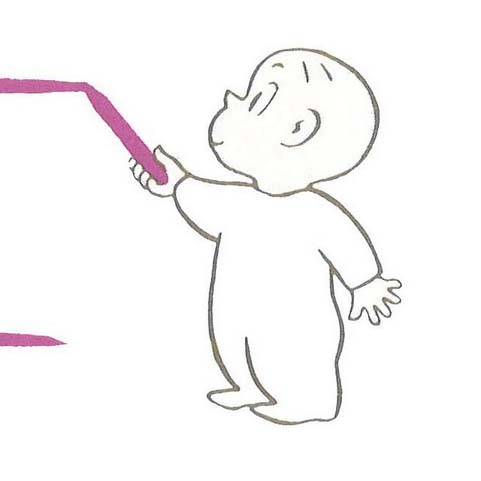
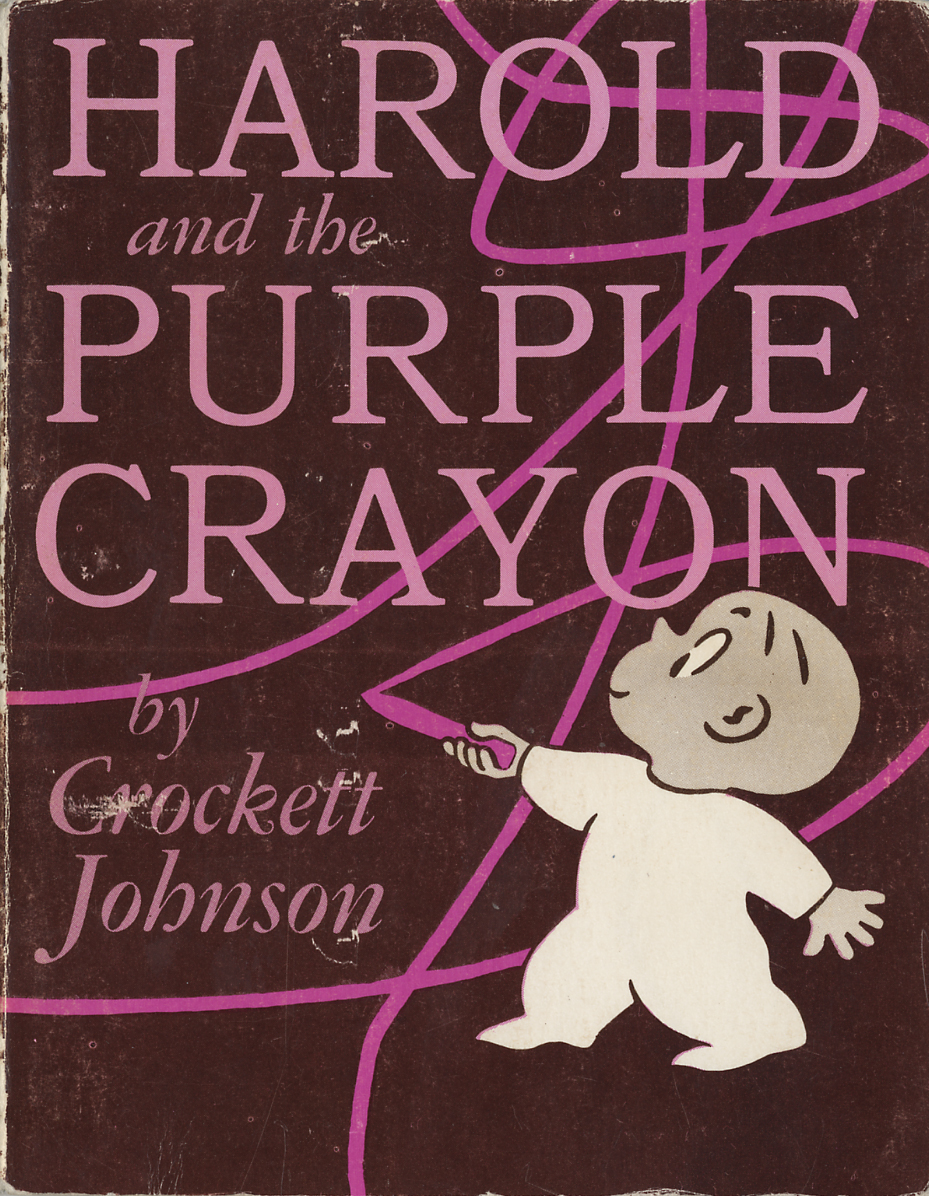
Crockett Johnson, Harold and the Purple Crayon (1955): coverBut, in 1938, Dr. Seuss’s And to Think That I Saw It on Mulberry Street didn’t even merit a Caldecott Honor. Dorothy P. Lathrop’s pictures for Helen Dean Fish’s Animals of the Bible, A Picture Book won that year. Caldecott completely ignored Crockett Johnson’s books. The year that Harold and the Purple Crayon was eligible (1956), the award went to Feodor Rojankovsky’s illustrations for John Langstaff’s retelling of Frog Went A-Courtin‘.

Yet Mulberry Street and Harold and the Purple Crayon remain both beloved and in print, as do Slobodkina’s Caps for Sale, H.A. Rey’s Curious George, and Donald Crews’ Freight Train (an Honor Book in 1979).  Eric Carle’s The Very Hungry Caterpillar is one of the bestselling children’s books of all time.

So, to all who did not win the Caldecott Medal this year, you’re in excellent company.

(I suspect those who didn’t win today’s other awards are also in great company, but I know picture books best — and so have chosen to focus just on the Caldecott.  Also, just to be clear, this is not intended to criticize this year’s winner. Love Chris Raschka’s work! Rather, the point of this post is to place the award-giving into some context.  That’s all.)

Leave a Comment

Harold and the School Mural

Harold taks his purple crayon to the walls of the Ben Franklin School, on Flax Hill, in Norwalk, Connecticut.  The school houses the Head Start program.  I’m told that the mural was painted by employees of Pepperidge Farm.

Harold mural at Ben Franklin School, Norwalk, Connecticut. Photo by Jackie Curtis.

Harold mural at Ben Franklin School, Norwalk, Connecticut. Photo by Jackie Curtis.

Harold mural at Ben Franklin School, Norwalk, Connecticut. Photo by Jackie Curtis.

Harold mural at Ben Franklin School, Norwalk, Connecticut. Photo by Jackie Curtis.

Harold mural at Ben Franklin School, Norwalk, Connecticut. Photo by Jackie Curtis.

The photos are all courtesy of Jackie Curtis, a friend of Ruth and Dave — a.k.a. Ruth Krauss and Crockett Johnson.  Known as Dave to his friends, Johnson created Harold and the Purple Crayon (1955) and its six sequels.  Krauss, author of A Hole Is to Dig (1952, illus. by Maurice Sendak) and The Carrot Seed (1945, illus. by Johnson), was married to Johnson. Both lived in Rowayton (South Norwalk), about three miles from the school where the above mural appears. And, as readers of this blog will be aware, Johnson and Krauss are the subjects of my double biography, scheduled to appear in September of this year.

Comments (2)

Dr. Seuss on “conditioned laughter,” racist humor, and why adults are “obsolete children”

In 1952, Dr. Seuss published an essay in which he pointedly critiqued racist humor. True, his own work — both before and after then — did contain stereotypes. In an essay that’s been languishing at American Quarterly since August 2010, I examine the conflict between Seuss’s progressive impulses and a visual imagination steeped in early twentieth-century caricature. But my point today — Martin Luther King Jr. Day, here in the U.S. — is to highlight Seuss’s anti-racism, and his awareness of how humor is implicated in social structures.

So, then, here is Seuss’s  ”… But for Grown-Ups Laughing Isn’t Any Fun,” which appeared in the New York Times Book Review, 16 Nov. 1952, p. 2.  (The asterisks are in the original — I presume they’re supposed to be ellipses.)


… But for Grown-Ups Laughing Isn’t Any Fun

Dr. Seuss

There are many reasons why an intelligent man should never ever write for children.  Of all professions for a man, it is the most socially awkward.  You go to a party, and how do they introduce you?  The hostess says, “Dr. Seuss, meet Henry J. Bronkman.  Mr. Bronkman manufactures automobiles, jet planes, battleships and bridges.  Dr. Seuss * * * well, he writes the sweetest dear, darlingest little whimsies for wee kiddies!”

Mr. Bronkman usually tries to be polite.  He admits there is a place in the world for such activities.  He admits he once was a kiddie himself.  He even confesses to having read Peter Rabbit.  Then abruptly he excuses himself and walks away in search of more vital and rugged companionship.

Wherever a juvenile writer goes, he is constantly subjected to humiliating indignities.  When asked to take part in a panel discussion along with other members of the writing fraternity he is given the very end seat at the table * * * always one seat lower than the dusty anthologist who compiled “The Unpublished Letters of Dibble Sneth, Second Assistant Secretary of Something-or-Other under Polk.”

Besides that, since we don’t make much money, our friends are always getting us aside and telling us. “Look, now.  You can do better.  After all, with all your education, there must be some way you could crack the Adult Field!”

The thing that’s so hard to explain to our friends is that most of us who specialize in writing humor for children have cracked the adult field and, having cracked it, have decided definitely that we prefer to un-crack it.  We are writing for the so-called Brat Field by choice.  For, despite the fact that this brands us as pariahs, despite the fact this turns us into literary untouchables, there is something we get when we write for the young that we can never hope to get in writing for you ancients.  To be sure, in some ways you are superior to the young.  You scream less.  You burp less.  You have fewer public tantrums.  You ancients are, generally speaking, slightly more refined.  But when it comes to trying to amuse you * * *!  Have you ever stopped to consider what has happened to your sense of humor?

30 x 30 blank space Seuss, illustration for "But for Grown-Ups, Laughing Isn't Any Fun" (1952)

“Him * * * ? Oh, he’s nobody. They say he writes for children”

When you were a kid named Willy or Mary the one thing you did better than anything else was laugh.  The one thing you got more fun out of than anything else was laughing.  Why, I don’t know.  Maybe it has to do with juices.  And when somebody knew how to stir those juices for you, you really rolled on the floor.  Remember?  Your sides almost really did split.  Remember.  You almost went crazy with the pain of having fun.  You were a terrible blitz to your family.  So what?  Your juices were juicing.  Your lava was seething.  Your humor was spritzing.  You really were living.

At that age you saw life through very clear windows.  Small windows, of course.  But very bright windows.

And, then, what happened?

You know what happened.

The grown-ups began to equip you with shutters.  Your parents, your teachers, your everybody-around-you, your all-of-those-people who loved you and adored you * * * they decided your humor was crude and too primitive.  You were laughing too loud, too often and too happily.  It was time you learned to laugh with a little more restraint.

They began pointing out to you that most of this wonderful giddy nonsense that you laughed at wasn’t, after all, quite as funny as you thought.

“Now why,” they asked, “are you laughing at that?  It’s completely pointless and utterly ridiculous.”

“Nonsense,” they told you, “is all right in its place.  But it’s time you learned how to keep it in its place.  There’s much more in this world than just nonsense.”

Your imagination, they told you, was getting a bit out of hand.  Your young unfettered mind, they told you, was taking you on too many wild flights of fancy.  It was time your imagination got its feet down on the ground.  It was time your version of humor was given a practical, realistic base.  They began to teach you their versions of humor.  And the process of destroying your spontaneous laughter was under way.

A strange thing called conditioned laughter began to take its place.  Now, conditioned laughter doesn’t spring from the juices.  It doesn’t even spring.  Conditioned laughter germinates, like toadstools on a stump.

And, unless you were a very lucky little Willy or Mary, you soon began to laugh at some very odd things.  Your laughs, unfortunately, began to get mixed in with sneers and smirks.

This conditioned laughter the grown-ups taught you depended entirely upon their conditions.  Financial conditions.  Political conditions.  Racial, religious and social conditions.  You began to laugh at people your family feared or despised — people they felt inferior to, or people they felt better than.

If your father said a man named Herbert Hoover was an ass, and asses should be laughed at, you laughed at Herbert Hoover.  Or, if you were born across the street, you laughed at Franklin Roosevelt.  Who they were, you didn’t know.  But the local ground rules said you were to laugh at them.  In the same way, you were supposed to guffaw when someone told a story which proved that Swedes are stupid, Scots are tight, Englishmen are stuffy and the Mexicans never wash.

Your laughs were beginning to sound a little tinny.  Then you learned it was socially advantageous to laugh at Protestants and/or Catholics.  You readily learned, according to your conditions, that you could become the bright boy of the party by harpooning a hook into Jews (or Christians), labor (or capital), or the Turnverein or the Strawberry Festival.

You still laughed for fun, but the fun was getting hemmed in by a world of regulations.  You were laughing at subjects according to their listing in the ledger.  Every year, as you grew older, the laughs that used to split your sides diminished.  The ledger furnished more sophisticated humor.  You discovered a new form of humor based on sex.  Sex, a taboo subject, called for very specialized laughter.  It was a subject that was never considered funny in large gatherings.  It was a form of humor you never indulged in at Sunday school.  It was a form of humor that was subtle and smart and you learned to restrict it for special friends.

And, by the time you had added that accomplishment to your repertoire, you know what had happened to you, Willy or Mary?  Your capacity for healthy, silly, friendly laughter was smothered.  You’d really grown up.  You’d become adults * * * adults, which is a word that means obsolete children.

As adults, before you laugh, you ask yourselves questions:

“Do I dare laugh at that in the presence of the boss?  Sort of dangerous, when you consider how he feels about Taft-Hartley.”

“How loud shall I laugh at that one?  Mrs. Cuthbertson, my hostess, is only laughing fifteen decibels.”

“Shall I come right out and say I thought the book was funny?  The reviewer in THE TIMES said the humor was downright silly.”

These are the questions that children never ask.  THE TIMES reviewer and Mrs. Cuthbertson to the contrary notwithstanding, children never let their laughs out on a string.  On their laughter there is no political or social pressure gauge.

That, I think, is why we maverick humorists prefer to write exclusively for children.


Someday, I hope someone will publish a collection of Seuss’s non-fiction. (Some years ago, I proposed such a collection to Random House. This is one of my many failed book ideas — they turned it down.)  Until that day, Seuss scholars and fans will have to seek out these pieces. If you happen to be seeking them, I give full bibliographic citations in Dr. Seuss: American Icon (2004) — borrow it from your local library.

Comments (4)

Seussology

The Cat's hatI’m doing it again — teaching an entire course devoted to Dr. Seuss (the link in this sentence takes you to the current draft of the syllabus).  Art!  Politics!  Verse!  Nonsense!  Activism!  These are but some of the subjects we’ll explore in English 710: Dr. Seuss, a graduate-level course which begins on Wednesday.

Aiming to improve on the earlier Seuss course (taught 5 years ago), I did not look at the earlier syllabus as I drafted this one.  Only when I finished the draft did I read the 2007 version of the class, incorporating some of the worthier parts of that syllabus.  The idea, this time, is to structure the class around a dozen sets of questions — any of which, as I’ve pointed out on the paper assignment, could lead students to a fruitful paper.  Here are a few:

Dr. Seuss, And to Think That I Saw It on Mulberry Street (cover)1. The Child: The Boy in the Book.  How do Seuss’s works conceive of the child? With which understanding of childhood would you link his children? In his works, what sort of power do children have? And which children get that power? How is Seuss’s work influenced by his own childhood, including what he read?

3. Activism, Part 1: Horton Hears a Heil! How do Seuss’s politics play out in his own works? Are there ideological inconsistencies between his stated goals and other messages that the books may convey? What makes an activist children’s book persuasive to its readers?

4. Cartoons, Camp, & Surrealism: The Art of Dr. Seuss. What kind of artist is Dr. Seuss? How do cartoons inform his aesthetic? How do artistic movements inform his aesthetic? Beyond The 5,000 Fingers of Dr. T., does camp play a role in his aesthetic? Indeed, what is the Seuss aesthetic? How does his art work?

7. Gender: Is Seuss for the Goose Seuss for the Gander? The most blunt way to ask this question is this: Was (or is) Dr. Seuss sexist? More subtle ways to ask the question might include: In what ways do Seuss’s books participate in gender stereotypes? In what ways do they resist gender stereotypes? What role, if any, should Seuss’s biography play in your answer to these questions?

10. Marketing: Quick, Henry, the DDT!  There’s debate among those who study Seuss, and in the wider public discourse about Seuss. On the one hand, there are those who argue that much of the posthumous merchandising (Grinch selling breakfast cereal, etc.) violates Seuss’s wishes: his work had a moral and aesthetic value, not merely a commercial one. On the other hand, there are those who will point out that Seuss was a successful advertising man (until the publication of The Cat in the Hat, his primary source of income was advertising), and in fact entered into merchandising agreements during his life. Wade into this debate about art and commerce. Which side is more correct? Or is there a different set of questions we should be asking?

Above: Seuss’s Ford advertisements, 1949

There are also questions about poetry, race, and adaptations, among other topics. (You can find a full list on the paper assignment.)   I chose this structure because the best discussions derive from good questions.

Your Favorite SeussAnother change from last time: using the anthology Your Favorite Seuss, instead of having the students buy individual Seuss books.  I have mixed feelings about this choice.  On the one hand, this is far cheaper than having them buy the individual books — and that’s my primary reason for doing this.  I realize that books are expensive.  And, also in its favor, Molly Leach has done a really nice job in redesigning the layout for each Seuss book.  On the other hand, I’d prefer for students to read the books as originally laid out.  Your Favorite Seuss includes all text, but moves artwork around so that it can include 13 books in fewer pages.  As a compromise, I’m putting the original versions on Reserve (at the library) so that students can also see the originals.

One assignment I’ve retained from the original version of the class is “Sighting Seuss,” which requires students to keep an eye out for appropriations, references, parodies, etc. of Seuss in contemporary popular culture.  Examples might include this Kids in the Hall sketch (1990), in which Dave Foley presents the “Dr. Seuss Bible”:

Another example is NicePeter’s recent “Dr. Seuss vs. Shakespeare: Epic Battles of Rap History #12″ (2011):

As it’s an election year, we should find many examples of Seuss in political satire.  Since the 1990s, people have been aligning Newt Gingrich with the Grinch.

Newt Gingrinch, Newsweek cover (1994) Grinch

But he’s not the only one.  John Kerry, George W. Bush, Osama Bin Laden, Barack Obama, and others have all been caricatured as the Grinch.

There are hundreds of examples of Seuss in popular culture.  The point is to get students to think about the ways in which Seuss circulates in the public imagination.  When people invoke Seuss (or his anapestic tetrameter, or his characters, etc.), to what purpose do they use him?  In popular culture, what does Seuss mean?

One big change from the last time I taught this is that formerly obscure short films by Seuss are now easy to find.  5 years ago, I showed the class a bootleg DVD of Your Job in Germany (1945), a propaganda film written by Theodor Geisel (a.k.a. Dr. Seuss) and directed by Frank Capra.  You can now see this via YouTube or Archive.org.

Indeed, until this weekend I had never seen Our Job in Japan (1945), another U.S. Army propaganda film written by Geisel — and, incidentally, considered so sympathetic to the Japanese that General MacArthur worked to prevent it from being shown to the troops.  But now, it’s very easy to find (as in below, also courtesy of Archive.org).

I’ve assembled a whole page of these films.  We’ll still view a few of these in class, but now the students have the luxury of re-watching them and seeing more than those screened during class.  For those of you who lack the time to view all of those Private SNAFU cartoons, here are a couple of the better ones, which, yes, include some “adult” humor.  (The audience were GIs, not children.)  You will also note the sort of ethnic caricature common to Warner Bros. cartoons of the period.

Private SNAFU: Spies (Aug. 1943)


Directed by Chuck Jones.  If the voice reminds you of Bugs Bunny, that’s because Mel Blanc is also the voice of SNAFU. (From Archive.org)

Private SNAFU: The Home Front (Nov. 1943)


Directed by Frank Tashlin. (From Archive.org)

Well.  Any suggestions?  Let me know.  Classes start on Wednesday, and I’ll be editing the syllabus until then.  Though (of course) I can modify the reading list during the term, I tend to do that only minimally once the semester begins.   If no suggestions, well, I hope you’ve enjoyed learning about, oh,… the thinks that we’ll think!

Comments (1)

All Things Rey: New Blog Devoted to Creators of Curious George

H.A. Rey, Curious GeorgeThere’s a new blog that children’s lit readers & Curious George fans will want to explore.  Titled All Things Rey (an homage to the great All Things Thurl website, perhaps?), it features posts devoted to H.A. and Margret Rey.  It launched on Nov. 2 2011 with a post on H.A., at a New Hampshire swimming pool, doing pitch-perfect imitations of animals.  Other posts have focused on the original spelling of “Rey,” the Reys’ arrival in New York in 1940, and their Greenwich Village apartment.  Ann Mulloy Ashmore, the blog’s creator, promises more “fascinating anecdotes and details about” the Reys, derived from her work on them both now and as a staff member of the de Grummond Collection who helped catalog the Reys’ papers when they arrived in 1999.

Not incidentally, Ashmore also has published a really good piece on the Reys: “From Elizabite to Spotty: The Reys, Race and Consciousness Raising,” in Children’s Literature Association Quarterly 35.4 (Winter 2010), pp.357-372.  If you or your university library subscribes to ProjectMuse, you can read the article gratis.

Here’s hoping these blog posts become a book!

Comments (1)

Make Way for Boston: Children’s Literature and New England. CALL FOR PAPERS. Due: 15 Mar. 2012

New England Primer.  Edition of 1777.The beginnings of children’s literature in America predate the nation, but not the region. In 1686, the publication of the New England Primer heralded a centuries-long tradition of books for children and young people written in, on, and around New England. These works show that constructions of places and people are not wholly separate processes; in their convergence, they produce complex and multi-faceted environments. Just as it is impossible to consider “the child” as a singular entity, it is equally impossible to conceive of a single “New England.” Both formations are heterogeneous, intricate, and highly dependent upon subjective perspective. Proposed for the Jan. 2013 MLA in Boston, this panel will consider not only the different New Englands readers encounter through various texts for children, but — concurrent with the MLA 2013 Presidential Theme of “Avenues of Access” — also how the region itself has both prevented and promoted access to children’s literature.

Questions and subjects prospective panelists might wish to pursue include but are not limited to:

  • the role of publishers. Houghton Mifflin, Candlewick, David R. Godine, Beacon all have offices in Boston, the city that was also home to earlier publishers of works for children (E.P. Dutton, Lothrop and Lee, Munroe and Francis, Ticknor and Fields, the American Tract Society, Isaiah Thomas)
  • the role of librarians from the region, such as Caroline M. Hewins, Minerva Sanders, Alice M. Jordan
  • Horn Book logomagazines for children, such as Our Young Folks (pub. by Atlantic Monthly), Youth’s Cabinet, The Student and Schoolmate, Parley’s Magazine, Oliver Optic’s Magazine, Robert’s Merry Museum (founded by Samuel Goodrich and edited by Louisa May Alcott)
  • Horn Book.  Based in Boston, the influential publication has, since 1924, provided reviews of and essays on children’s books.
  • the mid-19th century popularity of world histories and geographies for children, written and published in New England by Samuel Goodrich, Jacob Abbott, and othersLouisa May Alcott, Little Women
  • Authors who live or lived in New England, such as Louisa May Alcott, M.T. Anderson, Sandra Boynton, Virginia Lee Burton, Eric Carle, Lydia Maria Child, Robert Cormier, Eleanor Estes, Nathaniel Hawthorne, Crockett Johnson, Ruth Krauss, Robert Lawson, Lois Lowry, Robert McCloskey, Gregory Macguire, Eleanor H. Porter, H.A. & Margret Rey, Maurice Sendak, Dr. Seuss, Marc Simont, Lane Smith, Chris Van Allsburg,, E. B. White, and Mo Willems. We welcome considerations of New England authors not traditionally acknowledged as writers for children, but who wrote for children nonetheless (such as Sarah Orne Jewett, Mary E. Wilkins Freeman, and Alice Cary) as well as those whose works are assigned to young readers even if not necessarily intended for them (J.D. Salinger, Sylvia Plath, Junot Diaz)
  • Robert McCloskey, Make Way for DucklingsBooks set in New England, such as: The New England Primer (1686), Jacob Abbott’s Rollo books (1835-1858), Samuel Griswold Goodrich’s Peter Parley series (1827-1859), Louisa May Alcott’s Little Women (1868-69), Alice Cary’s Snow-Berries: A Book for Young Folks (1867), Kate Douglas Wiggin’s Rebecca of Sunnybrook Farm (1903), Eleanor H. Porter’s Pollyanna (1913), Rachel Field’s Hitty, Her First Hundred Years (1929), E. B. White’s Charlotte’s Web (1952) and The Trumpet of the Swan (1970), Robert McCloskey’s Make Way for Ducklings (1941) and many books set in Maine (Blueberries for Sal, One Morning in Maine, Time of Wonder), Chris Van Allsburg’s The Stranger (1986), Dr. Seuss’s And to Think That I Saw It on Mulberry Street (1937), Oliver Butterworth’s The Enormous Egg (1956), Robert Lawson’s Rabbit Hill (1944), Esther Forbes’s Johnny Tremain (1943), Joan W. Blos’s A Gathering of Days: A New England Girl’s Journal, 1830-32 (1979), Elizabeth George Speare’s The Witch of Blackbird Pond (1958), Jacqueline Briggs Martin’s Snowflake Bentley (1998), Virginia Hamilton’s Anthony Burns: The Defeat and Triumph of a Fugitive Slave (1988), Eleanor Estes’ The Moffats books (1941-1943, 1983),Virginia Hamilton, Anthony Burns: The Defeat and Triumph of a Fugitive Slave Lois Lowry’s Anastasia Krupnick series (1979-1995), Jeanne Birdsall’s The Penderwicks series (2005-), Robert Cormier’s The Chocolate War (1974) and I Am the Cheese (1977), M.T. Anderson’s The Astonishing Life of Octavian Nothing, Traitor to the Nation (2006-2008).

By 15 March 2012, please send 500-word abstracts to Philip Nel (philnel@ksu.edu) and Kate Slater (kslater@ucsd.edu).  Panelists will need to be members of the MLA by 7 April 2012.

This panel is sponsored by the MLA Children’s Literature Division but is not guaranteed.  The 2013 MLA will be held in Boston, 3-6 January 2013.

Comments (1)

Emily’s Library, Part 3: En Français

section of Emily's Library, Emily's Room, Switzerland. Photo taken 31 Dec. 2011Here are a few en français.  For each, I also provide the title as translated into English.  As noted in Emily’s Library, Part 1, I read the books in English (since I don’t speak French) and then send the French originals to my niece (whose parents are raising her in English & French).  I agree that this section of the library needs to expand at a faster rate, and especially welcome further suggestions.

Ramona Badescu, Gros Lapin. illus. Delphine Durand (2007) [Big Rabbit's Bad Mood (2009)]

Badescu writes, “Big Rabbit had a big, bad hairy mood that stuck to him like glue,” and Durand draws a grey, furry oblong creature following big rabbit around.  Big Rabbit spends much of the book trying to evade the bad mood, but to no avail.  In the end, though, the bad mood leaves. Very funny, and evocative of what a bad mood feels like.

Boyer, Ouaf Miaou Cui Cui (2009): coverCecile Boyer, Ouaf Miaou Cui Cui (2009) [Woof Meow Tweet Tweet (2011)]

Brilliant use of typography to tell a story.  Boyer represents each animal using the word for that animal’s characteristic sound; each sound gets its own typeface.  Ingenious.

Sylviane Donnio & Dorotheé de Monfreid, Je mangerais bien un enfant (2004) [I'd really like to eat a child (2007)]

A funny story about a crocodile who won’t eat the food his parents get him because he’d prefer to eat a child.  Of all the books I’ve sent, this one is a particular favorite of my sister’s.

Delphine Durand, Ma Maison (2000) [My House (2007)]

Non-narrative book that explores the many rooms and creatures that live in the house.  Lots of detail with much to examine on each page.

Durand, Bob & Cie (2004): coverDelphine Durand, Bob & Cie (2004) [Bob & Co. (2006)]

A story about life, the universe, and story, Durand‘s Bob & Cie is one of my all-time favorites. It asks the big questions. It’s funny.  It has philosophical and theological implications, which can be pondered or ignored (depending on the interests and cognitive abilities of the reader).

Jean-Luc Fromental & Joëlle Jolivet, 365 Pingouins (2006) [365 Penguins (2006)]

An oversize book about math, the environment, and… penguins!  Its bold contrasts and limited color palette recalls mid-twentieth century poster design.

Catherine Graindorge & Fiona Land, Mon tout premier livre d’éveil (2005)

This is the sole book featured here — or, indeed, on any of these “Emily’s Library” lists — that I didn’t buy for my niece.  In the tradition of Dorothy Kunhardt’s Pat the Bunny (1940), Mon tout premier livre déveil is a tactile experience, with textures to rub, flaps to pull, even a mirror to look in.  I’m including it here because Emily loves it.  One caution: it might be more sturdily designed.  She’s already torn off two of the flaps.

Marcellino, Le Chat Botte (1999): coverFred Marcellino & Charles Perrault, Le Chat Botte [Puss in Boots] (1999)

The late, great Fred Marcellino did amazing work.

Beatrice Rodriguez, Le voleur de poule (2005) [The Chicken Thief (2010)]

This one is wordless (and so should really be included in yesterday’s list), but I purchased the French edition. Curiously enough, I first saw the book in Germany, where it is published under the title Der Hühnerdieb (2009)

Tullet, Un Livre (2010): coverHervé Tullet, Un Livre (2010) [Press Here (2011)]

New York Times bestseller, Tullet’s picture book reminds us that books are interactive.  Who needs an interactive ebook when you can read this?  Note that, in French, the title is simply A Book, but in English it’s Press Here.

Dorothée de Monfreid, Nuit Noire (2007) [Dark Night (2009)]

Felix, walking home through the forest in the dark, sees many scary creatures — and meets a brave rabbit who shows him how to deal with his fears.

Yes, I am aware that all of these are recent, and I do know Babar and The Little Prince. Saint-Exupéry’s book does not strike me as being for very young readers — a point which, admittedly, also might be made regarding a few other choices I’ve made. Emily has already been given a few Babar books. Regarding recency: as noted at the top, I’m seeking suggestions!

Looking for other great children’s books?  Try these blogs:

Related posts on Nine Kinds of Pie:

That’s it for this installment, but there will be more “Emily’s Library” features in the future.

Comments (3)

Emily’s Library, Part 2: Wordless Picture Books

section of Emily's Library, Emily's Room, Switzerland. Photo taken 31 Dec. 2011As mentioned in Emily’s Library, Part 1, one reason for including these is that they’re multi-lingual, but another is that they’re compelling works of narrative art. They highlight art’s centrality to the picture book itself.  To restate what I noted in yesterday’s post, art is so central to the picture book that, as part of his final revision process, Shaun Tan removes all of the words (to make sure that the pictures carry the story) and then restores just enough words.

Suzy Lee, Wave (2008)

Wordless tale of a girl, at the beach, facing off with the waves. Her movements and facial expressions tell you all you need to know. One of the New York Times’ Best Illustrated Books of that year.  Lee is one of my favorite contemporary illustrators.

Suzy Lee, Shadow (2010)

A near-wordless picture book. You open it with the spine at the top, so that the fold is in the middle of your reading experience, dividing the upper half (a basement) from the lower half (a shadow).  The shadow transforms ordinary objects into an adventure.

Suzy Lee, Shadow (2010): cover

Barbara Lehman, The Red Book (2004)

Lehman, The Red Book (2004): cover

Probably Lehman’s best-known work, this wordless tale is about friends, books, and the unexpected.  You can’t go wrong with a Barbara Lehman book. This one won a Caldecott Honor.

Barbara Lehman, Trainstop (2008)

Another lovely wordless tale from Lehman. It appeals to that sense one has (or I had, when I was a child, and still retain) that, when the train doors open, you might step out into… anywhere.  I need to write a full-length blog post on Lehman.  Her work ranks among the best contemporary children’s books — and, indeed, children’s books in general.

Newgarden and Cash, Bow-Wow Bugs a BugMark Newgarden and Megan Montague Cash, Bow-Wow Bugs a Bug (2007)

As Lane Smith says, “What an odd, sweet, surreal and hilarous adventure from Newgarden and Cash. It’s what Crockett Johnson, Ernie Bushmiller and Rod Serling might have come up with if they shared a bench at the doggie park. I love it!” See also my longer blog post on Newgarden and Cash’s Bow-Wow books, and the board books listed with Emily’s Library, Part 1.

Stephen Savage, Where’s Walrus? (2011)

A comic tale of a walrus on the run, combining the find-the-character game of Where’s Waldo? with a playful narrative and plenty of joie de vivre.  Savage‘s design recalls posters from the 1930s, and the work of Richard McGuire (whose work will make an appearance in a future “Emily’s Library” post).

There are other great wordless books, of course.  These are just the ones I’ve sent so far.

Looking for other great children’s books?  Try these blogs:

Related posts on Nine Kinds of Pie:

 Tomorrow: Emily’s Library, Part 3: En Français!

Comments (1)

Introducing Emily’s Library. Part 1: 62 Great Books for the Very Young

section of Emily's Library, Emily's Room, Switzerland. Photo taken 31 Dec. 2011Welcome to a new feature on Nine Kinds of Pie: “Emily’s Library.” It’s named for my eight-month-old niece, and it will highlight only the very best children’s books. When I learned that my sister was expecting, I decided to create for her child an ideal library of children’s books. She and her spouse could read them to her, and, eventually, Emily could read the books herself.

Since I began this project, I’ve found myself sharing my list of “Emily” books with other parents or parents-to-be. With “Emily’s Library,” I will now be sharing it with you.

What do I mean by “ideal” or “the very best”?  I’m still developing my criteria, but here’s what I have so far.

  1. Old and new. Classics, but also more recent books.  I want neither to reify the past, nor to dwell solely in the present.  Rather, I’d like a range of works from then and now.
  2. Difference. This is fairly broadly defined. I’m thinking of different types of stories (different genres), different nationalities, different ethnicities, different artistic styles….
  3. I want some emphasis on children’s books originally in French. Emily and her parents live in Switzerland. My sister and brother-in-law speak English, French, German, and Spanish, but they’ll be raising Emily primarily in English and French.  Since I don’t speak French, I’ve been reading French books in translation, and then sending Emily the original French-language editions. A broader implication of this criterion is a need to read children’s books that originate in countries (and languages) other than one’s own.
  4. The theme of wordless picture books is (in part) a response to the language issue. Art is legible in any language. Readers can create their own words, changing those words with each reading if they wish. Or they can experience the story fully through the language of pictures. Wordless picture books also feature on this list because they’re great examples of narrative art: they prove, definitively, that a story does not require words. Art is so central to the picture book that, as part of his final revision process, Shaun Tan “test[s] for wordless comprehension. I remove the text and see if it works by itself. And if it does I feel that that’s a successful story.”  And, finally, wordless picture books are here because I happen to like them.
  5. Which brings me to the question of taste. Since it reflects my likes and dislikes, the list will be somewhat idiosyncratic. So, for example, you’ll notice that I’m drawn to humor.
  6. Politically acceptable, inasmuch as possible. The list will not be strictly “politically correct” because: I’m inherently suspicious of orthodoxies, some classics that don’t reflect contemporary social values remain worth reading, and books can be interpreted in many ways. By this last point I mean to say that (with a few exceptions) a book is not a tract: whatever political messages it may harbor, there’s no guarantee that a reader will discern them… simply because literature doesn’t work that way. Having said that, I am interested in books that may teach Emily to respect those who are different from herself, to be receptive to ideas that challenge the status quo, to think critically, and to imagine… whatever she wants.
  7. All of these books are for Emily, and thus reflect my own imagination — what I think she or her parents may enjoy, what might make her smile, give her pleasure, or grant her some insight. Since she is only eight months old, I am of course projecting onto her my own sense of who she is or might become.

I’ve listed these points to underscore the subjectivity of this endeavor. I have written books and articles on children’s literature, I teach courses on children’s literature, and I have amassed a certain amount of “expertise” in the field.  However, I’m acutely aware of how much I have yet to learn, I recognize that tastes vary, and I know that my aesthetic criteria are (as yet) rather vague. If this list does represent a literary canon of sorts, it also acknowledges that canon-formation is an idiosyncratic, flawed, and tricky business.

In sum, I think all of these books are good. You may disagree, or have favorites of your own that I’ve failed to list. Please feel share your disagreements and suggestions in the comments section below. As I say, I know that I’ve much to learn, and would be delighted to learn about other great children’s books.

Without further prologue, here are some of the first 62 books I’ve sent to Emily.  I’ll post more tomorrow and Wednesday, continuing with semi-regularly posts throughout Emily’s childhood.

Janet and Allan Ahlberg, Each Peach Pear Plum (1978)

Enjoy the rhymes, have fun finding nursery-rhyme characters.  Great for very young readers.

Sandra Boynton, Hippos Go Berserk! (1977, rev. 2000)

A counting book featuring the humor and hippos of the inimitable Sandra Boynton.

Boynton, Snoozers: 7 Short Short Bedtime Stories for Lively Little Kids (1997)

Sandra Boynton, Snoozers: 7 Short Short Bedtime Stories for Lively Little Kids (1997)

“I’m not tired!”  The reliably funny Sandra Boynton offers tales for bedtime.  Also features words and music to “Silly Lullaby” (later recorded for Philadelphia Chickens).  I’ve bought Emily quite a few Boynton books — in part ’cause Emily’s mother likes them, and in part ’cause I do.  Here are the other titles I’ve sent:

  • But Not the Hippopotamus (1982)
  • Pajama Time (2000)
  • 15 Animals (2008)

Jeff Brown, Flat Stanley, illus. Tomi Ungerer (1964)

Brown, Flat Stanley, illus. Ungerer (1964): cover

A favorite of mine when I was in first grade. Then, this book appealed to me because it suggested that the imagination could alter the physical universe — Stanley’s near two-dimensionality seemed so real to me. As an adult, I love the book’s dry humor, sense of the absurd, and its silliness. There’s also one joke that Emily may appreciate far sooner than children who only speak English. The “head of the Famous Museum of Art” is Mr. O. Jay Dart. Get it? His name puns on objet d’art (French for “work of art”).

Margaret Wise Brown and Clement Hurd, Goodnight Moon (1947)

Brown’s verse and Hurd’s post-impressionist art combine to deliver the pleasures of evading bedtime. (For more about the book, see Leonard Marcus’s biography of Brown or his The Making of Goodnight Moon.)

Peter Brown, Children Make Terrible Pets (2010)

The central conceit — swapping human and animal roles — is both comic and instructive. If animals saw us as we see them, what would they see?

Burton, Katy and the Big Snow (1943): coverVirginia Lee Burton, Katy and the Big Snow (1943)

Along with Keats’ The Snowy Day and Takao’s A Winter Concert, this was one of a trio of winter-themed books sent to Emily in late October 2011.  It’s another favorite from my own childhood.  As I did then, I love the images of Katy plowing everyone out, the paths she cuts across the landscape, discovering roads where there had been only snow.  There’s something powerful in the book’s presentation of a relatively small being (Katy) remaking a vast snowy landscape.  It suggests that strength need not derive from size.

Eric Carle, The Very Hungry Caterpillar (1969, rev. 1987)

You know this one, don’t you?  I’d be surprised if you didn’t.  It’s a great example of Carle’s vibrant collage-style illustration and storytelling.  Check it out.

Chih-Yuan Chen, Guji Guji (2003, English translation 2004).

When the title character (a crocodile raised by ducks) meets crocodiles who want to eat his family, he realizes that — though he may not be a duck — he needs to defend those he loves. Told with a gentle sense of humor, the book addresses difference without being preachy.

Donald Crews, Freight Train (1978)

Bold colors, clean layout, a “simple” idea beautifully realized.  Those last five words identify a key part of my aesthetic criteria.

Tim Egan, Friday Night at Hodges Café (1994)

I’ve previously devoted a whole blog post to Tim Egan’s work.  He deserves much, much more attention than he has thus far received.  And this book contains one of my favorite lines in all of children’s literature: “Too bad his duck was so crazy.”

Lois Ehlert, Color Zoo (1989): coverLois Ehlert, Color Zoo (1989)

Turn the die-cut pages to see shapes become animals.  See also Ehlert’s companion book, Color Farm (1990).  Bright colors, clever design.  A Caldecott Honor book. In its board book incarnation, great for the youngest readers.

Ian Falconer, Olivia (2000)

The book that launched the literary career of that precocious pig, Olivia is an Eloise for contemporary children. In addition to his sense of humor, Falconer is also great at using white space to pace his narrative.  I imagine him making detailed sketches, and then reducing those to just the vital visual information.

Hoban, Black and White (2007): coverTana Hoban, Black and White (2007)

This book — and its companions Black on White (1993) and White on Black (1993) — show black shapes on white backgrounds and vice-versa.  Buttons, a sailboat, a fork, a flower, a banana.  The pages unfold accordion-style so that you can stand the book up around a baby, and she can look at the images.  The sharp contrast between black and white make the shapes especially vivid to infants (whose eyes are still developing the capacity to focus). This is one of the first books that really interested Emily.

Crockett Johnson, Harold and the Purple Crayon (1955): coverCrockett Johnson, the Harold series (1955-1963):

  • Harold and the Purple Crayon (1955)
  • Harold’s Fairy Tale (1956)
  • Harold’s Trip to the Sky (1957)
  • Harold at the North Pole (1958)
  • Harold’s Circus (1959)
  • A Picture for Harold’s Room (1960)
  • Harold’s ABC (1963)

Quite possibly the best children’s books ever written, and certainly the most succinct expression of the power and peril to be found in the imagination. When I talk to people about Johnson‘s Harold books, they either (a) have not heard of them, or (b) know them and love them. Very rarely do I meet someone who knows the books, but is indifferent.  In sum, if you do not know these, you should.  Start with Harold and the Purple Crayon and Harold’s ABC.

Ezra Jack Keats, The Snowy Day (1962)

Keats, The Snowy Day (1962): coverThis Caldecott-winning book is a favorite from my childhood. Yes, Peter (the book’s protagonist) was the first child of color I had met in literature.  But what left a longer, more lasting impression was the affinity I felt — and feel — for him.  As I was, Peter is a contemplative, curious child.  He makes snow angels, he explores his neighborhood, discovers that his feet can make different kinds of tracks in the snow, and pretends to be a mountain-climber.  As I did, he (or so it seemed to me then) often feels more comfortable in the company of his imagination than in the company of other children.  He does not join in the snowball fight.  After the day is over, he reflects on his adventures.  The bold colors of Keats’s collages, and the thoughtfulness — the inwardness — of his protagonist make The Snowy Day a great book for any child who, like Peter, sees in snow a sense of wonder and possibility.

Laurie Keller, The Scrambled States of America (1998)

I thought Emily might like to learn a little bit about the country where her mother was born. Well, that was part of the reason behind choosing this one. Mainly, I think Keller’s work is hilarious. Sure, there’s a geography lesson here, but there are far more jokes.

Jon Klassen, I Want My Hat Back (2011)

A masterpiece of economy and wit.  Each detail works perfectly.  And its deadpan humor knocks me out each time I read it.

Ruth Krauss and Crockett Johnson, The Carrot Seed (1945)

A little boy plants a carrot, everyone keeps saying “it won’t come up,” but every day he keeps “sprinkling the ground with water.” This story has been interpreted as being about faith, persistence, or simply ignoring the nay-sayers.  Maurice Sendak calls it a “perfect picture book.”

Karla Kuskin, Roar and More (1956)

Poet Karla Kuskin’s first children’s book.  Dynamic layout and typography introduces animals and the sounds they make.  Visually compelling, fun to read aloud, and nice humor (she also provides the sounds of giraffe and fish).

Munro Leaf & Robert Lawson, The Story of Ferdinand (1936)

I expect you know this one, but, if not, then you might like to read my earlier post, “Ferdinand at 75.”

James Marshall, The Three Little Pigs (1989): cover (for paperback edition, 1996)Three versions of three pigs:

  • James Marshall, The Three Little Pigs (1989)
  • Jon Scieszka & Lane Smith, The True Story of the Three Little Pigs by A. Wolf (1989)
  • Eugene Trivisas & Helen Oxenbury, The Three Little Wolves and the Big Bad Pig (1993)

Three versions of the fairy tale. Marshall’s stays closest to Joseph Jacobs’ original, but his illustrations add great comic timing and general daffiness.  Scieszka and Smith tell the story from the wolf’s point of view.  Trivisas and Oxenbury swap the roles of protagonist and antagonist.  Note: be careful of what edition you get of the Marshall.  There’s a re-formatted hardcover version you want to avoid.

Bill Martin, John Archambault, & Lois Ehlert, Chicka Chicka Boom Boom (1989)

Bold colors, swinging verse, and … the alphabet!  One of several ABC books I’ve given thus far.  See also Dr. Seuss’s ABC and Crockett Johnson’s Harold’s ABC.

Mark Newgarden and Megan Montague Cash, the Bow-Wow board books (2007-2009):

  • Bow-Wow Naps by Number (2007)
  • Bow-Wow Orders Lunch (2007)
  • Bow-Wow Hears Things (2008)
  • Bow-Wow Attracts Opposites (2008)
  • Bow-Wow 12 Months Running (2009)
  • Bow-Wow’s Colorful Life (2009)
Newgarden and Cash, Bow-Wow Orders Lunch Newgarden and Cash, Bow-Wow Naps by Number Newgarden and Cash, Bow-Wow Hears Things Newgarden and Cash, Bow-Wow Attracts Opposites Newgarden and Cash, Bow-Wow 12 Months Running Newgarden and Cash, Bow-Wow's Colorful Life

I’ve written an entire post on Newgarden and Cash’s Bow-Wow books. The first, Bow-Wow Bugs a Bug, is listed in tomorrow’s post on wordless picture books. During her first year, the Bow-Wow board books have been Emily’s favorites.

Antoinette Portis, A Penguin Story (2009)

Penguin seeks something new,… and finds it! Love Portis’ graphic style, humor, and how she honors the title character’s curiosity.

Peggy Rathmann, Goodnight Gorilla (1994)

Peggy Rathmann, Good Night, Gorilla (1994): cover

A clever riff on Brown and Hurd’s Goodnight Moon. Rathmann has great comic timing, knows how to let the illustrations tell the story, and includes lots of fun details. The baby giraffe has a toy giraffe, the baby elephant has a toy Babar, and the baby armadillo has … a toy Ernie. Why would the little armadillo have not a toy armadillo, but the Muppet from Sesame Street?  Well, why not?

Michael Rosen and Helen Oxenbury, We’re Going on a Bear Hunt (1989)

Exemplifies the dynamic relationship between words and images that sustains any good picture book.  And it’s a fantastic read-aloud.  For more Oxenbury, see the entry for James Marshall (above) — it contains three versions of “The Three Little Pigs,” one retold by Trivias and Oxenbury.

Amy Krouse Rosenthal & Tom Lichtenheld, Duck! Rabbit! (2009).

Based on the metapicture that fascinated Wittgenstein, two unseen persons debate whether we’re looking at a duck… or a rabbit.

Seuss, Green Eggs and Ham (1960): coverDr. Seuss, Green Eggs and Ham (1960)

Using only 50 different words, Seuss creates a nonsensical classic & his own best-seller.  See also an earlier blog post on this book.

Dr. Seuss, Dr. Seuss’s ABC (1963)

The third of Seuss’s alphabetically themed works.  The first two are The Cat in the Hat Comes Back (1958) and On Beyond Zebra! (1955).

Maurice Sendak, The Nutshell Library (1962)

A collection of four books: Alligators All Around, Chicken Soup with Rice, One Was Johnny, and Pierre.  All are made for tiny hands, and are what Sendak was working on just before he created Where the Wild Things Are (1963).  In other words, this is prime Sendak.  Wild Things will be a future purchase for Emily, but these seemed a better fit for her first year.

Sendak, The Nutshell Library (1962)

Esphyr Slobodkina, Caps for Sale (1940).

A peddler, a nap, and monkeys.  The repetition, the bright colors, and the satisfying resolution have helped this book endure for the last seventy years.

Lane Smith, It’s a Little Book (2011)

Smith, It's a Little Book (2011): cover

For the board book version of the picture book It’s a Book (2010), Smith tones down the joke at the end. He makes other changes (the three main characters are all much younger, for example), but retains much of the original’s sense of humor and mischief. For more Smith, see my longer blog post on him, and the entry for James Marshall (above) — it contains three versions of “The Three Little Pigs,” one retold by Scieszka and Smith.

Toby Speed, Brave Potatoes, illus. Barry Root (2000)Toby Speed & Barry Root, Brave Potatoes (2000).

Why is this book out of print?  It’s one of the best children books published in the new millennium.  A verse tale of vegetables and revolution.  The poetry pops, and the pictures make the “death-defying spuds” seem almost human. Vegetables of the world, unite!  See also my tongue-in-cheek post on this book for Lane Smith & Bob Shea’s blog.

Jon Stone and Michael Smollin, The Monster at the End of This Book (1971)

Thus far, the sole Little Golden Book on this list. Grover (the Muppet) is worried that he’s going to face a monster at the end of the book, and pleads with the reader to help him.  Metafictional humor for beginning readers.  See also Mo Willems’ Elephant and Piggie: We Are in a Book (scroll down).

Yuko Takao, A Winter ConcertYuko Takao, A Winter Concert (1995, trans. 1997)

Along with Burton’s Katy and the Big Snow and Keats’ The Snowy Day, this was part of a trio of winter-themed books I sent Emily in late October 2011.  Rendered in black lines on white paper, a mouse goes to a concert, where she hears “beautiful music” (rendered in small colored dots), which she and the other concert-goers carry home with them — brightening the wintry landscape.  An evocative sense of how music transforms experience.  See also my brief blog post on the book.

Shaun Tan, The Lost Thing (2000)

A modern classic about paying attention, and what happens when we don’t. Later adapted into an Academy Award-winning short film, this book is probably for slightly older children (early grade school, rather than pre-school), but Tan is one of the greatest narrative artists working today — and I thought it important for Emily to have his work in her library. Also, it’s visually rich, with much to reward rereading.

Shaun Tan, Eric (cover)Shaun Tan, Eric (2010)

When a foreign exchange student stays with a family, they try to make him welcome. But what does he think of them? A slightly different version of the story in Tales from Outer Suburbia (2008), this has Tan’s sense of mystery, wonder, and warmth. If there’s a Tan story for the youngest readers, this — despite its more “advanced” vocabulary — is the one.

Martin Waddell and Barbara Firth, Can’t You Sleep, Little Bear? (1988)

This book launched Waddell and Firth’s Little Bear series (no relation to the Little Bear books by Else Homelund Minarik and Maurice Sendak).  A gentle tale, in which big bear helps little bear face his fear of the dark, and get to sleep.

Ellen Stoll Walsh, Mouse Paint (1989)

The pleasure of combining colors, transformation, and evading the cat. The sharp contrast between colors appeal to the eye.

Mo Willems, Don’t Let the Pigeon Ride the Bus! (2003)

Perfect illustration of the “less is more” principle of storytelling. Altering the background color to reflect the title character’s changing mood, Willems provides just enough detail to convey the pigeon’s character — and nothing more. Sympathetic to a child’s desire to be in charge and a great read-aloud, Willems’ book never fails to amuse me.

Mo Willems, Knuffle Bunny: A Cautionary Tale (2004)

Mo Willems, Elephant & Piggie: We Are in a Book! (2010): cover

The book that gave us the phrase “aggle flaggle klabble” and the term “to go boneless” (as in “She went boneless”).

Mo Willems, Elephant & Piggie: We’re in a Book! (2010)

Metafictional tale about reading, starring Willems’ duo.  My favorite of the Elephant & Piggie books, and a worthy companion to Stone and Smollin’s The Monster at the End of This Book (see above).

Looking for other great children’s books?  Try these blogs:

Related posts on Nine Kinds of Pie:

Comments (9)

Holiday Mix Redux

GrinchI’d hoped to post some new (well, new to you) mixes for the holidays, and I may yet manage to do so.  It’s been the busiest semester of my professional career and, indeed, of my life.  And, where I’m currently staying, there’s no wi-fi… well, unless I poach some from another apartment.  (I’m writing this on the train to NYC.)

Last year, I did manage to get up a few mixes, and they remain ready to supply holiday cheer:

  • Essential Holiday Tunes (6 Dec. 2010).  A selection of my favorites, including the Glam Chops, Gayla Peevey, Swingerhead, the Rondelles, the Ronettes, and the Ravonettes!
  • Blue Christmas (10 Dec. 2010).  A downbeat holiday mix, for when you have the holiday blues.
  • You’re a Mean One, Mr. Grinch (20 Dec. 2010).  15 versions of “You’re a Mean One, Mr. Grinch” because, well, why not?


Enjoy!


Leave a Comment